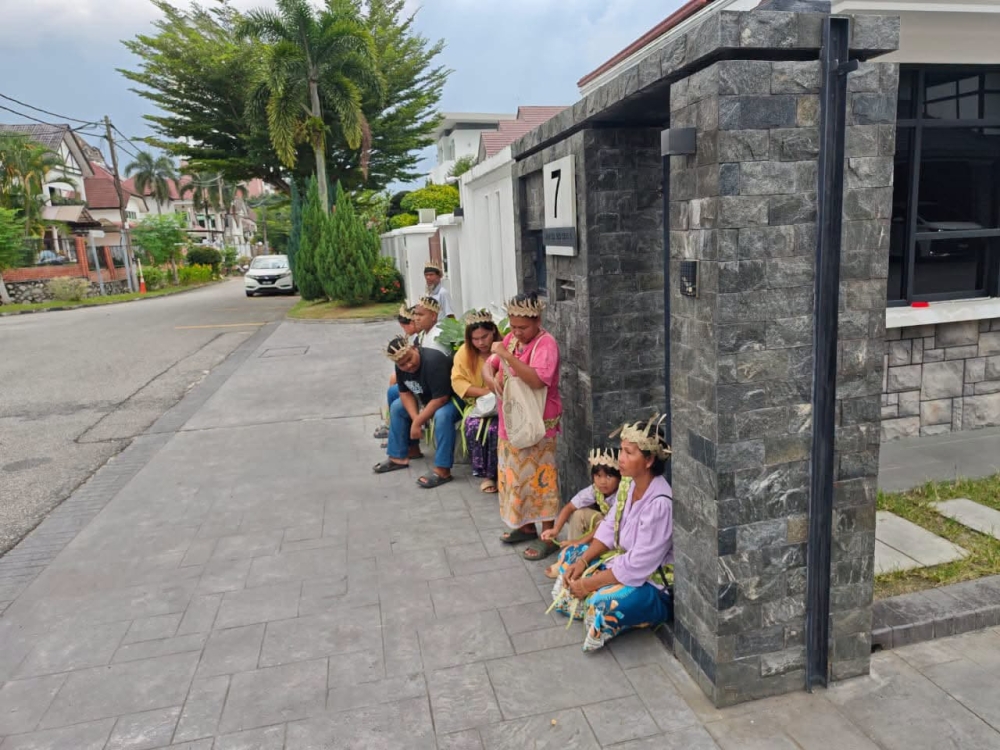
Prime Minister Datuk Seri Anwar Ibrahim has committed to taking up a contentious land issue affecting Orang Asli communities in Maran with the Pahang state administration, following direct engagement with concerned villagers who have long battled for recognition of their territorial rights. The pledge came after Anwar visited the district to listen to grievances from residents whose ancestral lands have become entangled in complex ownership disputes with state authorities and other claimants.
The Maran land controversy represents one of Malaysia's persistent indigenous rights challenges, reflecting broader tensions between development pressures, government land administration, and customary territorial claims by the Orang Asli, the peninsula's original inhabitants. Such disputes frequently go unresolved for years, leaving communities in legal and economic limbo while their claims wind through bureaucratic channels. By committing to raise the matter at state government level, Anwar signals that the federal administration views the Maran case as significant enough to warrant high-level intervention.
Orang Asli land grievances have historically received limited political attention despite affecting thousands across Peninsular Malaysia. Many communities occupy territories that predate colonial land surveys and modern cadastral systems, yet lack formal documentation recognised by contemporary property law. This documentation gap has created vulnerabilities that allow disputes to flourish, with external parties sometimes claiming overlapping rights to the same tracts. The Maran situation exemplifies this structural problem, where indigenous residents find themselves defending claims their forebears held for generations.
Anwar's undertaking to escalate the dispute carries particular weight given his position as prime minister and his previous advocacy for marginalised communities. His willingness to engage directly with villagers—rather than delegating the matter entirely to state-level politicians—suggests a commitment to personalised problem-solving on issues that touch vulnerable populations. This approach contrasts with earlier periods when such disputes received minimal federal executive attention, often remaining trapped within state administrative systems where resources and political will were frequently insufficient.
The Pahang state government's role in resolving the Maran dispute will be crucial. As the authority responsible for state land administration and indigenous affairs at the state level, Pahang holds considerable discretionary power over how such claims are investigated, adjudicated, and resolved. Bringing the issue before state leadership offers the possibility of expedited review and potential negotiated settlement, though success remains contingent on political will and bureaucratic cooperation. States vary considerably in their responsiveness to Orang Asli grievances, influenced by factors ranging from the political composition of state government to the economic value of disputed land.
The timing of Anwar's commitment reflects growing domestic and international scrutiny of Malaysia's treatment of indigenous rights. Civil society organisations, human rights advocates, and international bodies have increasingly highlighted the vulnerability of Orang Asli communities and the inadequacy of existing dispute resolution mechanisms. By addressing the Maran case, the federal government can demonstrate responsiveness to indigenous concerns while potentially establishing precedents for handling similar disputes elsewhere in the country.
For Maran's Orang Asli residents, Anwar's involvement offers a potential pathway toward resolution that bypasses traditional state administrative channels that may have previously been unresponsive. Direct escalation to the prime minister's office typically accelerates bureaucratic processes and elevates cases above routine administrative handling. However, residents will likely remain cautious until concrete steps materialise, given the frequency with which political promises regarding indigenous issues remain unfulfilled.
The broader implications extend beyond Maran itself. Orang Asli communities across Peninsular Malaysia face similar land disputes rooted in the same systemic gaps between customary territorial occupation and formal legal recognition. How authorities resolve the Maran case could establish templates for addressing comparable grievances, potentially affecting dozens of communities currently engaged in territorial disputes. The federal government's willingness to engage directly signals a possible shift toward treating indigenous land rights as matters of federal consequence rather than purely local state concerns.
Implementing Anwar's commitment will require substantive steps beyond political rhetoric. This includes convening relevant state officials, reviewing historical land records and territorial claims, consulting both Orang Asli representatives and other stakeholders, and developing concrete resolution mechanisms. The process demands patience and cultural sensitivity, as effective resolution necessitates understanding both the legal frameworks within which disputes are formally contested and the historical and customary dimensions that communities view as fundamental to their claims.
The government's approach to the Maran dispute will also reflect its broader indigenous affairs philosophy. Recent years have witnessed expanding international attention to indigenous rights, including through the United Nations Declaration on the Rights of Indigenous Peoples, which Malaysia has endorsed. Demonstrating tangible commitment to resolving longstanding Orang Asli grievances aligns Malaysian practice more closely with such international frameworks and enhances the country's standing on indigenous rights globally.
Stakeholders across the political spectrum and civil society will likely monitor how energetically the federal and state governments pursue the Maran resolution. For Anwar's administration, successfully navigating this dispute could strengthen its credentials on social justice issues while building political capital among indigenous communities. For the Orang Asli residents of Maran, the prime minister's intervention represents a potentially pivotal moment in their lengthy struggle for official recognition of their ancestral territorial rights.

