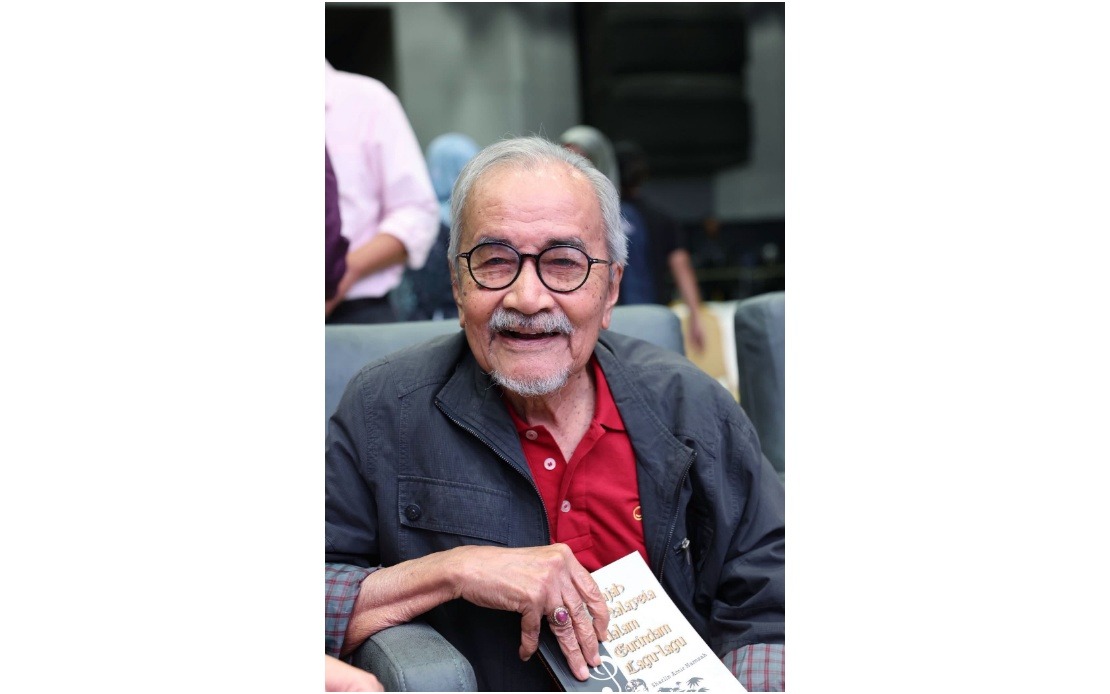
Prime Minister Datuk Seri Anwar Ibrahim has extended warm birthday wishes to one of Malaysia's most accomplished cultural ambassadors, Datuk Rahim Razali, who turned 87 on July 3. Through a Facebook post released today, Anwar recognised Rahim's towering influence on the local creative industry, characterising him as a stalwart whose body of work has fundamentally shaped how Malaysian audiences understand their own heritage and values.
Anwar's tribute underscores the enduring relevance of Rahim Razali's artistic legacy in contemporary Malaysian discourse. The Prime Minister highlighted how the veteran's filmography transcends entertainment, serving instead as a vehicle for exploring universal human experiences while simultaneously anchoring these narratives within Malaysia's distinctive cultural and national identity. This positioning reflects a broader government acknowledgement that the arts and cultural production remain vital to nation-building efforts, particularly at a time when Malaysia navigates complex questions about social cohesion and collective identity.
Born on July 3, 1939, in Batu Gajah, Perak, Rahim Razali has spent more than six decades navigating virtually every significant role within Malaysia's creative ecosystem. His versatility is remarkable: he has worked as an actor, director, scriptwriter, sports journalist, and broadcaster, demonstrating the kind of intellectual flexibility and creative range that characterised Malaysia's golden age of cultural production. This breadth of experience makes him a living bridge between different eras of Malaysian cinema and broadcasting, a generalist at a time when specialisation dominates creative industries.
Rahim's filmography includes numerous works that achieved iconic status within Malaysian popular culture. Among his most celebrated roles was his performance in Matinya Seorang Patriot, a film that explores themes of patriotism and sacrifice. Throughout his career, he has balanced commercial filmmaking with more artistic and socially conscious projects, a duality that has earned him considerable respect from both audiences and industry peers. His willingness to tackle substantive themes sets him apart from many contemporaries and suggests a filmmaker motivated by more than box office considerations.
The recognition conferred by his multiple accolades attests to his consistent quality and impact. Rahim has received Best Director and Best Male Actor awards at the Malaysian Film Festival, Malaysia's most prestigious cinematic honour. These dual recognitions across different categories illustrate his mastery of distinct craft disciplines and his ability to excel whether working behind or in front of the camera. For contemporary Malaysian filmmakers and actors, his career trajectory represents a model of sustained excellence and artistic integrity across multiple decades.
Anwar's acknowledgement of Rahim carries particular significance given the Prime Minister's own stated commitment to cultural affairs as a dimension of governance. By publicly celebrating Rahim's contributions, Anwar signals that the government views cultural figures not as peripheral ornaments but as essential participants in national development. This messaging matters for Malaysia's creative industries, which have historically struggled with questions of resource allocation and institutional support compared to more economically quantifiable sectors.
The prayer offered in Anwar's statement—that Rahim be granted good health, longevity, and continued capacity to contribute to Malaysian arts and culture—reflects a recognition that his influence extends beyond past achievements. At 87, Rahim remains a living repository of institutional knowledge about how Malaysian cinema evolved, the commercial and creative pressures that shaped production decisions, and the relationship between filmmakers and their audiences across different historical periods. His continued presence and potential engagement with younger generations thus carries educational value.
Rahim Razali's career also illuminates the trajectory of Malaysian cinema itself. The period during which he came of age—the 1960s and 1970s—represented a formative era for Malaysian national cinema, when filmmakers grappled with questions of identity in the post-independence context. His work from this period documented and helped construct how Malaysians understood their newly independent nation. By continuing to work across subsequent decades, Rahim witnessed and participated in the industry's evolution through periods of commercial consolidation, technological transformation, and changing audience demographics.
The significance of this birthday tribute extends beyond ceremonial politeness. It represents a moment when senior government leadership explicitly validates the cultural sector's contribution to national wellbeing. For Malaysian artists, filmmakers, and cultural workers watching these signals, the message is that their labour receives official recognition and that cultural production remains woven into broader national narratives. This matters in a region where cultural industries frequently compete for limited state resources and where questions about artistic freedom and institutional support remain contested.
Rahim's longevity in the creative industries also positions him as a mentor figure for subsequent generations of Malaysian filmmakers navigating their own careers. Many contemporary directors and actors have benefited, directly or indirectly, from the pathways and possibilities that veterans like Rahim helped establish. His example demonstrates that sustained artistic practice, engagement with serious themes, and popular recognition need not be mutually exclusive. In an era when Malaysian cinema competes increasingly with international streaming content and global entertainment franchises, Rahim's career exemplifies how locally rooted storytelling can achieve both critical acclaim and audience resonance.
As Malaysia's cultural landscape continues evolving—shaped by digital transformation, generational shifts, and changing consumption patterns—figures like Rahim Razali represent continuity with a particular model of culturally engaged filmmaking. His recognition by the Prime Minister thus serves a dual function: honouring his specific achievements while simultaneously affirming the broader importance of sustained artistic commitment to Malaysian society.

