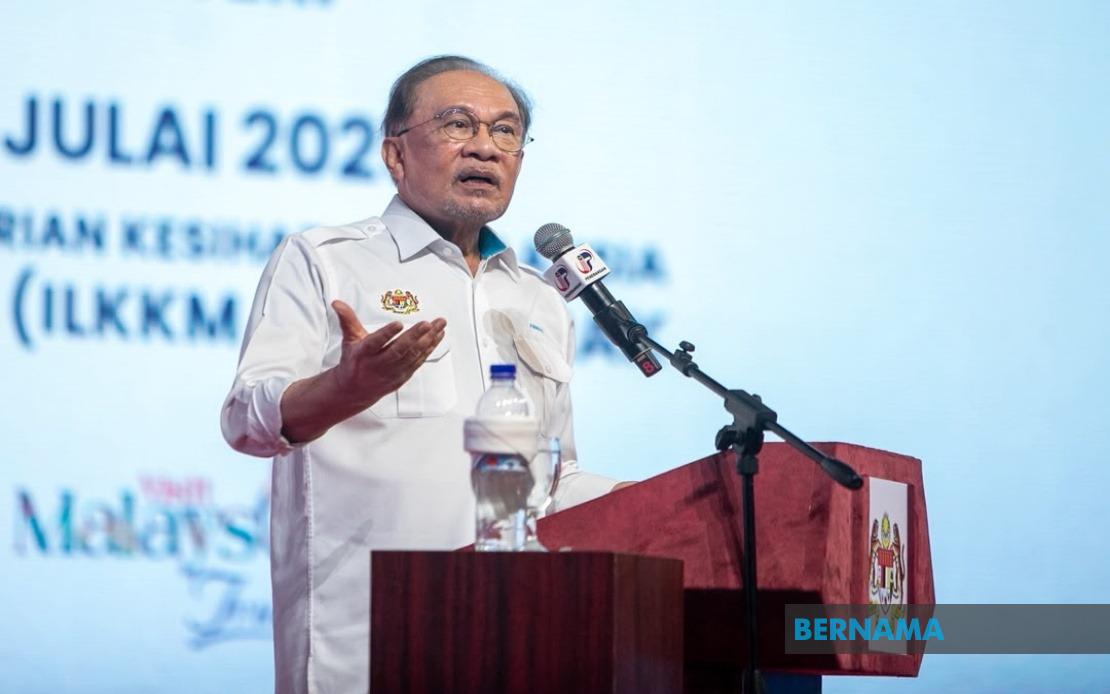
Prime Minister Datuk Seri Anwar Ibrahim has issued a pointed call for Malaysians to reconnect with their nation's independence heritage, warning that the comforts enjoyed today risk becoming meaningless without genuine understanding of the price paid by previous generations. Speaking at the official launch of the 2026 National Month and Fly the Jalur Gemilang Campaign in Ipoh on July 19, Anwar framed the occasion not merely as a patriotic ritual but as an opportunity for collective reflection on what independence truly signifies for contemporary Malaysia.
The Prime Minister's remarks come at a moment when Malaysia navigates complex questions about national identity, social cohesion, and generational continuity. By emphasizing the "blood, sweat and tears" of independence fighters, Anwar sought to ground modern discussions about Malaysian nationalism in concrete historical reality rather than abstract symbolism. His language—deliberately invoking the visceral struggle of anti-colonial movements—suggests an underlying concern that younger Malaysians may lack sufficient grounding in the narratives that forged the nation.
Anwar articulated a three-part framework for national renewal that begins with historical consciousness. The first element involves revisiting the archival record and documented accounts of Malaysia's path to independence, a foundational step that acknowledges how easily collective memory can fade within a single generation. The second phase centres on active symbolic participation, with the raising of the Jalur Gemilang serving as a tangible expression of unity and belonging. The third component looks forward, positioning historical awareness not as nostalgic dwelling but as a platform for building "a brighter and more glorious future."
This conceptual architecture reveals a sophisticated understanding of how nations maintain continuity across generational lines. Rather than demanding blind reverence for the past, Anwar's framework treats history as prologue—a necessary foundation for informed citizenship and collective aspiration. By linking historical gratitude to future-building, he avoids the trap of positioning independence narratives as merely commemorative exercises divorced from present-day concerns about governance, development, and regional standing.
The campaign's focus on understanding rather than simple celebration also reflects evolving approaches to national commemoration across Southeast Asia. Many regional governments have moved beyond flag-waving ceremonies toward deeper educational initiatives that connect independence struggles to contemporary challenges around democracy, economic justice, and inclusive growth. Malaysia's 2026 campaign positioning suggests alignment with this broader regional shift toward more substantive forms of national reflection.
The composition of dignitaries present at the Ipoh launch underscored the multi-dimensional nature of the initiative. Communications Minister Datuk Seri Fahmi Fadzil's attendance highlighted the campaign's media and messaging components, while National Unity Minister Datuk Aaron Ago Dagang's presence emphasized how historical narratives directly serve contemporary nation-building objectives. The inclusion of Perak Menteri Besar Datuk Seri Saarani Mohamad demonstrated the campaign's federal-state coordination, ensuring that national commemorative efforts translate into localized engagement across Malaysia's constituent states.
For Malaysian readers, particularly those engaged in education, civic administration, and cultural institutions, Anwar's framing carries practical implications. Schools, community organizations, and government agencies will likely receive guidance to structure their 2026 activities around deepened historical understanding rather than perfunctory displays of patriotism. This pedagogical reorientation could reshape how independence is taught and experienced, moving from memorization of dates and figures toward critical examination of the ideologies, personalities, and popular movements that drove decolonization.
The emphasis on generational transmission also speaks to broader anxieties about national cohesion in an increasingly diverse, urbanized, and globally connected Malaysia. As economic migration, diaspora communities, and digital connectivity reshape social bonds, investments in shared historical understanding become more vital. When Anwar directly addressed "children" in his remarks, he was signalling that the nation views younger citizens not as passive inheritors of independence but as active agents responsible for reinterpreting and defending it within their own contexts.
Regionally, Malaysia's approach carries implications for how Southeast Asian nations manage their post-colonial narratives amid contemporary geopolitical competition. As China expands its regional influence and global powers vie for dominance in the Indo-Pacific, stronger domestic consensus around independence values and national resilience serves strategic purposes beyond ceremonial commemoration. Historical consciousness becomes tied to collective confidence in navigating external pressures and asserting sovereign interests.
The 2026 campaign timing deserves consideration as well. Launching an initiative now for implementation two years hence allows sustained public engagement and institutional preparation. Rather than sudden, concentrated bursts of patriotic activity, this timeline enables incremental deepening of historical knowledge and cultural connection across multiple sectors of society. Educational institutions can embed independence studies more comprehensively into curricula; media organizations can develop documentary and analytical content; community groups can organize localized commemorative activities informed by regional historical specificity.
Anwar's insistence that independence struggles involved combinations of sacrifice—blood, sweat, and tears working together—also carried subtle political messaging about inclusive nation-building. This formulation avoided privileging any single community's contributions while emphasizing that independence was genuinely collective work requiring sustained commitment across different segments of society. In a Malaysian context where historical narratives sometimes become contested along communal lines, this emphasis on combined effort served as gentle reminder of shared stakes in national existence.
Looking forward, the success of the 2026 National Month campaign will depend significantly on whether it translates abstract calls for historical appreciation into concrete educational and cultural experiences that resonate with diverse age groups and communities. The launch's rhetoric was stirring, but sustained engagement requires sustained institutional investment and creative programming that makes independence narratives feel relevant to contemporary Malaysians navigating questions about jobs, governance, and their place in rapidly changing region.

