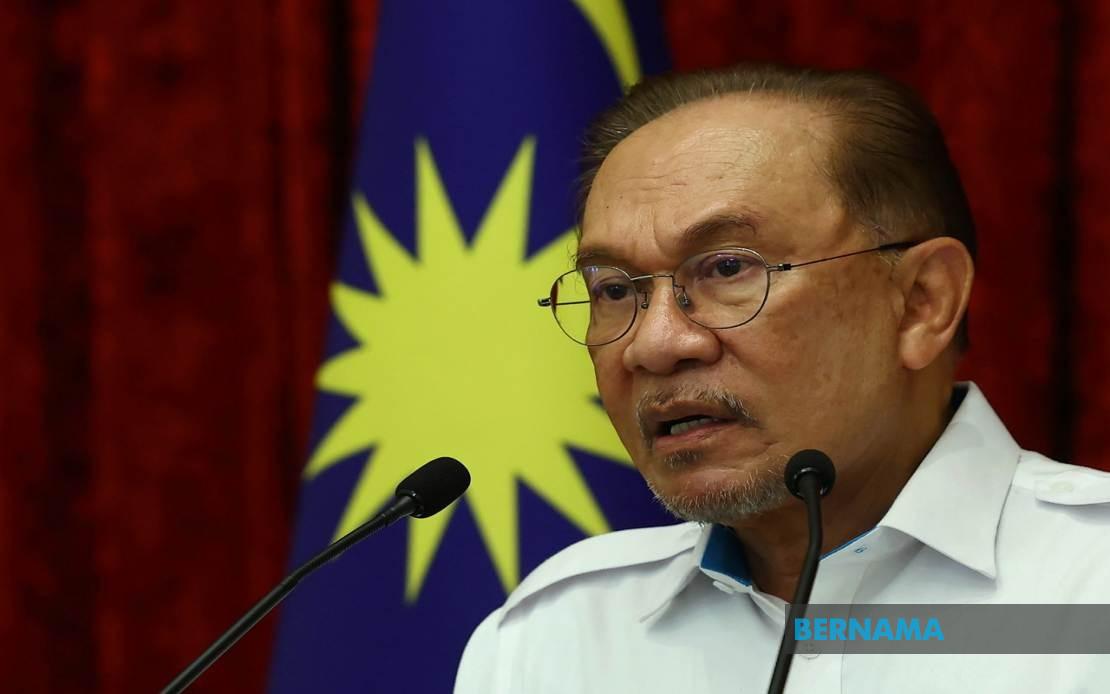
Prime Minister Datuk Seri Anwar Ibrahim expressed regret on August 11 for his inability to participate in a special parliamentary sitting convened to deliberate on findings from the Royal Commission of Inquiry into Tabung Haji, Malaysia's pilgrimage savings institution. The absence came as the nation's most senior political office holder continues recuperating from recent medical intervention, raising questions about the handling of parliamentary priorities during leadership transitions.
Through his senior press secretary Tunku Nashrul Abaidah, the Prime Minister conveyed his hope that parliamentary proceedings would proceed unhindered whilst affirming his intention to remain engaged with substantive policy discussions remotely. The statement underscored his commitment to protecting the institutional integrity and public confidence that surrounds Tabung Haji, an organisation entrusted with managing the religious and financial aspirations of Muslim Malaysians preparing for the hajj pilgrimage.
The Prime Minister's medical circumstances stemmed from an elective laparoscopic surgical procedure designed to address a para-umbilical hernia, as confirmed by his medical team lead Datuk Dr Asri Ranga Abdullah Ramaiah. This minimally invasive surgical approach typically permits faster recovery compared to conventional open surgery, though convalescence periods vary depending on individual health profiles and postoperative complications. The procedure represented a planned intervention rather than an emergency situation, suggesting administrative flexibility around parliamentary scheduling could have been negotiated.
According to his medical supervision team, the Prime Minister's recovery trajectory remained encouraging, with ongoing physiotherapy sessions monitored by specialist doctors forming part of a comprehensive rehabilitative framework. At 79 years old, recovery management assumes particular importance given the demands placed on Malaysia's chief executive, who must balance physical rehabilitation with governance responsibilities that cannot reasonably be delegated or deferred indefinitely. The coordinated medical care represented a measured approach designed to restore his full operational capacity.
The timing of the Tabung Haji RCI debate carries substantial significance for Malaysian public administration and financial governance. The Royal Commission's inquiry into the pilgrim fund institution addresses matters touching on transparency, accountability, and proper stewardship of assets belonging to hundreds of thousands of Malaysian Muslims. Parliamentary scrutiny of the RCI's findings contributes to broader national dialogue regarding institutional reform and public sector integrity, dimensions that demand leadership visibility and direct engagement.
Anwar's commitment to closely monitoring parliamentary proceedings from his recuperation environment reflects modern governance adaptations where technology facilitates remote participation in legislative business. Malaysian parliamentary convention, however, places particular weight on the physical presence of senior leaders during debates addressing institutional crises or matters of significant public concern. The special sitting's designation suggests the Tabung Haji inquiry possessed sufficient gravity to warrant the entire chamber's dedicated attention on a single legislative agenda item.
The Prime Minister's office notably included acknowledgment of well-wishes received in conjunction with his recent 79th birthday, a gesture that humanised the political leadership whilst reinforcing his continued connection with constituent support networks. Birthday greetings and expressions of public concern for political leaders' wellbeing serve important functions in Malaysian political culture, signalling citizen investment in their representatives' personal circumstances and demonstrating the affective dimensions underlying formal governance structures.
For Malaysian parliamentarians and policy observers, the incident illuminates recurring tensions between medical necessity and institutional protocol. Senior government officers, particularly heads of state, occupy positions where personal health conditions intersect with public responsibility in ways that demand careful navigation. Transparency regarding health circumstances, as demonstrated through the official statements, contributes to public confidence whilst the actual legislative participation remains constrained by genuine physical limitations.
The Tabung Haji RCI findings themselves warrant attention beyond the immediate parliamentary theatre. The institution manages billions of ringgit in accumulated savings for Malaysian Muslims, making governance lapses or financial mismanagement capable of affecting millions of lives directly. Parliamentary debate around RCI recommendations provides opportunities for elected representatives to scrutinise proposed reforms, question implementation timelines, and ensure that accountability mechanisms receive proper statutory footing rather than remaining aspirational policy commitments.
Looking forward, the incident suggests that careful institutional planning regarding leadership succession and continuity of government should incorporate protocols for managing senior officials' medical absences. Parliamentary conventions, while respecting the gravity of health circumstances, might benefit from procedures allowing for structured delegation of certain ceremonial or participatory functions to designated cabinet members during temporary incapacity periods. Malaysia's governance maturity could be demonstrated through developing mechanisms that honour both health requirements and institutional imperatives.
The broader context matters considerably for understanding Malaysian politics currently. Coalition governments managing diverse stakeholder interests depend substantially on visible, unified leadership presence during contentious deliberations. Anwar's remote monitoring of proceedings, whilst better than complete disengagement, arguably sends mixed signals regarding the urgency with which the government treats this particular accountability exercise, potentially influencing how opposition members and independent observers interpret the administration's commitment to institutional reform.

