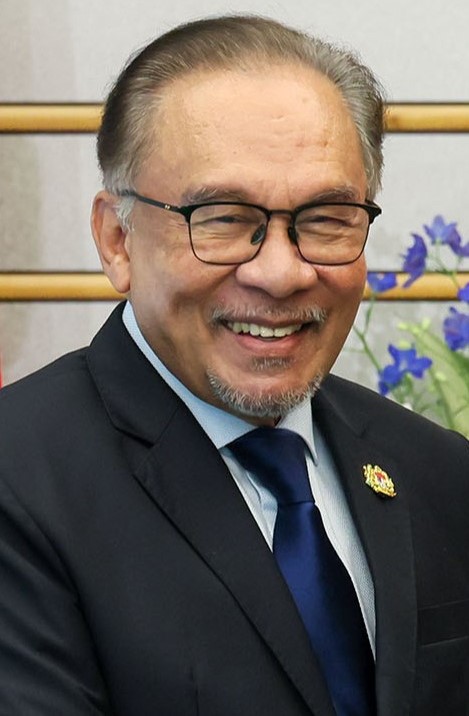
Prime Minister Anwar Ibrahim has met with Johor Regent Tunku Ismail Sultan Ibrahim in Kuala Lumpur to underscore both leaders' dedication to sustaining constructive relations between the state government and Putrajaya's federal apparatus. The private audience represents an important moment of alignment between two of Malaysia's most significant political figures at a time when coordination between state and federal tiers of governance is critical for effective national administration.
The engagement between Anwar and the Johor regent signals a broader commitment to collaborative governance across Malaysia's federal structure. Johor, as the nation's second-largest state by economic output and population, plays a substantial role in the country's overall development trajectory. When state and federal leadership maintain open channels of communication and shared objectives, the benefits cascade through policy implementation, infrastructure development, and public service delivery across multiple sectors.
TMJ, as the regent is commonly known in Malaysian political circles, represents not only Johor's constitutional monarchy but also serves as a significant voice in national affairs given the sultanate's historical prominence. His engagement with the Prime Minister reflects recognition that despite occasional tensions that can arise between state and federal governments over fiscal allocations, administrative boundaries, or policy priorities, the overarching interest lies in strengthening institutional relationships rather than allowing them to fray.
The timing of this meeting carries weight in Malaysia's evolving political landscape. The nation has witnessed considerable shifts in state-level governance arrangements over recent election cycles, with different states sometimes governed by coalitions distinct from federal administrations. Such fragmentation can create friction if not managed thoughtfully. By convening with the Johor regent, Anwar demonstrates proactive leadership in ensuring that potential divergences do not translate into administrative paralysis or unhelpful competition between tiers of government.
Johor's economic significance makes this coordination particularly vital. The state contributes substantially to Malaysia's manufacturing sector, ports infrastructure, and increasingly, high-technology industries. Seamless cooperation between state authorities and federal agencies responsible for trade, investment promotion, and economic planning directly influences Johor's capacity to attract foreign direct investment and nurture homegrown enterprises. When bureaucratic friction impedes this cooperation, economic opportunities diminish.
Beyond economics, security and public welfare considerations underscore why state-federal harmony matters. Border security arrangements, environmental management, disaster response, and public health initiatives all require coordinated action across administrative levels. The COVID-19 pandemic starkly illustrated how misalignment between state and federal responses could confuse the public and undermine crisis management. Anwar's initiative to strengthen relations with the regent helps establish the relational foundation necessary for swift, unified response to future emergencies.
The Johor regent's traditional influence within Malaysia's constitutional monarchy framework also makes his perspective valuable to federal leadership. As a senior royal figure, his views on governance reflect not only state interests but also the broader institutional concerns of Malaysia's constitutional architecture. Engaging him demonstrates respect for both the sultanate's constitutional role and the symbolic importance of maintaining royal confidence in federal administration.
This meeting also acknowledges the sophisticated nature of Malaysian federalism. Unlike purely centralised systems, Malaysia's constitutional design deliberately distributes powers between state and federal levels, with certain matters reserved for states and others for the federal government. This requires constant negotiation and goodwill. Neither tier can simply impose its will; both must work within constitutional parameters and through persuasion and compromise. Regular high-level engagement like Anwar's audience with TMJ lubricates these processes.
For ordinary Malaysians, what matters is whether such diplomatic courtesies translate into tangible improvements in governance quality and service delivery. Citizens in Johor expect roads to be maintained, schools to function effectively, business registration to proceed smoothly, and public safety to be assured—outcomes that depend on state and federal agencies working together rather than at cross-purposes. The commitment to preserve good relations therefore carries implications for how well these fundamental services operate.
The symbolism of Anwar seeking the audience in Kuala Lumpur rather than meeting elsewhere is also noteworthy. It underscores the federal capital's continued institutional significance and subtly reinforces the Prime Minister's role as the principal coordinator of national affairs. Yet the substance—reaffirming commitment to preserve good relations—frames the interaction as mutually beneficial rather than hierarchical, respecting both the regent's status and constitutional position.
Looking ahead, such regular engagement should help prevent the kind of state-federal conflicts that occasionally grab headlines and distract from substantive governance. While disagreements will inevitably arise over specific issues, the underlying relationship of respect and commitment to cooperation creates space for resolving them constructively. This is particularly important for Johor, whose size and strategic location make it essential to Malaysia's national wellbeing.