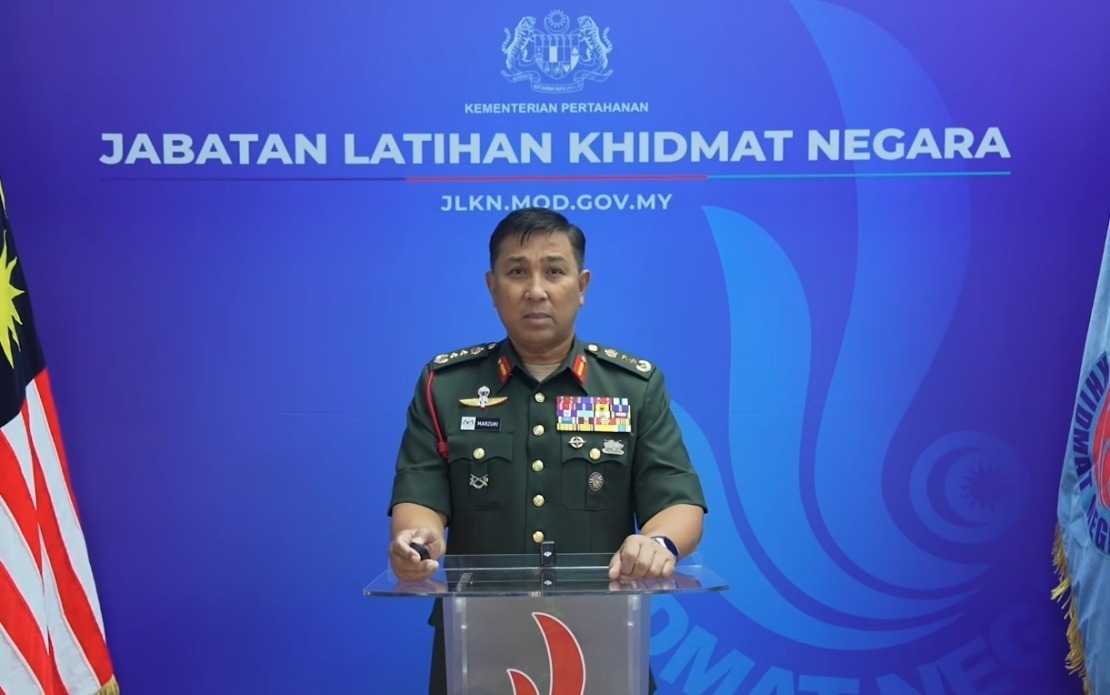
The National Service Training Department has permitted 77 trainees enrolled in the PLKN 3.0 Series 3/2026 to temporarily leave their camps to participate in upcoming state elections across Johor and Negeri Sembilan, according to an announcement by the department's leadership on July 11. This accommodation represents an effort to uphold the constitutional right to vote while simultaneously maintaining the integrity and schedule of the mandatory national service programme.
Major General Datuk Marzuki Mokhtar, the director general of the National Service Training Department (JLKN), emphasised that the decision reflects a commitment to preserving democratic participation among the nation's youth. He framed the arrangement as essential to balancing civic duties with the broader educational and nation-building objectives that underpin the PLKN initiative. The flexibility demonstrates recognition that mandatory service requirements need not conflict with fundamental democratic processes, an important precedent for future cohorts.
The logistics of the arrangement have been tailored to each election timeline. For the Johor state election held on the announcement date, 31 trainees received authorisation to cast their ballots and return to their respective camps by the following day, minimising disruption to the training schedule. The timing allowed these participants to fulfil their voting obligations without extended absences, reflecting careful coordination between the election commission and military training administrators.
The situation in Negeri Sembilan differs slightly due to its later election date. Approximately 46 trainees scheduled to vote in that state on August 1 have been granted a more generous window of two to three days off work. This extended leave accounts for travel time and the logistics of reaching polling stations from three separate training facilities distributed across the peninsula. The staggered approach acknowledges geographical realities while maintaining fairness across different trainee populations.
The current training series encompasses 870 confirmed participants distributed across three major facilities. Camp 505 AW in Pekan, Pahang represents the largest installation with 500 trainees, while Camp 515 AW in Kuala Lumpur accommodates 250 participants. The smallest contingent of 120 trainees trains at Camp 504 AW Bukit Keteri in Perlis. These camps form the backbone of the third series running from July through late August, with the voting arrangements affecting a relatively small percentage of total participants.
The PLKN 3.0 programme itself represents Malaysia's approach to instilling national consciousness and civic responsibility among young citizens. By facilitating electoral participation, the department underscores that democratic engagement constitutes part of the broader education mission. Trainees who exercise their voting rights while simultaneously undergoing national service experience firsthand the integration of individual rights with collective responsibilities—a lesson that extends beyond classroom instruction.
For the broader Malaysian context, this decision carries implications regarding how mandatory service programmes interact with democratic processes. As the PLKN continues to expand and evolve, establishing clear precedents for accommodating elections becomes increasingly important. Future cohorts will likely reference this arrangement, making it a de facto policy template for subsequent electoral cycles. The flexibility demonstrated here could influence how other mandatory service systems worldwide balance participation requirements with democratic obligations.
Looking ahead, the National Service Training Department has issued reminders to prospective trainees for the upcoming PLKN 3.0 Series 4/2026, particularly those born in 2008 who will constitute the eligible cohort. The department continues to encourage these individuals to monitor official channels for announcements regarding selection procedures and registration timelines. This communication reinforces the department's preference for transparent, direct engagement with trainees rather than reliance on intermediaries.
The department also issued a cautionary notice stating that BERNAMA—or indeed JLKN itself—has never engaged agents or external individuals for recruitment purposes. This warning reflects concerns about fraudulent schemes that exploit confusion among young people and their families regarding national service processes. Prospective trainees should verify all communications through official government channels and remain sceptical of unsolicited recruitment approaches, regardless of their apparent authenticity.
The voting leave arrangement ultimately demonstrates institutional flexibility in Malaysia's approach to mandatory national service. Rather than treating the PLKN as a rigid programme incompatible with civilian life, the administration has recognised that temporary absences for voting represent a legitimate public interest. This nuanced approach respects both the importance of the training mission and the fundamental democratic rights that the nation asks trainees to protect and preserve through their service.

