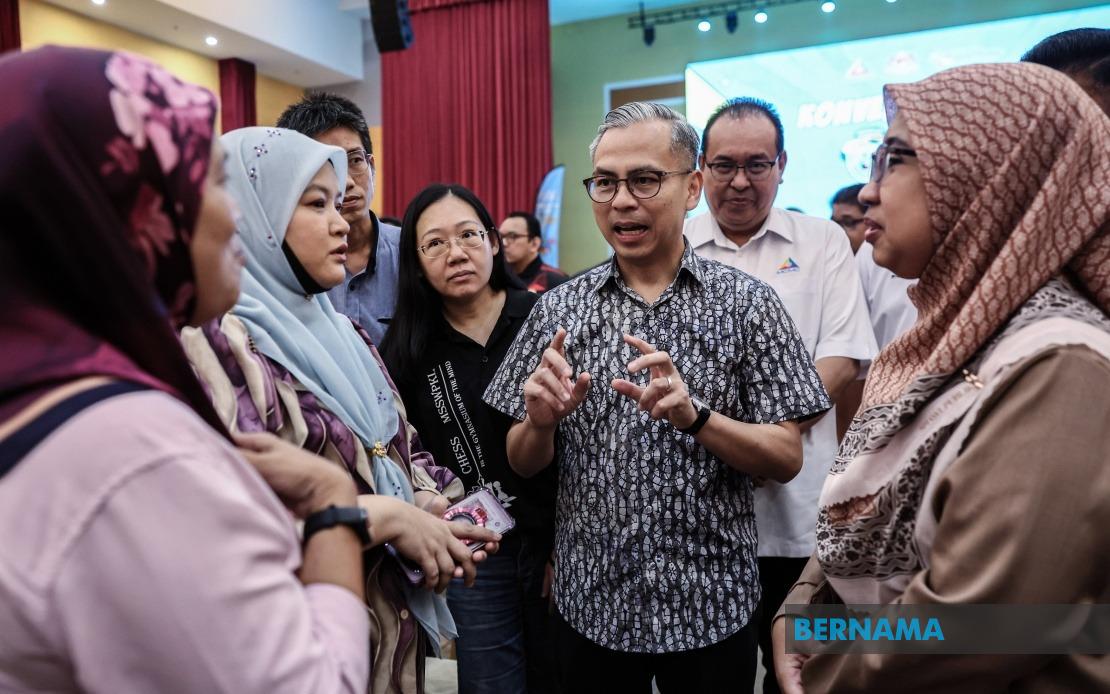
The People's Justice Party (PKR) has moved to quell concerns about operational disruptions following the approval of temporary leave for Nurul Izzah Anwar from her role as deputy president. Speaking at a press conference after launching the Kuala Lumpur-level Safe Internet PIBG Convention 2026, PKR Information Chief Datuk Seri Fahmi Fadzil confirmed that the party's machinery will continue functioning without interruption, with organisational and administrative processes proceeding according to schedule.
The PKR Central Leadership Council rejected Izzah's resignation request and instead granted her petition for temporary leave to address personal circumstances whilst pursuing doctoral studies. This distinction carries symbolic weight within the party structure, as it preserves her formal membership and maintains her standing within PKR's hierarchy. Fahmi emphasised that Izzah continues to be regarded as an active party member whose contributions to the party's ideological mission remain valued, notwithstanding her temporary absence from frontline leadership duties.
Responsibility for the deputy president's functions will be assumed by Vice-President Datuk Seri Saifuddin Nasution Ismail, who has been assigned the mandate to manage the post's operational requirements during the interim period. This succession arrangement reflects standard organisational protocol within PKR's governance framework and ensures continuity of decision-making authority. Saifuddin's appointment to these temporary duties represents a natural progression given his existing seniority within the party hierarchy and his track record in party administration.
The decision arrives at a moment when PKR, as a cornerstone component of both the Pakatan Harapan coalition and the broader Unity Government, faces sustained pressure to demonstrate institutional stability. The seamless transition of Izzah's responsibilities underscores the party's institutional maturity and its capacity to manage senior-level transitions without triggering broader organisational disruption. For a party that has weathered considerable internal turbulence over recent years, this methodical handling of a senior position's temporary vacancy signals renewed equilibrium within its ranks.
When pressed on speculation surrounding Subang Member of Parliament Wong Chen potentially vacating his parliamentary seat, Fahmi disclosed that no official notification had been received to date. He directed queries regarding any parliamentary seat changes toward Dewan Rakyat Speaker Tan Sri Johari Abdul, whose office holds jurisdiction over matters of legislative representation. This measured response avoided confirming or denying rumours whilst clearly delineating institutional responsibilities, a strategic positioning that neither antagonises potential dissidents nor prematurely commits the party to public statements about internal deliberations.
Regarding broader political timelines, Fahmi dismissed circulating speculation that the federal government might advance the timing of the next general election. He stated unequivocally that no such acceleration is presently under consideration, with the administration's working assumption positioning the election's occurrence by year-end 2026 at the latest. This timeline aligns with constitutional parameters whilst providing the Unity Government with its full mandate period to implement planned policy initiatives and demonstrate measurable progress on key reform programmes to the electorate.
The government's current strategic emphasis remains focused on ensuring seamless administration across all federal departments and sustained economic management. Fahmi acknowledged the continued dedication of component parties within the Unity Government coalition to Prime Minister Datuk Seri Anwar Ibrahim's leadership architecture, framing this political stability as essential infrastructure for effective governance during a period of ongoing institutional modernisation and economic repositioning.
Within the broader Pakatan Harapan alliance and across the wider Unity Government framework, the prevailing consensus centres on advancing systemic reforms and implementing initiatives designed to address longstanding structural impediments to Malaysia's development trajectory. Fahmi characterised these collective endeavours as essential to realising the substantive improvements in national competitiveness and quality of life that constitute the government's foundational mandate. This emphasis on consolidating reform momentum, rather than pursuing electoral expansion, reveals strategic prioritisation within the current political dispensation.
Among unresolved policy matters requiring continued governmental attention stands the implementation of recommendations emerging from the Royal Commission of Inquiry examining Lembaga Tabung Haji's operations across the 2014-2020 period. Fahmi's identification of this issue signals the government's determination to address the institutional vulnerabilities and governance lapses that precipitated the religious endowment fund's financial difficulties, demonstrating commitment to protecting the interests of Malaysian Muslim depositors whose funds remain entrusted to the institution.
In an intriguing closing remarks, Fahmi hinted obliquely that Prime Minister Anwar Ibrahim would imminently announce several significant policy or institutional decisions deemed beneficial for both public welfare and national development prospects. Whilst declining to elaborate on the nature or scope of these forthcoming announcements, his framing suggested measures of sufficient magnitude to warrant senior leadership pronouncement. This forward-looking signal to stakeholders and the broader public indicated that the government's reform agenda continues generating substantive policy outputs beyond the ongoing management of coalition dynamics and parliamentary administration.

