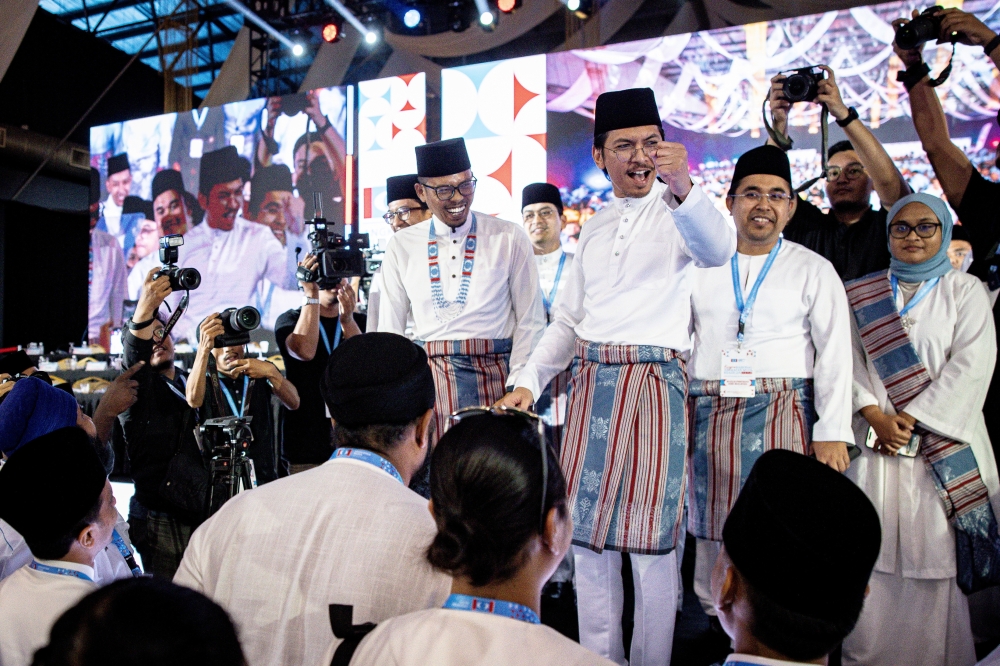
The youth wing of Parti Keadilan Rakyat has positioned itself at the forefront of Malaysia's higher education liberalisation agenda, backing the government's intention to dismantle restrictions embedded in the Universities and University Colleges Act. The announcement, which came as part of broader modernisation efforts within the administration, reflects deepening momentum toward greater academic freedom and student expression on university campuses nationwide.
Prime Minister Datuk Seri Anwar Ibrahim's move to repeal the act represents one of the most significant shifts in campus governance since the legislation's original enactment. The current framework has long drawn criticism from civil society groups, educators, and student activists who argue that its stringent regulations stifle legitimate debate and constrain democratic participation within higher learning institutions. By aligning with this position, PKR Youth has signalled that education reform sits centrally within the coalition government's political priorities.
The party youth organisation has called upon students across Malaysia's universities to become active participants in this transformation rather than passive observers. This mobilisation strategy extends beyond mere symbolic support, positioning student bodies as key stakeholders capable of shaping campus policies and institutional structures. The appeal reflects recognition that sustainable reform requires grassroots participation and student ownership of change processes.
Universitarians in Malaysia have historically operated under constraints that limit their ability to engage in political discourse, organise campus activities independently, and voice institutional critiques. The UUCA framework has served as a regulatory instrument maintaining administrative control over student expression, with penalties for those breaching operational guidelines. Repeal would fundamentally alter this power dynamic, transferring greater agency to student populations and academic communities themselves.
The timing of PKR Youth's public backing carries strategic significance within Malaysia's current political climate. The government has centred education as a transformative policy domain, with higher education reform contributing to broader narratives about modernisation and democratic deepening. Youth engagement across educational sectors represents a crucial demographic for coalition consolidation ahead of future electoral cycles.
However, the repeal proposal has not proceeded without opposition or concern. Administrative stakeholders within universities have raised questions regarding governance transition mechanisms and institutional stability during reform implementation. Conservative political voices have cautioned against excessive deregulation, framing restrictions as necessary safeguards for campus order and national security considerations.
Sector observers note that repealing the act represents merely the initial step within a more comprehensive reform agenda. Substantive change requires corresponding amendments to institutional bylaws, development of alternative regulatory frameworks, and cultural shifts within university administrations accustomed to extensive oversight authority. The involvement of PKR Youth suggests the coalition government intends to maintain momentum rather than allow the initiative to stall following legislative passage.
For Malaysian students, particularly those in politically active cohorts, the proposed reforms carry tangible implications for campus life, organisational freedom, and political participation. Universities have traditionally served as incubators for civic engagement, yet institutional constraints have limited the scope of legitimate activism. Repealing the UUCA could expand the space available for student-led dialogue on national affairs and university-specific governance matters.
The broader Southeast Asian context matters here. Throughout the region, higher education systems navigate tension between administrative control and academic liberty. Some ASEAN counterparts have experimented with greater campus autonomy with mixed results, while others maintain restrictive frameworks. Malaysia's reform trajectory may influence regional conversations about educational governance and student rights in comparable democracies.
International observers, including educational bodies and civil society networks tracking academic freedom metrics, have monitored Malaysian higher education developments closely. Repeal of the UUCA would likely improve Malaysia's standing within international indices measuring institutional autonomy and student participation rights. This dimension appeals to governments concerned with attracting international students and positioning the country as a progressive education hub.
PKR Youth's sustained mobilisation beyond symbolic endorsement suggests the party recognises educational constituencies as pivotal for long-term political support. By framing student empowerment as compatible with stability and national interest, the coalition seeks to reposition education reform as mainstream policy rather than oppositional demands. This framing proves essential for securing necessary parliamentary backing and institutional cooperation from university leaderships.
Moving forward, the success of UUCA repeal and subsequent reforms hinges upon translating legislative intent into operational reality. Student bodies must develop the institutional capacity and democratic practices to exercise newly acquired freedoms responsibly. Simultaneously, university administrations require guidance navigating transition from regulatory oversight toward collaborative governance models.
The government's commitment to this agenda will face practical tests as implementation proceeds. PKR Youth's continued engagement with student populations ensures the issue remains politically salient and monitors government follow-through. For Malaysian students and education policy advocates, the coming months will prove crucial in determining whether UUCA repeal catalyses meaningful campus democratisation or becomes a hollow symbolic gesture.

