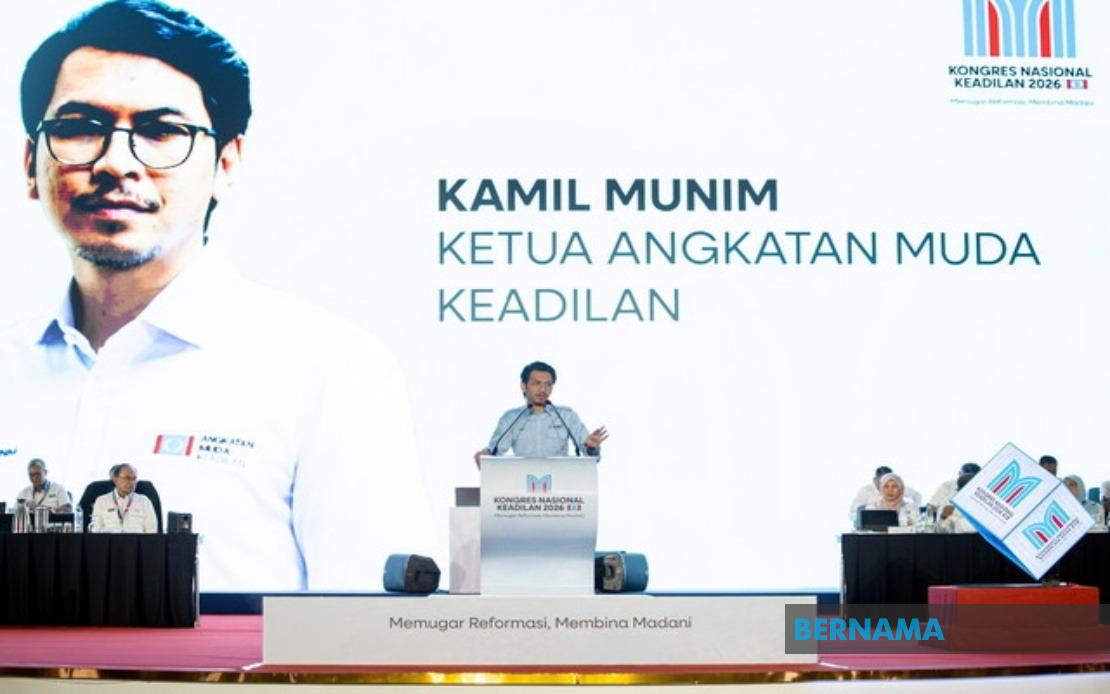
PKR Youth chief Muhammad Kamil Abdul Munim has urged the party to fundamentally reshape its approach to winning over younger voters, emphasising that those aged 45 and below now form the largest single bloc on Malaysia's electoral register. Speaking at the PKR National Congress in Melaka on August 16, Muhammad Kamil stressed that securing this demographic's confidence will be pivotal to the party's electoral fortunes going forward, particularly as the next general election draws closer.
The remarks signal a strategic recalibration within PKR following disappointing performances in recent state elections in Johor and Negeri Sembilan. These results have forced party leadership to conduct a thorough examination of its existing strengths and weaknesses, prompting a recognition that current methods may not be adequately resonating with younger Malaysian voters. Muhammad Kamil acknowledged during his closing address on the congress's second day that the electoral setbacks have revealed gaps in the party's approach that demand urgent identification and remediation.
Central to Muhammad Kamil's message is a call for grassroots leaders to expand their focus beyond routine administrative functions and instead invest in deepening their understanding of constituent concerns. He emphasised that leadership capability at the grassroots level must evolve to encompass genuine engagement with community priorities and grievances. This shift represents an acknowledgment that electoral victories depend not merely on organisational machinery but on authentic, ground-level dialogue between party representatives and the electorate they seek to represent.
While the MADANI Government has received generally positive public feedback regarding its performance, Muhammad Kamil suggested this approval has not automatically translated into electoral support. The disconnect between government popularity and voting patterns points to underlying anxieties or unmet expectations among significant voter segments. Party leaders must therefore engage directly with communities, particularly in rural and small-town settings where political engagement patterns often differ from urban centres, to uncover and address these latent concerns.
Muhammad Kamil urged party machinery to embark immediately on an identification process targeting voter concerns and anxieties, framing this work as essential preparation for the coming general election. He positioned grassroots leaders as frontline actors responsible for both diagnosing problems and offering tangible solutions that would rebuild public confidence in PKR's ability to govern effectively. This grassroots-led diagnostic approach reflects a recognition that top-down messaging alone cannot bridge the trust deficit the party appears to be experiencing.
The youth chief's remarks also invoked PKR's historical trajectory, noting the party's demonstrated capacity to generate electoral surprises at regular intervals. He highlighted the 2008 general election, when PKR was instrumental in denying Barisan Nasional the two-thirds parliamentary majority it had held for decades, and the 2018 election, which enabled Pakatan Harapan to form a federal government for the first time. These references serve as reminders that PKR possesses a track record of contesting successfully at the national stage, despite current setbacks.
For Malaysian voters and observers, Muhammad Kamil's intervention reflects deeper tensions within the ruling coalition. The PKR Youth chief's acknowledgment that gaps exist between government performance perception and electoral outcomes suggests the coalition may be struggling to convert administrative competence into sustained political support. This vulnerability is particularly acute among younger voters, who represent the largest electoral force and typically possess different priorities and communication preferences compared to older generations.
The emphasis on targeting voters under 45 carries significant strategic implications for Malaysia's political landscape. This demographic cohort grew up in an era of relative democratic openness and heightened political consciousness, with many having participated in or been influenced by movements predating the 2018 political transition. Their voting patterns reflect diverse concerns ranging from economic opportunity and housing affordability to environmental sustainability and digital governance—issues that may not be effectively addressed through traditional campaign methods.
Muhammad Kamil's call for a paradigm shift also implicitly acknowledges that social media, digital platforms, and informal networks now shape voter expectations and political engagement in ways that established party structures are still learning to navigate. Younger voters increasingly seek authenticity and direct engagement rather than formal political messaging, a reality that requires PKR to fundamentally reconsider how it communicates and connects with constituents. The reference to strengthening leadership capabilities at grassroots level suggests recognition that traditional cadre training models may require renovation to address contemporary voter expectations.
The PKR Youth chief's framing of the immediate task—identifying concerns and fears while offering concrete solutions—positions the party for a potentially prolonged period of strategic rebuilding ahead of the next general election. This approach contrasts with reactive post-election blame-shifting, instead committing the party to proactive voter engagement and programme development. For other political parties in the region observing Malaysian developments, the emphasis on demographic targeting and strategic renovation offers a template for parties seeking to remain electorally competitive as voter profiles shift.
Muhammad Kamil's comments also underscore the increasing centrality of younger voters to Malaysian electoral outcomes. As Malaysia's population ages, voters under 45 will constitute an even larger proportion of the electorate in future cycles. Parties that fail to develop genuine engagement strategies and policy platforms that resonate with this group face structural disadvantages that may prove difficult to overcome through traditional campaigning. For PKR specifically, the congress remarks represent a formal acknowledgment that the party must evolve its practices to remain relevant to the constituency that will ultimately determine Malaysia's political future.

