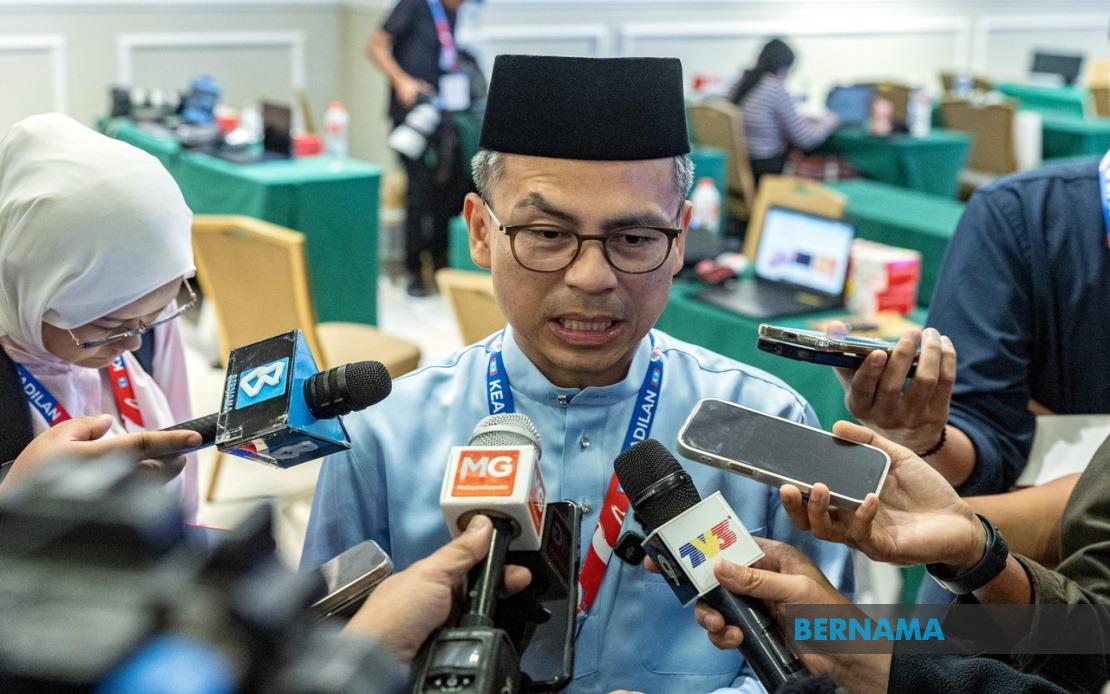
Parti Keadilan Rakyat is undertaking a comprehensive overhaul of its communication machinery, aiming to deliver government messaging with greater clarity and impact to ordinary Malaysians. The initiative emerged from deliberations at the PKR National Congress 2026, held at the Melaka International Trade and Exhibition Centre in Ayer Keroh, where delegates raised concerns about the disconnect between government policy achievements and public perception.
Communications Minister Datuk Seri Fahmi Fadzil, who also serves as PKR's Information Chief, identified a critical communication gap that has plagued the administration. Despite substantial government initiatives and measurable macroeconomic progress, these accomplishments have not visibly translated into tangible improvements in household finances and living standards for ordinary Malaysians. This perception gap represents a significant challenge to the ruling coalition's narrative and public standing heading toward the next general election cycle.
Fahmi acknowledged that multiple proposals from party delegates during the congress highlighted the necessity for a more robust information dissemination framework. The recognition reflects growing frustration within PKR's own ranks that the party and government have failed to effectively communicate their policy outcomes to the grassroots level, where electoral support ultimately determines political viability. The minister indicated that comprehensive details regarding planned communication reforms would be unveiled during the congress's closing session.
The proposed restructuring involves formalising and strengthening channels through which branch-level party structures can escalate community concerns to the federal capital. Fahmi noted that informal communication pathways have existed historically, but acknowledged their limitations in addressing the volume and complexity of issues emerging from parliamentary constituencies. A more systematic approach would ensure that problems identified at the ground level can be escalated to decision-makers in Putrajaya and addressed through coordinated policy responses.
Party delegates have reportedly expressed enthusiasm about assuming greater responsibility in amplifying government achievements and explaining policy rationale within their respective communities. This grassroots-focused approach recognises that formal government communications often fail to penetrate the informal networks through which Malaysians genuinely discuss policy impacts. By mobilising party members as credible local messengers, PKR hopes to establish more authentic communication channels that resonate with voters' everyday concerns.
The communication reform initiative signals recognition within PKR's leadership that the party's Central Leadership Council must itself undergo transformation before expecting broader party units to execute new strategies effectively. Fahmi indicated the council's receptiveness to delegate proposals and commitment to implementing changes starting from the senior levels of party hierarchy. This top-down approach to institutional change underscores the seriousness with which PKR's top brass regard the communication deficiency.
For Malaysian voters, particularly those in urban centres where government messaging historically struggles to penetrate, the restructured communication strategy represents a potential shift in how administration policies and economic data are translated into relatable terms. The acknowledgement that macroeconomic growth has failed to reach household level is particularly significant, as it validates widespread public sentiment that despite national economic statistics, personal financial circumstances have remained stagnant for many workers and lower-income households.
The timing of this communication overhaul, occurring during an election year cycle, carries obvious political implications. As Pakatan Harapan prepares for electoral contests, effectively communicating government achievements becomes strategically crucial. The coalition's ability to convince voters that their administration has delivered tangible benefits directly influences electoral prospects, particularly in swing constituencies where perception gaps could prove decisive.
Fahmi's emphasis on his triple role—as Communications Minister, PKR Information Chief, and Pakatan Harapan Communications Director—indicates an attempt to create unified messaging across government and coalition structures. This integration could potentially address previous coordination problems where different government agencies and political parties communicated competing narratives about policy impacts.
The broader Southeast Asian context adds another dimension to PKR's communication challenge. Across the region, populist movements and opposition parties have successfully weaponised communication deficiencies, portraying incumbent governments as disconnected from ordinary citizens' experiences. Malaysia's ruling coalition faces similar pressures, making communication effectiveness not merely a public relations concern but a fundamental governance legitimacy issue.
Implementing the proposed communication reforms will require substantial investment in training party cadres, establishing robust feedback mechanisms, and creating rapid-response capabilities at both federal and local levels. The success of these initiatives will ultimately be measured by whether subsequent elections show improved voter perception of government economic management and policy delivery at the household level.
The congress deliberations suggest PKR recognises that simply achieving macroeconomic growth proves insufficient for political survival without effectively communicating how those achievements benefit average Malaysians. Whether the revamped communication strategy succeeds in closing this perception gap will significantly influence the coalition's electoral fortunes in upcoming contests.

