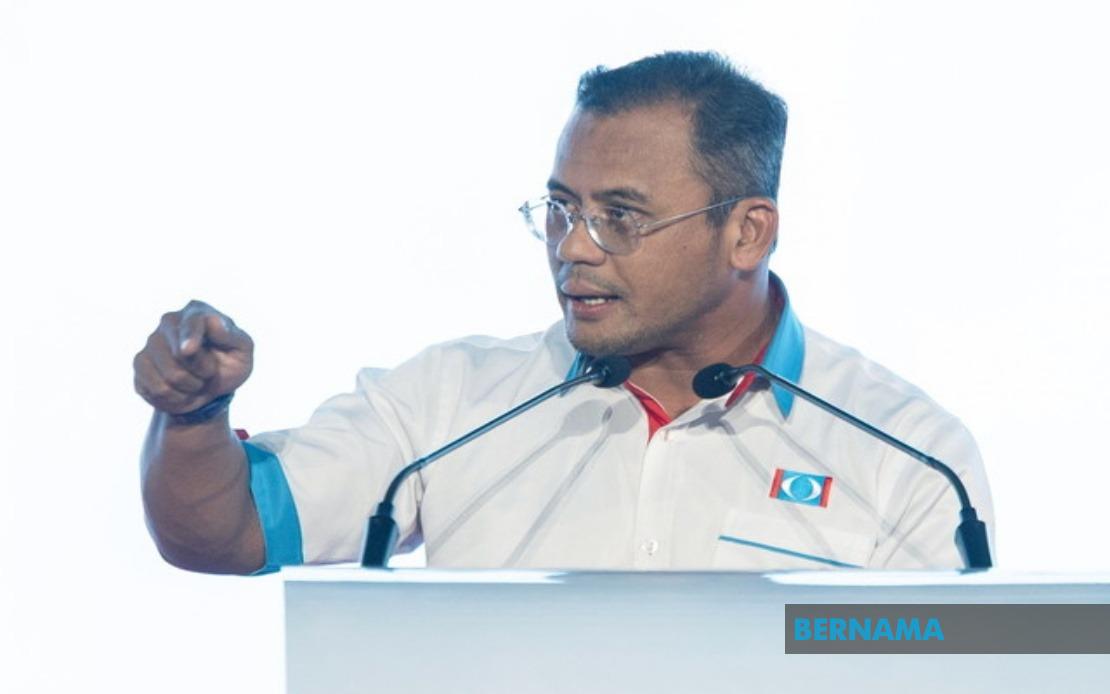
PKR's senior leadership has reasserted the party's fundamental commitment to practising inclusive and equitable politics across Malaysia's diverse communities, even as it acknowledged the constitutional position accorded to Islam and the Malays. Speaking at the party's national congress in Melaka, senior figures delivered forceful messages about the need to resist the political exploitation of communal divisions, signalling that PKR intends to position itself as a counterweight to parties that deploy identity politics as a voting strategy.
Datuk Seri Amirudin Shari, PKR's vice president and Selangor Menteri Besar, framed the party's political philosophy as one that balances respect for constitutional provisions with genuine fairness toward all Malaysians, irrespective of religion or ethnicity. The Federal Constitution's recognition of Islam's position and the special rights of Malays represents a foundational compact that all political parties must honour, Amirudin explained. Simultaneously, he insisted, PKR's governing approach extends equal consideration to Malays, Chinese, Indians, and citizens of all faiths, demonstrating that constitutional respect and inclusive governance are not mutually exclusive but rather complementary principles that define responsible political conduct.
This positioning reflects PKR's evolution since its founding philosophy under Datuk Seri Anwar Ibrahim in 1998. The party emerged from a reform movement centred on expanding democratic freedoms, strengthening fundamental rights, redistributing economic opportunities more fairly, and raising standards of governmental integrity. Over the decades, PKR has attempted to build a coalition encompassing multiple communities by arguing that genuine reform benefits all Malaysians, not narrow sectional interests. The congress speeches suggest the party believes this reform agenda remains valid and politically viable, even amid polarised electoral competition.
Datuk Seri R. Ramanan, another vice president who also serves as Minister of Human Resources, took direct aim at competitors who deliberately stoke racial anxieties to accumulate votes. He characterised such tactics as deliberate attempts to fracture national unity for parochial political advantage, warning that PKR must remain absolutely steadfast in defending Malaysia's ethnic and religious pluralism. For Ramanan, the stakes extend beyond electoral calculation: permitting racial division to become normalised in political discourse erodes the social cohesion that allows diverse communities to coexist peacefully. This framing positions PKR as defending a national interest rather than merely pursuing a partisan strategy, though the rhetorical distinction carries obvious electoral implications.
Ramanan's intervention also addressed internal party dynamics, emphasising that leadership unity is essential to party strength. When senior figures engage in personal rivalries or factional conflicts, he argued, the damage cascades downward through the organisational structure. Grassroots members become demoralised, branch machinery weakens, and ultimately the party's electoral competitors benefit from internal disarray. This emphasis on cohesion reflects a practical concern: PKR has experienced internal tensions in the past, and maintaining unified messaging around core principles serves both ideological consistency and organisational effectiveness. Ramanan's call for the entire leadership cadre to prioritise collective purpose over individual ambition suggests awareness that party factionalism could undermine efforts to position PKR as a principled alternative to identity-based politics.
A third vice president, Datuk Chang Lih Kang, offered empirical evidence supporting the claim that Malaysian voters increasingly vote beyond racial lines when representatives serve effectively. He cited the Chennah state seat contest in Negeri Sembilan, where DAP secretary-general Anthony Loke, despite facing opposition based on identity politics narratives, achieved increased support from Malay voters. The example serves multiple purposes: it demonstrates that cross-communal voting does occur in contemporary Malaysia, contradicting claims that racial voting is immutable; it illustrates that competent governance and public service can transcend communal boundaries; and it provides a concrete counter-narrative to opposition parties that argue Malaysian politics must remain organised along ethnic lines. For PKR, the Chennah result offers vindication that inclusive political positioning can succeed even in competitive electoral environments.
The timing and substance of these speeches at the national congress carry significance for Malaysian politics at a broader level. Coalition politics in Malaysia has historically relied on race-based parties and communal vote-banks, with BN and then Pakatan Harapan attempting to aggregate power through multi-ethnic coalitions while preserving space for communal politics within each alliance. PKR's explicit rejection of racial issue-exploitation suggests the party believes there is political space—and electoral demand—for a formation that operates differently. Whether this reflects genuine ideological commitment or strategic positioning to differentiate the party in a crowded political marketplace remains an open question, but the consistent messaging from multiple senior figures indicates the party is making this appeal central to its brand.
For Southeast Asian observers, PKR's emphasis on inclusive politics while maintaining constitutional respect for Islamic and Malay positions illustrates one model for managing pluralism in Muslim-majority democracies. The party argues that recognising constitutional provisions regarding Islam and indigenous peoples' rights need not preclude genuine equal treatment in governance and law. This balance attempt distinguishes PKR's approach from both hyper-nationalist parties that subordinate minority interests to majoritarian identity claims and secular-progressive formations that marginalise religious and indigenous concerns. Whether PKR can sustain this position while competing electorally against parties deploying more divisive messaging will test the viability of centrist, inclusive political movements in contemporary Malaysia.
The broader implication extends to the nature of competitive Malaysian democracy. If opposition figures like Ramanan and Chang are correct that voters will support cross-communal candidates who deliver effective service, then the electoral logic of identity politics becomes less deterministic. However, this optimistic assessment requires continued party discipline, consistent messaging, and demonstrated governance competence—precisely the combination that internal factionalism or policy inconsistency could jeopardise. PKR's congress declarations thus represent both a principled political stance and a strategic wager on where Malaysian voter preferences lie. The coming electoral cycles will determine whether this inclusive framing proves durable and electorally rewarding or whether the party faces pressure to adopt more divisive messaging to remain competitive.

