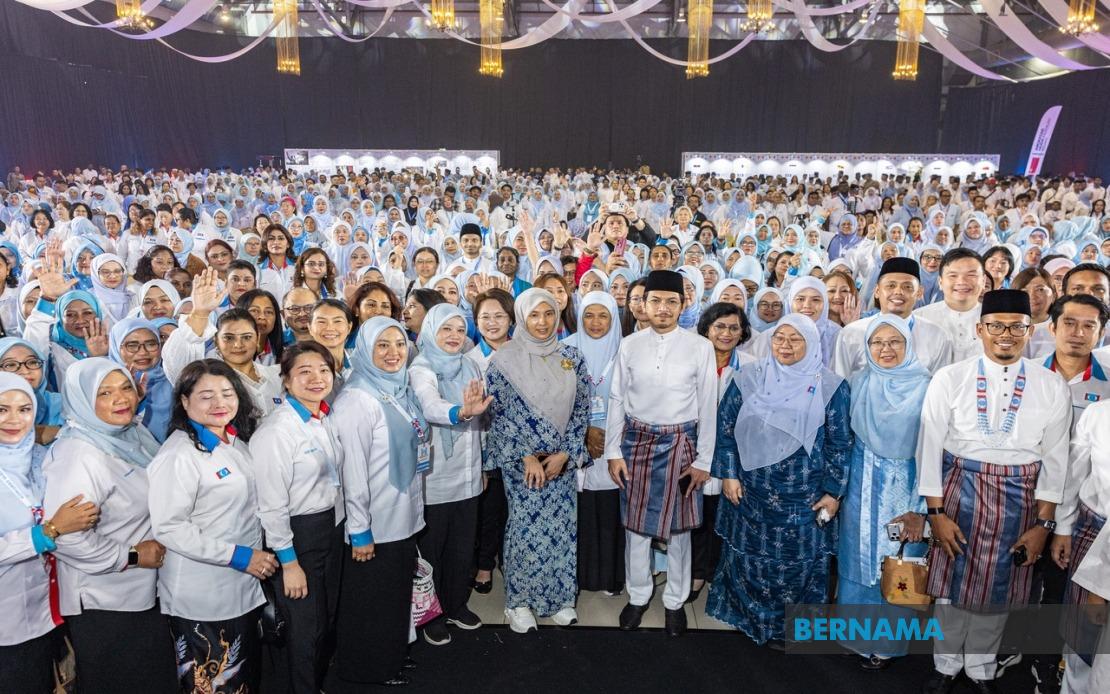
Parti Keadilan Rakyat faces an urgent need to articulate a more forceful and coherent political message if it hopes to regain public trust, according to Muhammad Kamil Abdul Munim, chief of the party's youth wing Angkatan Muda Keadilan. Speaking at the 2026 AMK National Congress held at the Melaka International Trade Centre in Ayer Keroh, he underscored that the ruling coalition cannot rely on brand recognition or past momentum to carry it through the coming electoral cycle. The remarks signal growing concern within PKR's organizational hierarchy about the party's readiness for elections following recent setbacks in state-level contests.
Muhammad Kamil's assessment reflects a candid acknowledgement of structural weaknesses that have become apparent since the party shifted from opposition to government. He pointed specifically to electoral performances in Sabah, Johor, and Negeri Sembilan as evidence that institutional capacity remains inadequate. Despite decades of campaigning dating back to 1998, when grassroots enthusiasm propelled the reformasi movement forward, the translation of public sympathy into concrete electoral success has proven elusive. The disconnect between public sentiment and on-ground organization represents a persistent vulnerability as PKR contemplates its strategy for the next general election.
The grassroots dimension looms particularly large in Malaysia's political context, where constituency-level mobilization and community networks remain decisive in translating voter preference into parliamentary seats. PKR has historically relied on waves of popular support during moments of political upheaval, with citizens volunteering their networks and social capital to amplify the party's reach. However, the transition to governing has altered this dynamic fundamentally. When in opposition, the party benefited from anti-establishment sentiment and moral clarity around reform narratives. Governing demands demonstrable policy delivery and administrative competence, a fundamentally different value proposition that cannot be conveyed through the same rhetorical frameworks.
Muhammad Kamil articulated the necessity for comprehensive strategic renewal across multiple fronts. The party must recalibrate its political methodology, organizational procedures, and engagement strategies to align with the complexities of holding executive power. He emphasized that pursuing reform while leading government presents qualitatively different challenges than mounting challenges from the outside. This recognition appears to signal recognition that existing party machinery, built primarily for opposition work, requires substantial recalibration. The structural overhaul extends beyond messaging to encompass how the party deploys resources, mobilizes supporters, and maintains organizational discipline across diverse local contexts.
The gathering, which convened PKR's youth contingent for national congress deliberations, included senior party figures including deputy president Nurul Izzah Anwar, vice-president Datuk Seri Dr Zaliha Mustafa, and Wanita PKR chief Fadhlina Sidek. Their attendance underscored the seriousness with which party leadership views the organizational challenges ahead. The congress functioned not merely as a ceremonial gathering but as a critical moment for frank internal assessment and collective problem-solving. Fadhlina, addressing delegates, characterized the occasion as an opportunity for institutional self-examination and acknowledgement of organizational shortcomings.
Fadhlina's contribution to the congress emphasized the importance of converting leadership rhetoric into concrete operational plans. She argued that the extensive speeches delivered by senior figures must undergo systematic translation into actionable agendas that strengthen party structures and reinvigorate the political fighting spirit among membership. This framing suggests that PKR recognizes a gap between articulated strategy and implementation capacity. The party leadership appears conscious that merely identifying problems without embedding solutions into organizational practice would squander the opportunity these gatherings provide for catalyzing change.
The emphasis on grassroots listening and feedback represents a potentially significant shift in PKR's organizational culture. Fadhlina explicitly invited delegates to channel their experiences and perspectives into party-level recommendations, positioning the congress as a bidirectional communication mechanism rather than merely a top-down directive session. This approach acknowledges that sustainable organizational change requires buy-in and engagement from the membership base. In the Malaysian political environment, where local party chapters exercise considerable autonomy and grassroots activists maintain informal influence networks, such participatory approaches carry genuine strategic significance.
For Malaysian observers and regional analysts, PKR's organizational struggles offer instructive lessons about the challenges facing established opposition movements transitioning into government. The party's electoral performance in state contests has generally disappointed relative to expectations built on their presence in federal power. These outcomes suggest that controlling national-level policy levers does not automatically translate into electoral dominance at sub-national levels, particularly when state-specific grievances and local political dynamics diverge from national political narratives. PKR's search for stronger messaging and more robust grassroots capacity reflects this broader struggle to convert governmental authority into sustained electoral advantage.
The party's predicament also reflects broader tensions within Malaysia's ruling coalition concerning resource allocation, ideological coherence, and strategic direction. As the leading component of the Pakatan Harapan-Barisan Nasional arrangement, PKR must balance its reformist origins with the compromises necessary to maintain coalition stability. This balancing act complicates efforts to articulate a clear, compelling political narrative that distinguishes the party from its coalition partners. Stakeholders seeking to understand PKR's trajectory must account for these coalition dynamics alongside internal organizational challenges.
Looking toward the coming electoral cycle, Muhammad Kamil's emphasis on accepting and learning from recent setbacks signals a more realistic assessment within PKR leadership than public statements often convey. Rather than attributing poor performances to external factors or temporary circumstances, party figures appear prepared to undertake genuine organizational reckoning. Whether this introspection translates into substantive reforms to party structure, candidate selection, campaign methodology, and messaging strategies will determine whether PKR can effectively address the grassroots mobilization deficits it has identified.
The timeline for electoral renewal remains compressed, with general elections potentially occurring within the next two to three years. This temporal pressure imparts urgency to PKR's organizational deliberations. The party cannot indefinitely postpone decisions regarding structural reconfiguration, leadership development, and strategic repositioning. The 2026 AMK National Congress represents a critical juncture where abstract recognition of challenges must convert into concrete institutional commitments. The coming months will reveal whether PKR can translate the candid self-assessment articulated by its leadership into tangible improvements in organizational capacity and political messaging.

