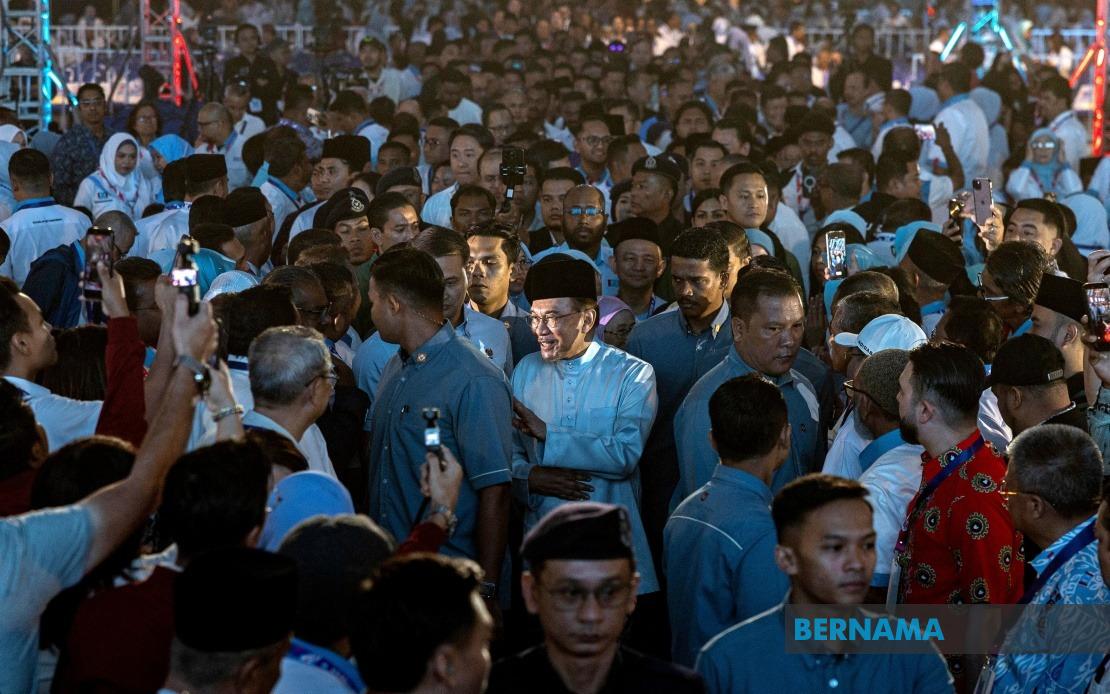
The upcoming 2026 PKR National Congress represents a critical juncture for the party to reassess its direction and reconnect with Malaysian voters, according to Tengku Datuk Seri Zafrul Tengku Abdul Aziz, who serves as the Prime Minister's senior political adviser. Speaking in Melaka on August 15, Tengku Zafrul, who holds an ex-officio position on PKR's Political Bureau, framed the gathering as more than a routine party assembly—rather, it should function as a comprehensive platform for internal reconciliation and organisational renewal aimed at restoring the electorate's confidence in the party.
Tengku Zafrul's intervention comes at a sensitive time for PKR, following outcomes in recent state elections that have prompted soul-searching within the party leadership. His remarks signal that senior figures within the administration recognise the urgency of addressing organisational weaknesses and operational inefficiencies that may be contributing to the party's struggles at the ballot box. By positioning the congress as a venue for honest self-evaluation, Tengku Zafrul has effectively placed pressure on PKR members to move beyond defensive posturing and engage in genuine institutional reform.
Central to his message is an appeal for party members to conduct a systematic assessment of structural vulnerabilities across all tiers of the organisation. Tengku Zafrul specifically highlighted the importance of strengthening operations from grassroots branches through to the central leadership apparatus, suggesting that weakness across this spectrum has compromised the party's electoral effectiveness. This hierarchical focus acknowledges that local-level grassroots work remains foundational to political mobilisation in Malaysia, even as national messaging and coordination matter significantly.
The senior adviser's comments reflect a recognition that while PKR participates in the broader Unity Government coalition, the party cannot simply attribute electoral disappointments to partners' failures. Instead, he contended that PKR must focus on controllable factors—its own internal coherence, messaging clarity, and organisational discipline. This distinction carries importance for Malaysia's coalition politics, where coalition partners sometimes deflect responsibility or blame other components. Tengku Zafrul's directness suggests a maturation in how the leadership diagnoses problems and envisions solutions.
A particularly significant element of his intervention concerns communication strategy. Tengku Zafrul acknowledged that even if the party has implemented policies and programmes successfully, voters have not necessarily perceived or credited these achievements. This gap between objective output and subjective public perception represents a critical vulnerability in PKR's political positioning. He called for more transparent, accessible, and persuasive articulation of the party's accomplishments—suggesting that technical competence alone cannot substitute for effective public engagement and narrative construction.
The adviser's emphasis on listening to public grievances reveals an implicit critique of how PKR has handled community engagement. He cautioned party members against becoming so focused on crafting responses and justifications that they fail to genuinely comprehend underlying problems affecting voters. This diagnostic approach mirrors broader international trends in political management, where responsive listening—rather than defensive messaging—increasingly determines electoral performance. For Malaysian voters accustomed to top-down party structures, Tengku Zafrul's emphasis on receptive engagement from party leadership represents a notable shift in tone.
His framing of the challenge as requiring honest self-reflection carries particular weight given his position as an adviser to the Prime Minister. This lends his words implicit institutional authority and signals that the highest levels of government recognise the necessity for PKR renewal. However, the rhetoric also implicitly distances the Prime Minister's office from direct responsibility for party performance, placing onus squarely on PKR's internal structures and membership commitment. This positioning allows the administration to signal seriousness about PKR's trajectory without appearing to micromanage the party.
The timing of these remarks—approximately 18 months before the scheduled congress—allows PKR adequate opportunity to implement reforms and assess their effectiveness before the formal gathering. This suggests that party leadership has not merely adopted a defensive posture following electoral setbacks, but instead intends to use the intervening period for substantive structural and strategic adjustments. For party members, the signal is clear: renewal is expected, not optional.
Tengku Zafrul's three-step framework—listen, acknowledge, deliver—represents a simplified but potentially powerful framework for rebuilt party-voter relationships. The first step demands genuine receptiveness to community concerns. The second requires honest recognition of unresolved issues rather than dismissive deflection. The third emphasises concrete follow-through rather than mere promises. This sequence suggests that public trust has eroded partly because of gaps in previous cycles between acknowledgement and delivery, a pattern common in Malaysian politics where pledges frequently outpace implementation.
The broader context for these comments includes the complex dynamics of Malaysia's Unity Government coalition, where PKR functions as a significant but not dominant component. As the coalition navigates various policy challenges and maintains electoral viability, PKR's internal strength becomes increasingly important for overall governmental stability. A weakened PKR could amplify internal coalition tensions, whereas a reinvigorated party strengthens the entire power structure. From this perspective, Tengku Zafrul's push for party renewal serves governmental interests alongside PKR's own organisational health.
For regional observers, PKR's trajectory holds significance beyond Malaysia's domestic politics. As one of Southeast Asia's most established multiethnic political parties, PKR's management of internal diversity and coalition dynamics offers lessons for other regional political organisations navigating similar multicommunal and multiparty environments. The party's ability to undergo institutional renewal while maintaining coalition commitments will influence perceptions of political adaptability throughout the region.
The practical implications of Tengku Zafrul's message will become evident as PKR members respond to his call for renewed organisational discipline and public engagement. Whether the party can translate this rhetoric into sustained structural improvements remains uncertain, but his intervention establishes clear expectations for the 2026 congress and the period leading toward it. Ultimately, PKR's success in rebuilding public trust will depend less on what is said in internal forums and more on what voters observe in the party's changed conduct and demonstrable commitment to addressing their concerns.

