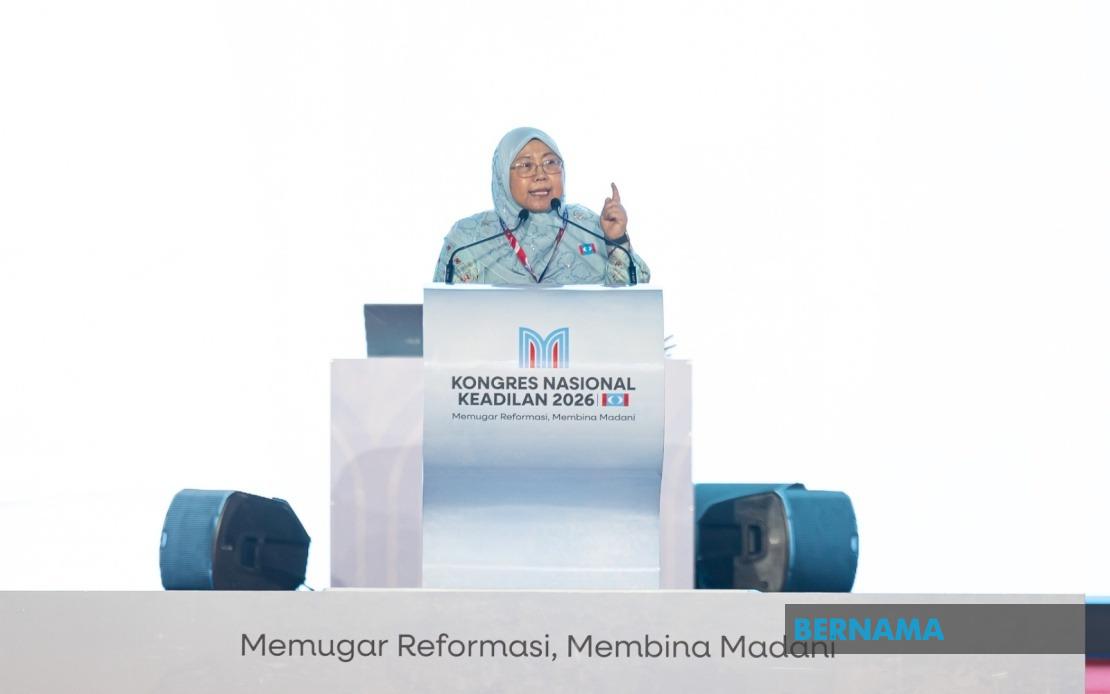
Parti Keadilan Rakyat needs to confront its recent electoral struggles with maturity and resolve rather than recrimination, according to party secretary-general Senator Datuk Dr Fuziah Salleh, who addressed the 2026 PKR National Congress in Melaka this week. Speaking at the gathering at the Melaka International Trade Centre, Fuziah stressed that party members and leadership must transform their disappointment into constructive energy aimed at rebuilding institutional strength and clarifying the party's direction amid a rapidly shifting political landscape.
The secretary-general's remarks represent an attempt to steer the congress away from internal blame-gaming and factional disputes that often emerge following major electoral reverses. Rather than using the national gathering as a forum for finger-pointing or settling scores over recent setbacks, Fuziah framed it as an opportunity for genuine reflection and strategic recalibration. She emphasised that members should learn from their experiences without allowing temporary setbacks to undermine confidence in the party's long-term trajectory or capacity to recover.
Fuziah drew on PKR's institutional memory to provide perspective on the party's current difficulties. She reminded delegates that the party had endured a far more severe crisis following the 2004 General Election, when its parliamentary representation collapsed to just a single seat. Despite that traumatic outcome, PKR did not dissolve or lose faith in its mission; instead, it engaged in methodical organisational rebuilding, expanded its grassroots reach, and propagated the Reformasi message across the country with renewed commitment. This historical precedent underscores that the party has demonstrated resilience before and possesses the capacity to do so again.
The narrative of recovery and renewal formed the thematic centrepiece of this year's congress, encapsulated in the slogan "Memugar Reformasi, Membina MADANI". The Malay word "memugar" carries connotations of revival and restoration rather than invention of something entirely new. Fuziah stressed that PKR's current challenge is not to create novel ideological frameworks but to reclaim and refresh the founding principles that animated the Reformasi movement when the party was established. This distinction is significant, as it signals continuity with the party's historical mission while acknowledging that those principles must be adapted to contemporary political and social realities.
The emphasis on reviving Reformasi's core spirit reflects recognition within PKR leadership that the party risks losing distinctiveness if it merely chases tactical political advantage without grounding itself in a coherent ideological foundation. The congress theme thus functions as both a historical invocation and a forward-looking call to programmatic renewal. It suggests that PKR's path forward depends not on abandoning or radically redefining its identity but on deepening and modernising its engagement with the values of democratic reform, institutional accountability, and social justice that originally attracted its membership and base.
The scale of the gathering itself testified to the party's continued organisational capacity. The congress convened 2,594 delegates and attracted more than 2,000 observers from across Malaysia, alongside diplomatic representation from 19 countries including six ambassadors. This international attendance underscores that PKR remains a significant player in Malaysia's political ecosystem and retains strategic interest among regional and international observers. The breadth of participation also suggests that despite recent electoral disappointments, the party retains sufficient internal mobilisation capacity and member engagement to conduct substantive national deliberations.
For Malaysian observers, PKR's current trajectory carries implications beyond the party's internal fortunes. The coalition partner in the Anwar Ibrahim government, PKR's performance and strategic clarity directly influence the stability and direction of federal governance. Recent electoral losses have raised questions about the government's political durability and the sustainability of its policy agenda. Fuziah's call for mature institutional reflection can be read as an attempt to signal that PKR is engaged in serious strategic recalibration rather than reactive crisis management, potentially reassuring coalition partners and constituencies invested in the government's continuity.
The broader regional context also matters. Southeast Asia's democratic systems have experienced considerable turbulence in recent years, with electoral volatility, coalition instability, and shifting voter preferences creating challenges for established parties across the region. Malaysia's political landscape has undergone particularly pronounced realignment since 2018, with traditional party structures fragmented and voter loyalties more fluid than in previous decades. In this environment, PKR's emphasis on institutional renewal and ideological clarity reflects adaptive strategies that other regional parties have also pursued when confronting similar pressures.
The secretary-general's framing of electoral defeat as temporary rather than definitive carries psychological and strategic importance for party cohesion. When major losses risk demoralising membership and prompting defections or factionalism, leadership narratives that situate defeats within longer historical arcs of challenge and recovery can help maintain organisational discipline and member commitment. By invoking PKR's survival through the 2004 nadir, Fuziah implicitly argues that current difficulties, while real, are not unprecedented and remain susceptible to determined organisational response.
Looking forward, the congress functions as a potential inflection point where PKR either successfully recalibrates its political strategy and messaging or risks further erosion of electoral support. The party's ability to genuinely renew its connection to Reformasi principles while adapting those principles to address contemporary governance challenges and voter concerns will substantially determine its electoral prospects in the run-up to the next general election. Fuziah's emphasis on maturity and constructive reflection suggests that PKR leadership recognises this moment carries significance for the party's political future and institutional survival.

