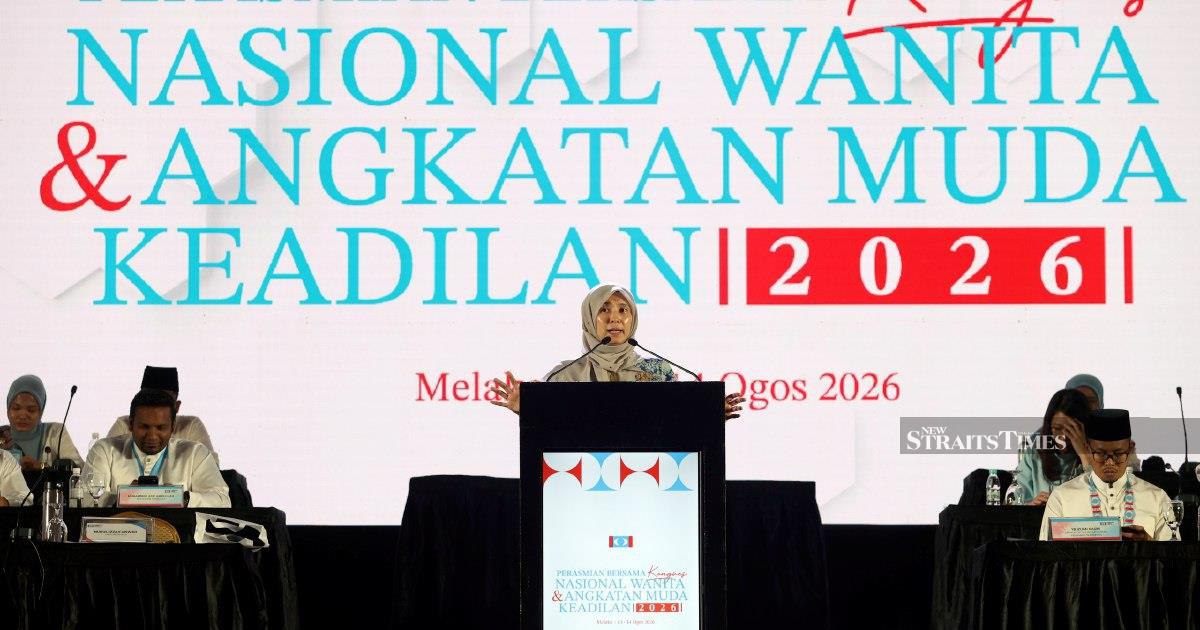
Speaking at an event in Ayer Keroh, PKR deputy president Nurul Izzah Anwar delivered a pointed message to her party about the need for principled governance: the organisation must draw explicit lines in the sand regarding what it will and will not tolerate from its leadership and members. Her comments underscore growing tensions within PKR over the balance between pragmatic political coalition-building and maintaining ethical standards—a tension that has intensified as Malaysia's multiethnic democracy grapples with governance questions.
Nurul Izzah's emphasis on defining "red lines" represents a deliberate reframing of PKR's internal conversation. Rather than discussing compromise in purely tactical terms—how many seats to contest, which coalitions to join—she is demanding the party establish non-negotiable principles. The concern animating her intervention is straightforward: that the pursuit of political power might become a convenient justification for overlooking serious misconduct. In a country where political corruption remains a stubborn challenge, and where government-linked scandals periodically dominate headlines, her warning carries particular weight.
The timing of Nurul Izzah's statement reflects PKR's position within Malaysia's broader political landscape. As a component party within the ruling coalition, PKR occupies an uncomfortable middle ground. It must balance its traditional reformist base—supporters who joined the party because of its anti-corruption messaging and commitment to institutional reform—against the practical necessities of coalition management and resource allocation. This creates recurring dilemmas: when should PKR stand firm on principle, and when should it accommodate coalition partners' interests? Her message suggests that too many recent decisions have tilted toward accommodation.
Corruption and abuse of power stand out as particularly sensitive issues for PKR. The party's foundational narrative, articulated through decades by its de facto leader Anwar Ibrahim, emphasised the need to restore integrity to Malaysian governance. Many party members joined specifically because they believed in this mission. Yet as PKR has moved from opposition to government, some supporters fear the party has become indistinguishable from the machinery it once criticised. Nurul Izzah's insistence on defining red lines can be read partly as an attempt to reassure these members that PKR's core values remain intact.
The concept of red lines in politics typically encompasses actions that, if crossed, fundamentally compromise an organisation's legitimacy or contradict its stated principles. For a reform-oriented party like PKR, such lines would logically include tolerance for high-level graft, arbitrary exercise of ministerial authority, or attempts to use state machinery for political vendetta. Establishing these boundaries explicitly is meant to send a dual signal: internally, to members that standards exist and will be enforced; externally, to voters that PKR represents a genuine alternative to business-as-usual politics.
However, publicly articulating red lines carries risks. Once explicit boundaries are declared, the party faces pressure to enforce them consistently. If senior figures are discovered to have crossed these lines, PKR must respond with credible disciplinary action, not merely rhetorical hand-wringing. In Malaysia's polarised political environment, opposition parties will immediately seize on any perceived hypocrisy. The difficulty compounds because red lines are rarely as clear-cut as they sound in speeches. Determining whether a questionable decision constitutes genuine corruption or merely aggressive but legal politicking often requires judgment calls that reasonable people dispute.
The relationship between political compromise and ethical decay deserves particular scrutiny in the Malaysian context. Coalition governments are a structural feature of Malaysian democracy, and without them, no government could function. But coalitions inherently involve compromise: smaller parties must accept decisions they might not prefer; larger partners must accommodate diverse constituencies. The question Nurul Izzah raises is whether this necessary give-and-take has extended too far, encompassing situations where compromise ought to yield to principle. Has PKR, in seeking coalition stability or ministerial positions, overlooked warning signs of misconduct that should have prompted action?
For Malaysian voters and observers of governance, Nurul Izzah's comments arrive as a useful reminder that political parties are not monolithic. Within PKR exists genuine debate about the party's direction and values. Nurul Izzah's prominence as deputy president means her views carry institutional weight, yet her willingness to voice reservations publicly—rather than confining concerns to closed party meetings—suggests either confidence in her standing or determination to force the issue into public view. Either way, her intervention signals that internal accountability mechanisms remain contested terrain within PKR.
The practical implications of Nurul Izzah's call extend across Southeast Asia's broader governance challenges. As countries in the region balance economic development, democratic participation, and institutional integrity, political parties everywhere face comparable questions. How do organisations founded to combat corruption protect themselves from becoming corrupted by power? The answer Nurul Izzah proposes—establishing unambiguous, publicly defended red lines—is deceptively simple, yet implementing it consistently requires political courage and institutional discipline that eludes many parties across the region.
Moving forward, PKR faces a choice. The party can treat Nurul Izzah's remarks as important-sounding rhetoric that eventually fades, allowing business-as-usual practices to continue. Alternatively, it can respond seriously by instituting mechanisms to translate red lines into enforceable standards, conduct regular internal audits of member conduct, and demonstrate that reform commitments remain genuine despite the temptations of executive power. For Malaysian democracy and regional governance norms, the distinction matters profoundly.

