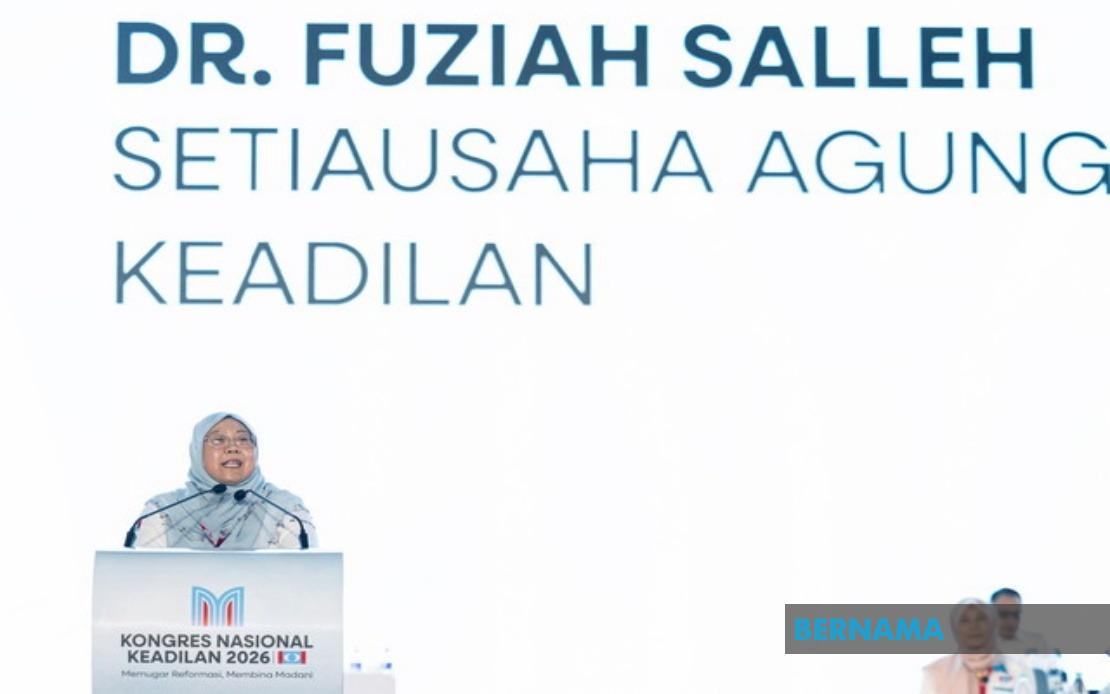
Parti Keadilan Rakyat's leadership has signalled that strengthening its intellectual foundation and public communication strategy around the MADANI Economy framework is essential if the party is to successfully advance its reform agenda and deliver meaningful improvements to citizens' lives. Party secretary-general Datuk Dr Fuziah Salleh made the call during the PKR National Congress 2026 in Melaka on August 16, stressing that party cadres at every organisational level must become more actively engaged in translating the party's ideological commitments into concrete administrative action.
The MADANI Economy represents PKR's policy blueprint for inclusive economic development, and Fuziah's remarks reflect growing party concern that while the conceptual framework exists, the mechanisms for communicating it effectively to the broader public remain underdeveloped. She outlined a need for PKR to recalibrate how it articulates this vision both internally among party members and externally to voters, suggesting that the party's current narrative strategy may not be fully capturing the framework's relevance to everyday Malaysians grappling with economic pressures and governance challenges.
For the reform agenda to gain meaningful traction, Fuziah emphasised that party leaders must acknowledge a fundamental reality: converting political thinking into institutional change demands unwavering discipline and sustained commitment from both party structures and government machinery. The language she employed—invoking military metaphors about winning wars and possessing sufficient ammunition—underscored the seriousness with which she views the implementation challenge ahead. PKR, she suggested, cannot afford half-measures or rhetorical flourishes disconnected from substantive policy delivery.
The secretary-general's intervention carries particular significance within the Malaysian political context, where parties frequently struggle with the gap between campaign promises and governance outcomes. PKR's history as an opposition movement transitioning into coalition government has meant navigating complex compromises and institutional constraints that can dilute ideological purity. By calling for strengthened discipline and commitment, Fuziah was essentially arguing that PKR must fortify its internal resolve to resist the organizational entropy that often accompanies power-sharing arrangements.
A striking element of Fuziah's message concerns PKR's positioning as a non-communal political force. She articulated a deliberate party philosophy rejecting the logic of ethnic entitlement, asserting instead that PKR's primary concern is championing economically disadvantaged populations regardless of their racial or religious background. This stance represents an intentional differentiation from Malaysia's traditional ethnic-based political paradigm, positioning PKR as a modernising force seeking to reorient political competition around socioeconomic rather than communal lines.
This ideological positioning, however, creates both opportunity and vulnerability for PKR. It appeals to urban, educated, and multiethnic constituencies seeking alternatives to identity politics. Yet it also exposes the party to accusations of inadequately serving particular communities' interests, particularly in contexts where communal concerns intersect directly with economic welfare. The MADANI Economy framework, with its emphasis on inclusive growth and broad-based prosperity, attempts to reconcile these tensions by arguing that universal prosperity benefits all communities more effectively than communal resource competition.
The timing of Fuziah's remarks reflects PKR's awareness that messaging discipline remains incomplete across party ranks. When political representatives at local, state, and federal levels offer inconsistent interpretations of party policy or fail to articulate the MADANI framework coherently, public confusion about the party's actual priorities results. Fuziah's call for improved communication implicitly acknowledges that PKR has not yet achieved the unified narrative capability necessary to dominate political discourse around economic reform.
Implementing institutional reforms—whether restructuring government agencies, introducing new fiscal mechanisms, or reorienting bureaucratic incentives—requires technical expertise, sustained political will, and public understanding of why changes matter. Fuziah's emphasis on the demanding nature of this task reflects recognition that Malaysians have grown weary of unfulfilled reform promises. The bar for credibility has risen considerably, making half-hearted or poorly communicated initiatives counterproductive to PKR's broader political project.
For the broader Southeast Asian region, PKR's reform agenda and its struggle to communicate it effectively offers instructive lessons. Across the region, parties committed to inclusive development and reduced identity-based politics face comparable challenges translating vision into action while maintaining internal coherence. The extent to which PKR succeeds in deepening its MADANI Economy narrative and translating it into measurable policy outcomes will influence how other regional political movements approach similar challenges.
The reference to justice principles as foundational to PKR's work signals that the party views the MADANI Economy not merely as a technical economic policy but as an expression of broader commitments to fairness and equitable opportunity. This framing attempts to elevate economic reform beyond technocratic debate into the realm of moral and political principle, potentially mobilising supporters beyond those motivated by narrower economic interest calculations.
Moving forward, PKR's effectiveness will depend significantly on whether senior leadership can impose sufficient discipline on party messaging while maintaining the coalition flexibility necessary for governing. The party must simultaneously present a coherent intellectual framework to dedicated supporters while navigating the compromises inherent in multiparty coalitions. Fuziah's speech suggests party leadership recognises these tensions and is positioning PKR to address them through renewed emphasis on ideological clarity and communicative discipline.

