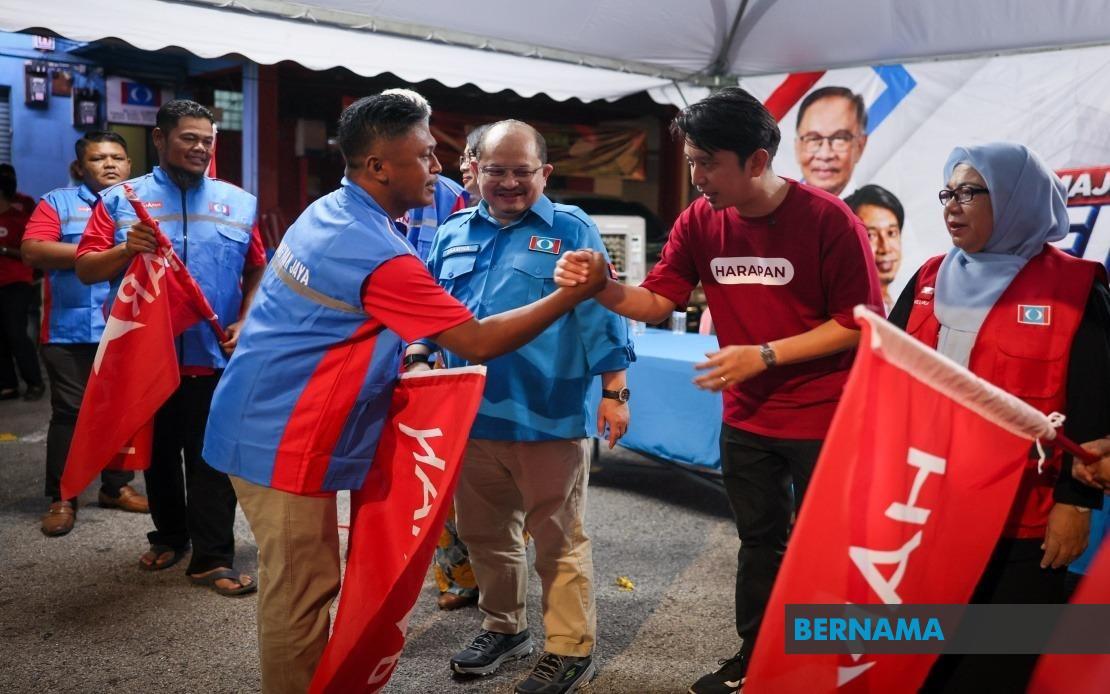
Parti Keadilan Rakyat (PKR) Melaka is taking a strategic approach to the forthcoming state election by accelerating its candidate selection process, according to Adam Adli Abdul Halim, acting chairman of the Melaka PKR Leadership Council. The initiative reflects a deliberate shift in how the party manages its electoral readiness, prioritising early announcement to give prospective candidates space to build momentum and connect with voters before the campaign formally kicks off.
The decision to move faster on candidate naming stems from the party's historical experience with delayed announcements. Adam Adli acknowledged that PKR has struggled previously with timing constraints caused by various logistical and procedural complications. By initiating the process earlier this cycle, the party hopes to avoid the rushed preparations that have occasionally handicapped candidates in previous contests. This administrative recalibration speaks to the broader challenge opposition parties face in competing effectively against incumbent-backed campaigns that enjoy institutional advantages.
A significant motivation driving the accelerated timeline is PKR's commitment to diversifying its candidate slate with fresh political faces. Rather than recycling the same pool of established politicians, the party is consciously building room for new entrants who lack previous electoral experience but bring different perspectives and community connections. This generational renewal carries particular weight in Malaysian politics, where voter sentiment increasingly favours candidates perceived as outsiders to the traditional political establishment.
The party is equally determined to achieve meaningful gender parity across its candidate pool. Adam Adli explicitly identified the need to balance representation between women and young people as a strategic priority. This reflects both changing voter expectations and recognition within PKR that female candidates often deliver stronger performance in their constituencies than party leadership traditionally assumed. Adequate advance notice allows women candidates to build campaign infrastructure and secure necessary resources without the disadvantage of compressed timelines.
The candidate screening process itself operates through a structured cascade beginning at branch level, moving through state-level review, and ultimately reaching the party president's office for final approval. This multi-stage approach theoretically allows grassroots input while maintaining central quality control. However, each procedural layer also represents a potential bottleneck, which is why advancing the timeline becomes crucial to prevent the entire process from collapsing under time pressure as polling day approaches.
Beyond candidate selection, PKR is simultaneously investing in organisational muscle-building across multiple constituencies. The party plans a series of election machinery launches spanning Tangga Batu, Hang Tuah Jaya, Alor Gajah, Masjid Tanah and Jasin. These rollouts serve dual purposes: they signal party presence and commitment to specific electoral divisions while creating visible momentum that energises party members and demonstrates organisational capacity to the broader electorate. Such groundwork proves essential in state elections, where local mobilisation often outweighs national narrative.
Adam Adli, who holds the portfolio of Deputy Minister of Higher Education, emphasised that establishing robust election machinery precedes candidate naming. This sequencing reflects sophisticated campaign thinking. A party with weak organisational structure cannot effectively deploy even the most talented candidate, while a well-oiled machinery can substantially elevate a relatively unknown contender's prospects. PKR's strategy suggests confidence that the right candidate will ultimately prove secondary to having supporters genuinely activated across communities.
The state election backdrop includes ongoing discussions between Pakatan Harapan (PH) and Barisan Nasional (BN) regarding potential cooperation arrangements. Adam Adli characterised these as currently informal rather than formally negotiated, though he confirmed both coalitions have indicated willingness to engage in structured talks. PH election director Datuk Seri Amirudin Shari has reportedly reached out to Melaka Chief Minister Datuk Seri Ab Rauf Yusof to arrange formal discussions, signalling that serious conversations may materialise soon.
These inter-coalition communications carry implications beyond simple seat-sharing agreements. Adam Adli specifically noted that dialogue serves to elevate electoral standards by reducing harsh and divisive campaigning tactics. This framing suggests PH recognises that Malaysian electoral discourse has increasingly deteriorated into personal attacks and unverified allegations rather than substantive policy debate. By signalling willingness to conduct elections on higher ground, opposition parties position themselves as defenders of institutional integrity.
However, PKR has clearly maintained contingency planning should BN negotiations break down. The party is explicitly preparing for scenarios in which Melaka becomes a three-way or multi-way contest rather than a binary affair. This flexibility indicates understanding that BN, as the state government, holds structural advantages in negotiating cooperation terms. Rather than desperation, independent readiness reflects confidence that PKR can compete effectively even without alignment with BN-affiliated parties.
For Malaysian voters and political observers, PKR's acceleration of candidate selection carries broader significance beyond Melaka's borders. The party's emphasis on fresh faces and demographic balance reflects generational shifts in Malaysian politics where younger and female voters increasingly expect representation that matches demographic reality. Melaka's election will likely serve as a testing ground for whether opposition parties can genuinely deliver on inclusion commitments or whether traditional power structures simply absorb new candidates into existing hierarchies.
The timeline pressure PKR is addressing through early candidate announcement extends to Southeast Asia's broader democratic landscape. Rapid institutional change, volatile electoral dynamics, and increased competition for political space require opposition coalitions to demonstrate organisational sophistication. PKR's strategic choices around pacing, machinery development, and candidate diversity will offer instructive lessons about what competitive opposition politics demands in contemporary Southeast Asian contexts.

