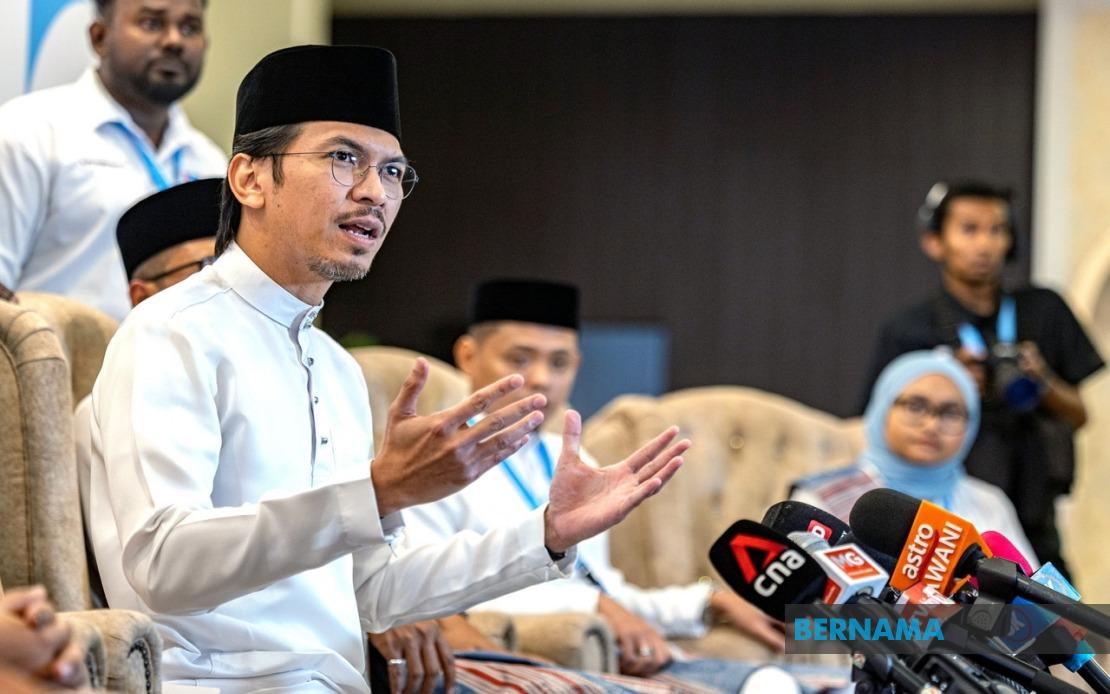
The departure of Parti Keadilan Rakyat members to rival political movements represents a minor issue that poses no meaningful challenge to the party's operational capacity or organisational strength, according to the party's youth wing leadership. Muhammad Kamil Ahmad Munim, chief of Angkatan Muda Keadilan (AMK), made the assertion during a press engagement held in Melaka on August 14 at the gathering for the 2026 AMK National Congress, pushing back against suggestions that the party faces internal cohesion problems.
The remarks from the youth wing chief appear calibrated to address mounting speculation about PKR's internal health following claims by a rival political formation. Parti Bersama Malaysia co-founder Datuk Seri Rafizi Ramli, a former PKR luminary who recently established the new party, stated that approximately 25 per cent of Bersama's recent membership comprised individuals who previously held PKR affiliations. Such a claim, if accurate, would suggest a meaningful drain of members from PKR to the nascent political entity, potentially signalling broader discontent within the party ranks.
However, Muhammad Kamil countered this characterisation by emphasising that PKR has not experienced statistically significant departures that would warrant concern. While acknowledging that some members have chosen to relinquish their PKR membership and migrate to other political homes, he framed the numbers as negligible within the broader context of the party's overall membership base. The youth wing chief declined to specify precise figures but indicated that internal party documentation does not support any narrative of destabilising exodus.
The youth wing's stance reflects a broader messaging strategy from PKR's senior leadership to project an image of institutional stability despite organisational challenges that extend beyond simple defections. The party has had to navigate the extended leave taken by Deputy President Nurul Izzah Anwar, creating a leadership vacuum at a critical juncture when Malaysian politics is sharpening focus on upcoming electoral contests. Muhammad Kamil sought to minimise the significance of this absence by emphasising that PKR's governance structures have distributed responsibilities across other senior figures, ensuring continuity of direction and operational momentum.
The distribution of duties following Nurul Izzah's leave has transferred key responsibilities to Vice-President Datuk Seri Saifuddin Nasution Abdullah and PKR Election Director Datuk Seri Amirudin Shari, creating an interim leadership arrangement that ostensibly maintains functional capacity. Muhammad Kamil suggested that this redistribution of portfolios has operated smoothly, with party machinery continuing to function according to predetermined protocols and without discernible friction. The emphasis on clear procedural delineation appears designed to convince both internal constituencies and external observers that PKR retains institutional resilience despite personnel absences.
What emerges from this episode is a portrait of a major political entity attempting to manage multiple pressures simultaneously. PKR must contend not merely with routine member movement to other parties—a phenomenon common across Malaysian politics—but with the particular challenge of members defecting to a new political vehicle founded by a figure who held prominent positions within the party hierarchy. The establishment of Bersama under Rafizi's stewardship carries symbolic weight, suggesting that at least some former PKR figures believed existing political formations could not adequately represent their policy preferences or political aspirations.
The timing of these developments carries implications for PKR's electoral positioning as Malaysia approaches state elections and the next general election cycle. Political parties across the Malaysian landscape must demonstrate unity and momentum during pre-election periods to project credibility with voters. Member defections, regardless of their quantitative significance, generate narrative momentum suggesting weakness or disillusionment. The fact that PKR's youth wing felt compelled to issue public statements emphasising stability suggests that internal circles recognise the reputational costs of even small-scale member losses, particularly when those departures involve migration to a rival entity led by a prominent PKR alumnus.
Muhammad Kamil emphasised that grassroots members have accepted party leadership's explanations regarding the deputy president's extended leave with understanding and open-mindedness, suggesting that messaging efforts at state and branch levels have successfully managed potential discord. This assertion about acceptance at lower organisational tiers represents a claim that requires independent verification, as perceptions of crisis or instability at the leadership level can generate frustration among ordinary members regardless of official messaging efforts. The fact that the youth wing chief felt obliged to cite this grassroots acceptance implies some awareness that scepticism might exist concerning the party's current trajectory.
PKR's current positioning reflects broader dynamics within Malaysian political coalitions, where member loyalties remain contingent and shifting political landscapes create opportunities for new entrants to attract dissatisfied voters and activists. The emergence of Bersama, while incorporating former PKR members, does not necessarily presage PKR's broader collapse; rather, it demonstrates the ordinary churn characteristic of Malaysian politics. Nevertheless, the concentration of departing members within a single rival entity led by a prominent former PKR figure distinguishes this situation from routine background-level membership fluctuations that occur in all political parties.
Looking forward, PKR faces the imperative to retain member confidence while simultaneously addressing policy and organisational questions that may have prompted some defections in the first place. The party's effectiveness in the state and general elections will ultimately determine whether current reassurances about stability prove justified or whether member departures accelerate should electoral prospects diminish. For now, PKR's youth wing leadership has drawn a line in the sand, asserting that internal cohesion remains intact and that the party's organisational machinery continues operating at full capacity despite leadership gaps and member losses to rival formations.

