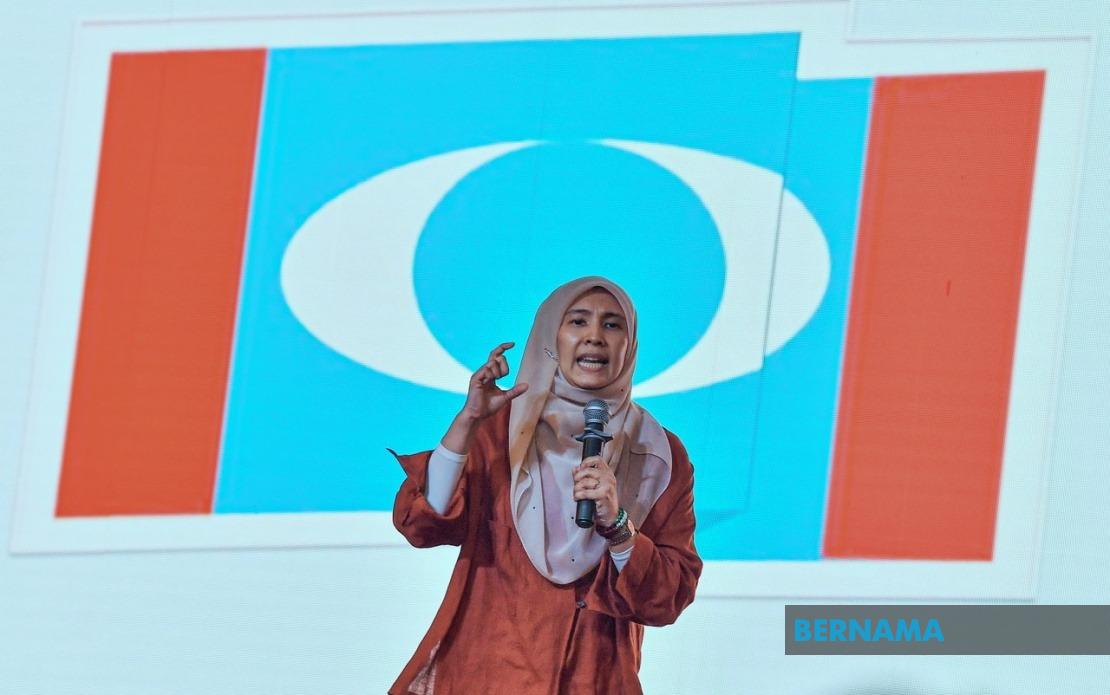
The leadership of Parti Keadilan Rakyat has sanctioned a significant organisational restructuring at its highest levels, granting Nurul Izzah Anwar, the party's Deputy President, a temporary leave from her position. The decision was formalised during a Central Leadership Council meeting in Kuala Lumpur on August 6, with the leave to take effect after the 2026 PKR National Congress, scheduled for mid-August in Melaka. The party has yet to announce when Nurul Izzah will formally return to her responsibilities, leaving room for flexibility in the arrangement.
According to Datuk Seri Fahmi Fadzil, PKR's Information Chief and Minister of Communications, the council deliberated extensively on Nurul Izzah's request to temporarily relinquish her responsibilities before reaching consensus. The outcome reflects an effort within the party hierarchy to accommodate personal or professional considerations whilst maintaining continuity in leadership functions. Fahmi's role as both party spokesperson and government minister underscores how PKR leadership positions intersect with Cabinet-level portfolios, a structural reality that frequently shapes party decision-making at the highest echelon.
The council moved swiftly to ensure uninterrupted operational capacity by designating Datuk Seri Saifuddin Nasution Ismail, the party's Vice-President, to step into the Deputy President role on an interim basis. This arrangement preserves the vertical chain of command whilst avoiding a protracted leadership vacuum. Saifuddin's assumption of duties demonstrates the party's confidence in his ability to discharge supplementary responsibilities alongside his existing Vice-Presidential obligations. The transition maintains institutional stability during a period when PKR faces critical electoral consolidation across multiple state jurisdictions.
Before her formal departure from active duties, Nurul Izzah will preside over two significant ceremonial occasions. She is scheduled to officiate the PKR Women's and Youth Wing congresses on August 14, positioning her as the ceremonial figurehead at these constituency gatherings. This sequencing allows her to maintain symbolic leadership presence at critical junctures within the party's organisational calendar whilst her responsibilities transfer to Saifuddin. The arrangement reflects a measured approach to the transition, avoiding any suggestion of abrupt departure or organisational rupture.
The 2026 PKR National Congress, to be convened in Melaka from August 15 to 16, will serve as the formal inflection point for this leadership reconfiguration. The congress represents one of the party's flagship assemblies, where delegates from branch-level organisations converge to deliberate party strategy, endorse leadership decisions, and chart the course for the ensuing organisational period. The timing of Nurul Izzah's leave relative to this congress allows the broader membership to contextualise the decision within the party's larger governance framework.
Simultaneously, the council made complementary personnel adjustments to strengthen electoral preparedness. Datuk Seri Amirudin Shari, another Vice-President, will now assume the full responsibilities of PKR Election Director, a portfolio previously managed alongside other duties. This consolidation addresses capacity constraints within the party's electoral machinery, concentrating strategic authority over campaign operations, candidate selection, and polling logistics within a single dedicated office. For a party navigating the complex terrain of Malaysian federalism—where state, federal, and local electoral cycles frequently overlap—robust electoral directorship assumes heightened importance.
PKR's recent performance in subnational contests shaped the context for these structural decisions. The party acknowledged the outcomes of concurrent Johor and Negeri Sembilan state elections with measured equanimity, extending gratitude to cadres and acknowledging service rendered by outgoing officeholders. Datuk Seri Aminuddin Harun, the former Negeri Sembilan Menteri Besar who concluded his tenure after two terms, received formal appreciation from the council for his stewardship. These acknowledgments, though ceremonial in character, signal the party's institutional focus on consolidating gains and maintaining morale amongst state-level operatives following electoral contests that produced mixed outcomes.
The council's approval of 3,533 newly registered members—who submitted applications through online channels between mid-July and early August—points to sustained grassroots recruitment efforts. This membership expansion, whilst numerically modest relative to the party's overall strength, demonstrates continued organisational activism in membership acquisition. For PKR, which maintains aspirations toward majority-building at federal level, sustained membership growth provides quantitative foundation for expanded volunteer networks, fundraising capacity, and grassroots mobilisation.
Nurul Izzah's temporary leave arrives at a juncture when PKR confronts multifaceted challenges across Malaysia's federal structure. As the senior coalition partner within Pakatan Harapan, PKR bears disproportionate responsibility for coalition cohesion and electoral performance. The party's internal restructuring reflects pragmatic acknowledgment that leadership flexibility—accommodating individual circumstances whilst preserving institutional function—constitutes sound management practice. Saifuddin's interim assumption of Deputy Presidential duties ensures that the party's executive apparatus continues operating at full capacity during a period of organisational transition.
The broader implications for Malaysian political observers centre on how coalition governance accommodates leadership transitions within constituent parties. Unlike monolithic structures where leadership succession triggers wholesale organisational convulsion, PKR's delegation of interim responsibilities demonstrates institutional maturation. The party has engineered continuity through distributed leadership authority, allowing Nurul Izzah space for personal or professional priorities whilst maintaining her ceremonial role at critical party gatherings before her formal leave commences.
Looking forward, the date Nurul Izzah returns to active Deputy Presidential duties remains unannounced, preserving organisational optionality. Whether her leave duration extends through forthcoming state elections, anticipated federal parliamentary calendar events, or other chronological markers remains an open question. This ambiguity permits flexible adjustment should circumstances demand extended absence or, conversely, earlier resumption of responsibilities. For a party navigating the volatile landscape of Malaysian coalition politics, such structural flexibility constitutes valuable strategic asset.

