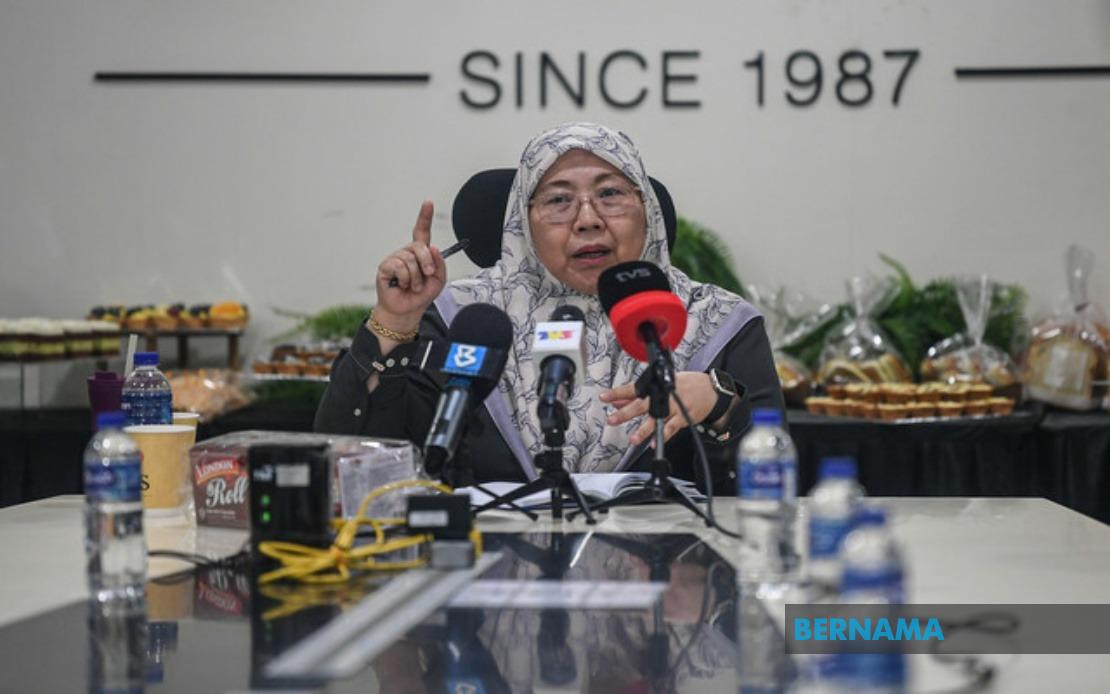
PKR secretary-general Datuk Dr Fuziah Salleh has dismissed a recent exodus of party members to the MIC as fundamentally driven by personal grievance rather than ideological disagreement, characterising the departures as "rather strange" during a press engagement in Johor Bahru. The remarks came shortly after former Johor PKR State Leadership Council vice-chairman M. Murugan announced on June 28 that approximately 200 supporters had left the party to join the MIC Iskandar Puteri division, marking a notable setback for the ruling coalition just days before the scheduled state election.
Fuziah's assessment reflects internal party analysis suggesting that frustrated ambitions within PKR's organisational hierarchy, rather than substantive policy disputes, motivated the switch. She pointed to public statements from departing members in which they themselves cited disappointment at being overlooked for appointments, suggesting that personal advancement concerns trumped party loyalty. This pattern of departure—rooted in patronage rather than principle—reveals a persistent challenge within Malaysian political parties where intra-party competition for roles and resources can overshadow broader political objectives, particularly during election cycles when resources and positions appear scarce.
The timing of these defections carries particular significance in the context of Malaysian electoral dynamics. The Johor state election, scheduled for July 11 with early voting on July 7, will determine the distribution of 56 seats among 172 candidates competing in a traditionally competitive state. Losing roughly 200 activists to a rival coalition weeks before polling day represents more than a symbolic setback; such departures can translate into weakened grassroots organisation, reduced volunteer capacity, and potential loss of accumulated institutional knowledge in specific constituencies. For PKR, which has invested considerable effort in building a presence in Johor following the 2022 general election, the loss signals vulnerability to defection pressures that competitors may exploit.
Fuziah's response, while maintaining public composure, implicitly acknowledges that PKR cannot satisfy all internal ambitions simultaneously. By wishing the departing members "all the best" in securing "significant positions" within the MIC, she offered a somewhat pointed commentary on the likelihood of their advancement prospects in a party where they were previously unknown. The MIC, as a component of the BN coalition, operates within a more established power structure with its own historical hierarchies and patronage networks, potentially making newcomers' path to influence equally challenging, though the departing members may have calculated otherwise or prioritised immediate status over long-term advancement potential.
Beyond internal PKR dynamics, Fuziah's comments arrived amid broader coalition positioning ahead of Johor's election. She responded to recent statements by PAS president Tan Sri Abdul Hadi Awang urging voters to reject Pakatan Harapan, interpreting such rhetoric as signalling potential rapprochement between the Islamist party and the BN coalition. This represents a significant shift in the political landscape, as PAS has oscillated between various coalition alignments over recent years, creating uncertainty regarding the stability of both the government coalition and its primary opposition. For Johor voters, such signals complicate electoral calculations and introduce questions about which alliances will prove durable post-election.
Fuziah's analysis of Perikatan Nasional's electoral strategy proved more optimistic for PH's prospects than recent polling trends might otherwise suggest. She contended that PN's apparent effort to attract BN-leaning voters could backfire by exposing latent tensions within the coalition, particularly given PAS's recent statements about supporting PH's departure from voters' considerations. This internal friction within PN and its relationship with BN suggests that no opposition coalition presents a unified, internally cohesive alternative to the government, a factor that PKR and PH may emphasise in their remaining campaign messaging to undecided voters and fence-sitters.
From a Malaysian political economy perspective, the pattern of members leaving PKR for the MIC reflects broader structural incentives within Malaysian politics that frequently privilege personalised patronage networks over institutional loyalty. Political parties, regardless of coalition affiliation, operate within a system where access to government contracts, civil service positions, business licenses, and development funds flows through party channels. Ambitious politicians and grassroots members calculate their expected returns from party affiliation based on perceived proximity to power and the likelihood of personal advancement. When such calculations shift, defection becomes rational behaviour rather than disloyalty, explaining why contemporary Malaysian politics witnesses frequent movement of members across party lines without corresponding shifts in their policy preferences.
The geographic focus on Johor underscores the state's ongoing political contestation. As Malaysia's second-largest state by population and a traditional BN stronghold that nevertheless swung toward PH in recent electoral cycles, Johor remains a barometer of broader national sentiment. PKR's expansion into Johor has been crucial to PH's viability as a government coalition, and the party invested significant organisational resources building membership and winning local support. Defections at this moment, therefore, carry outsized symbolic weight beyond their immediate numeric impact.
Fuziah's framing of departing members as primarily motivated by position-seeking rather than principled disagreement serves multiple rhetorical purposes for PKR. It allows the party to dismiss the defections as insignificant—essentially arguing that only opportunists were affected—while simultaneously cautioning PKR's remaining membership that unfulfilled advancement aspirations remain a potential source of further departures. The implicit message to internal audiences emphasises that party loyalty and organisational discipline matter more than individual ambitions, a necessary correction if PKR hopes to stabilise membership rolls and maintain campaign intensity through polling day.
Moving forward, PKR faces the challenge of replacing departing activists' organisational contributions while defending its Johor footprint against multiple opponents operating from different strategic bases. The MIC, as the beneficiary of these defections, gains experienced local figures who understand PKR's operational strengths and vulnerabilities, potentially informing more effective opposition campaigns in specific constituencies. This knowledge transfer represents an underappreciated cost of defection for departing-party organisations, as departing members carry intelligence about voter contacts, internal processes, and campaign strategies.
For Malaysian voters and observers, the PKR defections exemplify recurring patterns in the country's political system where electoral cycles bring strategic repositioning by ambitious politicians and members seeking to align with perceived winning coalitions or achieve personal advancement. The July 11 Johor election will test whether such defections, combined with broader opposition coalition positioning, can overcome PH's incumbent advantages, or whether the government coalition's structural advantages and internal discipline prevail despite recent setbacks and emerging rivalries within opposition ranks.

