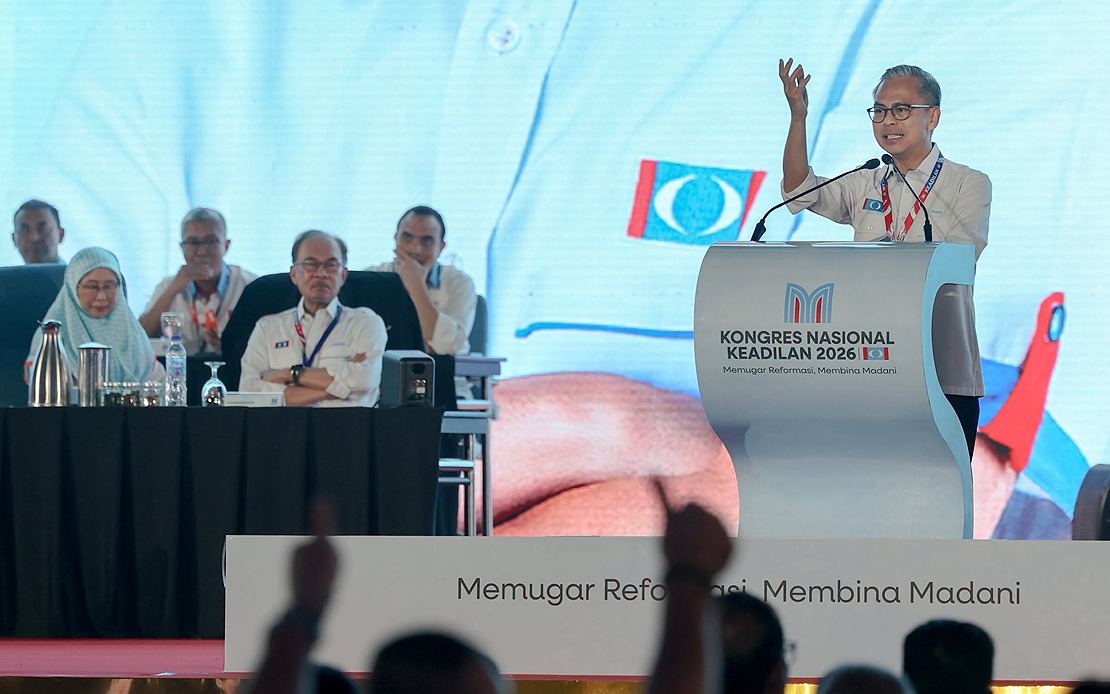
Parti Keadilan Rakyat wrapped up its 2026 National Congress in Kuala Lumpur on August 16, with party officials framing the two-day gathering as a critical juncture for reassessing the party's mission and refocusing efforts on its reform platform. Information Chief Datuk Seri Fahmi Fadzil characterized the congress as far more than a ceremonial occasion marked by speeches and procedural debates, instead describing it as a substantive exercise in institutional introspection where party delegates could examine both the progress made and shortcomings encountered since the previous assembly.
Fahmi underscored that the congress provided space for party members to engage in honest self-assessment, actively solicit feedback from grassroots supporters scattered across Malaysia's diverse constituencies, and critically evaluate which organizational strengths could be leveraged while addressing persistent structural weaknesses. This emphasis on listening and reflection reflects a strategic recognition within PKR that maintaining relevance in Malaysian politics requires more than periodic gatherings—it demands sustained dialogue between leadership and membership. The forum allowed delegates to collectively chart direction and renew their individual and collective commitment to the party's foundational principles in an era marked by shifting political dynamics and evolving voter expectations.
President Datuk Seri Anwar Ibrahim's keynote address delivered what party officials characterized as a forceful articulation that the reformasi struggle—the broader reform movement that has animated PKR since its founding—must remain the north star guiding party strategy and operations. Anwar's message underscored that party strength ultimately derives not from institutional machinery or political maneuvers, but from steadfast alignment with public interest and genuine responsiveness to citizen concerns. This framing places the burden on every PKR figure to demonstrate through action that the party's avowed commitment to reform translates into tangible improvements in people's daily lives, from service delivery to policy outcomes.
In his post-congress reflections, Fahmi articulated an operational roadmap that begins with grassroots reconnection. Party members are being directed to return to their home constituencies not as distant administrators issuing directives, but as engaged listeners genuinely seeking to understand the preoccupations affecting ordinary Malaysians. This involves structured engagement to comprehend voter concerns on cost of living, employment prospects, infrastructure quality, health and education services, and governance accountability. The implicit message is that PKR's reform agenda cannot remain abstract or elite-focused; it must be grounded in real problems experienced by real communities.
Fahmi also emphasized the necessity of organizational discipline and cohesion as PKR navigates an increasingly competitive political environment. The call for members to operate as a unified, disciplined force represents an acknowledgment that factional tensions or inconsistent messaging can undermine even well-intentioned policy initiatives. In Malaysian politics, where coalition building and intra-party stability significantly impact a party's capacity to implement its platform, such emphasis on institutional discipline carries strategic weight. The party must project both ideological coherence and operational competence to sustain voter confidence and maintain influence within coalition structures.
The acknowledgment that political challenges will persistently confront PKR reflects realistic assessment of the obstacles facing any reform-oriented political movement in contemporary Malaysia. These challenges range from entrenched interests resistant to change, to resource constraints that limit organizational reach, to the natural erosion of political support that occurs when governance reality fails to match campaign promises. By preparing party members for ongoing adversity while reaffirming foundational principles, PKR leadership aims to cultivate organizational resilience—the capacity to absorb setbacks without abandoning core commitments.
For Malaysian voters and observers of regional politics, PKR's positioning carries implications beyond the party's immediate institutional interests. As a component of the Pakatan Harapan coalition and a consistent advocate for institutional reform, PKR's trajectory influences the broader reform agenda in Malaysian politics. The party's success or failure in translating congress resolutions into sustained grassroots mobilization and policy impact will shape whether reform momentum can be maintained despite the inevitable compromises inherent in coalition governance. This is particularly significant given Malaysia's track record of reform movements that mobilized public enthusiasm but struggled to translate initial energy into lasting institutional change.
The emphasis on returning to constituencies and strengthening organizational capacity also suggests PKR recognizes that its political future depends on demonstrating concrete results beyond rhetorical commitment. Party machinery that operates effectively at local level—solving constituent problems, delivering services, addressing grievances—builds the foundation for electoral resilience and deeper institutional legitimacy. This ground-level work, while unglamorous compared to parliamentary debates or policy announcements, ultimately determines whether a party can sustain voter confidence across multiple electoral cycles.
Fahmi's final observation that congress conclusion marks beginning rather than endpoint of party responsibility underscores the challenging reality of political leadership. Grand assemblies generate visibility and symbolism, but sustained impact requires continuous effort in between such gatherings. The message to PKR members is clear: the congress renewed formal party commitments, but each individual member must now ensure that renewal translates into daily practice within their respective communities. This framing places responsibility squarely on the organization's distributed membership rather than relying primarily on central leadership to drive implementation.

