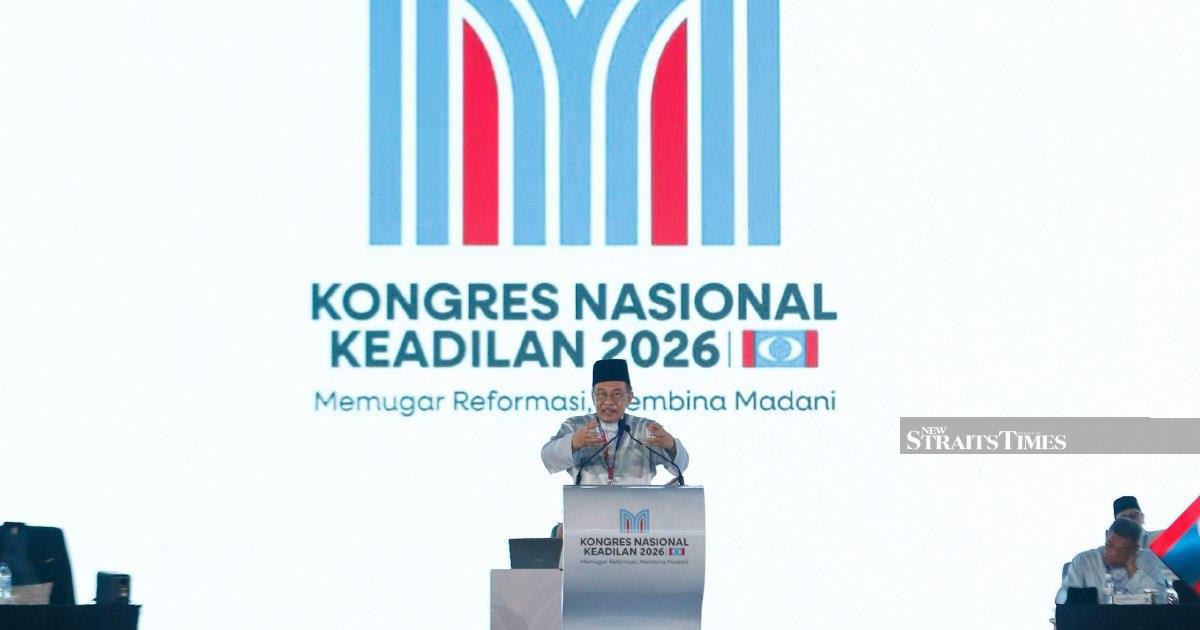
During the PKR Congress in Ayer Keroh, party president Datuk Seri Anwar Ibrahim publicly acknowledged that misappropriation of funds had taken place at Tabung Haji, drawing upon documented findings from the Royal Commission of Inquiry examining the institution's operations and governance failures.
Anwar's statement represents a significant acknowledgment of institutional wrongdoing at one of Malaysia's most sensitive organisations, which manages savings and investment funds for Muslim pilgrims preparing for the Hajj. The embezzlement allegations have long troubled the agency's reputation and raised concerns among millions of Malaysian account holders who entrust their life savings to the institution. The RCI's formal investigation into Tabung Haji operations provided substantial documentation of how funds designated for pilgrims' use were diverted through irregular means.
The PKR president's remarks carry particular weight as they reflect growing political consensus around accountability at major public institutions. By publicly validating the RCI's conclusions at a major party gathering, Anwar underscored his administration's commitment to addressing systemic corruption and financial mismanagement that had persisted across previous governments. This stance differentiates his approach from earlier administrations that had been reluctant to fully acknowledge the extent of institutional failures.
Tabung Haji's financial troubles have had cascading effects across Malaysia's banking and investment landscape. The institution manages billions of ringgit in pilgrim savings, making any breach of fiduciary duty a matter of national concern. Account holders ranging from working families to elderly retirees depend on the fund to preserve capital designated specifically for one of Islam's Five Pillars. When embezzlement occurs, it violates not only financial trust but also a religious obligation that millions of Malaysians hold sacred.
The Royal Commission's investigation into Tabung Haji uncovered systemic weaknesses in governance, internal controls, and oversight mechanisms that enabled unauthorised fund transfers. These findings highlighted how institutional vulnerabilities can persist across multiple administrations when political will to enforce accountability remains weak. The RCI's detailed documentation provided a roadmap for reform that subsequent leadership could reference when implementing structural changes.
Anwar's acknowledgment at the PKR Congress serves multiple purposes within Malaysia's political context. It signals to parliament and the public that the current administration takes seriously the findings of formal investigative bodies and intends to act on their recommendations. For PKR members, the statement reinforces the party's anti-corruption messaging that has been central to its political branding since the Reformasi movement. Additionally, it demonstrates that substantive governance issues transcend party politics and demand cross-party attention.
The implications for Malaysian citizens are substantial. Millions of account holders at Tabung Haji have legitimate concerns about whether their savings remain secure and whether embezzled amounts will be recovered and restored. The RCI findings and subsequent political acknowledgment create pressure on government authorities to pursue criminal investigations and seek restitution. Transparency about past wrongdoing becomes essential for rebuilding public confidence in the institution's future stewardship.
For Southeast Asia more broadly, Malaysia's handling of institutional corruption at Tabung Haji offers lessons about the importance of independent investigative commissions and political willingness to act on their findings. Regional economies increasingly recognise that financial sector integrity directly affects investment confidence and economic stability. Countries monitoring Malaysia's response to the RCI findings will observe whether acknowledgment translates into concrete remedial action.
The RCI's work on Tabung Haji also underscores broader governance challenges facing Malaysia's public institutions. Religious institutions managing public funds face particular scrutiny because of their role in serving specific demographic groups whose trust is especially important. When that trust is violated through embezzlement, the impact extends beyond financial loss to affect community cohesion and public faith in institutional leadership. Anwar's statement indicates awareness that restoring confidence requires honest acknowledgment before meaningful reform can proceed.
Moving forward, substantive questions remain about implementation of RCI recommendations. Will the government pursue criminal prosecutions against those responsible for embezzlement? Will legislative amendments strengthen governance frameworks at Tabung Haji and similar institutions? Will recovered funds be returned to affected account holders? The rhetorical acknowledgment at the PKR Congress must translate into institutional action that demonstrates genuine commitment to protecting public assets.
Anwar's remarks at Ayer Keroh also reflect evolving standards of accountability in Malaysian public discourse. In earlier eras, admitting embezzlement at major public institutions might have been politically costly. That party leaders now reference RCI findings openly suggests a shift toward greater transparency and acceptance that honest diagnosis precedes effective cure. For Tabung Haji specifically and Malaysian governance generally, this represents progress toward institutional integrity.

