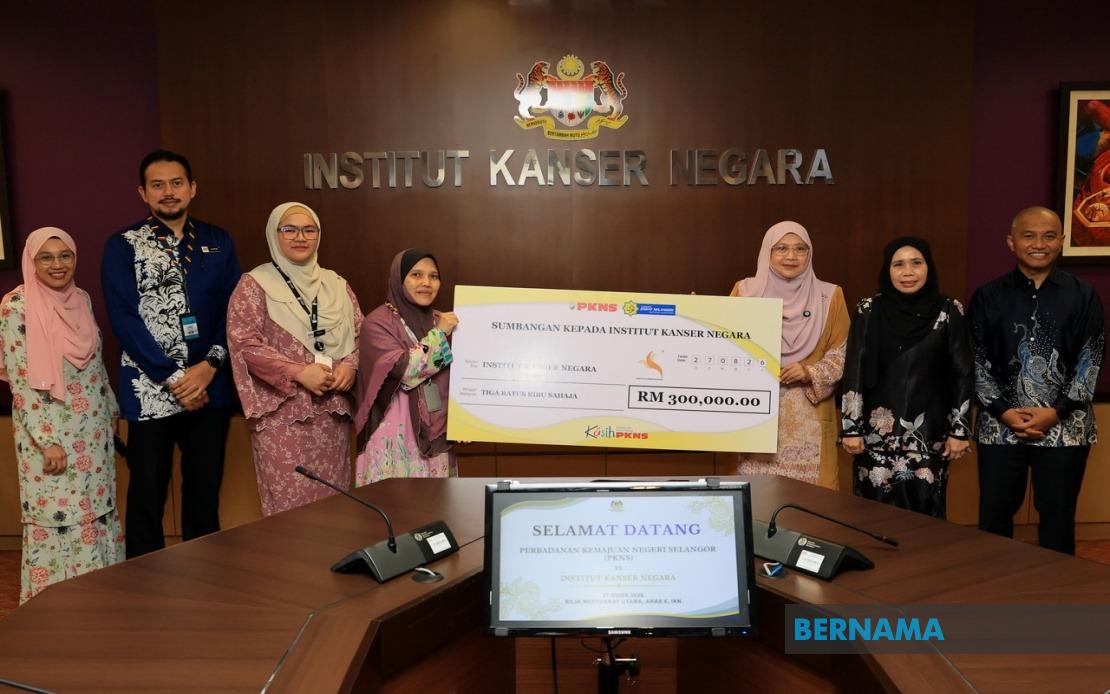
The Selangor State Development Corporation (PKNS) has announced a RM300,000 allocation to support cancer patients undergoing treatment at the National Cancer Institute (IKN), providing financial relief to between 50 and 100 individuals navigating the complex journey of cancer care. The contribution, presented in Putrajaya on August 27, represents a meaningful step in addressing the substantial financial pressures that accompany oncological treatment in Malaysia's public healthcare system.
Sapna Turmidi, senior general manager of PKNS Corporate Services, framed the donation as an expression of corporate values that extend beyond monetary support. She emphasised that meaningful assistance requires a holistic approach encompassing emotional encouragement, moral solidarity, and genuine compassion for those grappling with life-threatening illness. This broader interpretation of corporate responsibility reflects growing recognition among Malaysian institutions that cancer patients require multifaceted assistance beyond their medical needs.
The personal catalyst for PKNS's initiative emerged from tragedy within the organisation itself. The death of a staff member from glioma, who succumbed just four months after diagnosis, prompted leadership to reassess the agency's community commitments. This loss provided PKNS with intimate understanding of the vulnerabilities cancer patients and their families experience, transforming abstract sympathy into concrete action. The staff member's February diagnosis and subsequent passing at IKN crystallised the organisation's resolve to contribute meaningfully to the institute's patient welfare programmes.
Structurally, PKNS has channelled the assistance through wakalah zakat, a shariah-compliant mechanism for zakat distribution, executed in partnership with the Selangor Zakat Board (LZS). This approach targets Muslim patients classified under the asnaf al-Gharimin category—those burdened by debt or financial hardship—ensuring that assistance reaches those most vulnerable to treatment abandonment due to economic constraints. The programme launches coincidentally with PKNS's 62nd anniversary on August 1, adding symbolic significance to the corporation's commitment to Selangor's social development agenda since its establishment in 1964.
From the healthcare provider's perspective, Dr Nur Aslina Bahakodin, director of IKN, painted a stark picture of institutional funding gaps. The National Cancer Institute requires between RM1 million and RM2 million annually to adequately support underprivileged patients throughout their treatment trajectories. These funds address not merely curative interventions but encompass the ecosystem surrounding cancer care—travel expenses to frequent appointments, specialised nutritional support tailored to treatment regimens, and assistance to family members who often sacrifice income to provide caregiving support.
Financial barriers to continuous care represent a critical public health concern often overlooked in discussions of treatment outcomes. Dr Nur Aslina highlighted how economic constraints force some patients to forgo follow-up appointments, creating dangerous discontinuities in treatment protocols. Such gaps undermine the effectiveness of even well-designed therapeutic interventions, potentially transforming treatable diagnoses into terminal conditions. The RM300,000 from PKNS, whilst significant, addresses only a fraction of institutional need, underscoring the systemic resource constraints facing Malaysian cancer care infrastructure.
The distribution mechanism reflects careful targeting of assistance. IKN's Medical Social Work Unit will conduct socio-economic assessments of both patients and their immediate family circumstances before allocating funds. This gatekeeping approach ensures resources reach those facing genuine hardship rather than those with alternative financial capacities, maximising the intervention's impact on vulnerable populations. Such rigorous assessment protocols represent best practice in charitable healthcare funding, though they also impose administrative burdens on already-stretched social work departments within public institutions.
Dr Nur Aslina noted that rising cancer detection rates in Malaysia stem partly from expanded public awareness and improved screening programme participation. Early diagnosis substantially improves prognosis and treatment success rates, yet screening access remains unevenly distributed across socioeconomic strata. Breast cancer emerges as the predominant malignancy among Malaysian women, whilst colorectal cancer leads among men, patterns reflecting both epidemiological reality and screening infrastructure targeting these common cancers.
The PKNS contribution arrives within a broader ecosystem where corporate bodies, zakat institutions, and non-governmental organisations increasingly complement government healthcare provision. This tripartite model—public sector, charitable funding, and community support—has become essential to sustaining cancer care systems facing demographic pressures and rising treatment costs. For Malaysian policymakers, the reliance on corporate benevolence raises uncomfortable questions about whether publicly-funded healthcare institutions should depend on voluntary corporate charity to meet basic patient welfare needs, or whether this partnership model represents a sustainable long-term solution requiring greater public investment.
For regional observers, Malaysia's approach demonstrates how zakat mechanisms traditionally embedded within Islamic finance can be redirected toward healthcare provision, bridging religious obligation with modern public health challenges. The PKNS-IKN partnership illustrates how development corporations—typically focused on infrastructure and economic projects—increasingly recognise their role in addressing social determinants of health. This expansion of corporate social responsibility into healthcare financing reflects broader Southeast Asian trends where private sector engagement increasingly subsidises public health infrastructure, particularly in supporting vulnerable populations navigating catastrophic illness.

