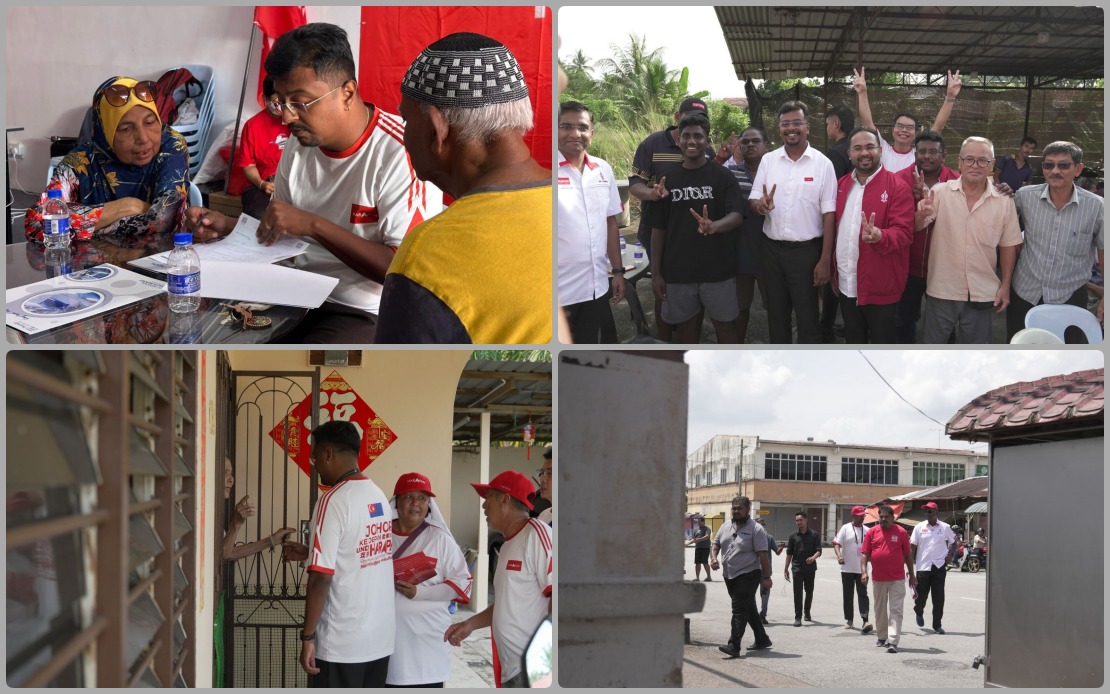
The Pakatan Harapan candidate contesting the Paloh state assembly seat, Dr. A. Ruban, was admitted to hospital in Batu Pahat on July 7 to receive treatment for a slipped disc condition that flared up during the final phase of the Johor state election campaign. His campaign manager, Abdul Majid Abd Aziz, confirmed to Bernama that the admission became necessary after Dr. Ruban experienced acute pain that severely restricted his mobility from early morning, forcing him to seek immediate medical intervention at midday.
The hospitalisation underscores the physical toll that intensive campaigning can exact on political candidates in Malaysia, particularly during state elections when ground-level engagement becomes paramount to voter outreach. Dr. Ruban's medical history includes previous spinal surgery related to his chronic disc condition, a vulnerability that appeared to have been exacerbated by the gruelling schedule of community engagement required in contemporary electoral contests. His campaign team attributed the recurrence of symptoms to cumulative fatigue and the demanding itinerary of walkabouts and community interactions that have characterised the lead-up to the Johor polls.
Abdul Majid provided reassurance regarding Dr. Ruban's prognosis, describing his condition as non-critical and indicating that medical professionals anticipated discharge within one to two days. This optimistic medical assessment suggested the candidate would likely be able to resume some campaign activities before voting day on July 11, though any strenuous field work would presumably remain restricted during his immediate recovery period. The campaign manager's statement carefully balanced concerns about the candidate's wellbeing against the electoral imperatives facing the coalition in a closely contested race.
Critically, the Paloh seat represents a four-way competitive struggle that reflects the fragmented political landscape currently defining Malaysian state-level contests. Beyond Dr. Ruban's PH candidacy, the race features D. Jeevakumar representing Perikatan Nasional, incumbent Lee Ting Han standing for Barisan Nasional, and G. Kamaleswaren contesting as an independent candidate. This multiplicity of contenders suggests significant voter volatility and suggests none of the major blocs can claim assured dominance in what remains a closely balanced electoral jurisdiction.
The PH machinery's commitment to sustaining campaign momentum despite their candidate's hospitalisation demonstrates how modern political organisations have developed contingency protocols to manage unexpected disruptions during election periods. Abdul Majid explicitly stated that the coalition's ground operations would persist uninterrupted, with party members and volunteers continuing direct voter engagement independently of Dr. Ruban's physical presence. This distributed campaign structure reflects organisational maturity, allowing political messages and policy manifestos to circulate throughout the constituency even when the principal candidate requires medical attention.
For Malaysian voters and particularly those in Johor, candidate health and campaign disruptions raise broader questions about the sustainability of electoral demands and the adequacy of rest periods within compressed campaign timelines. The incident involving Dr. Ruban parallels occasional health challenges affecting candidates in other jurisdictions, highlighting how the intensity of modern campaigning—with its emphasis on personal visibility, constant community engagement, and relentless scheduling—can pose genuine risks to candidates' physical wellbeing. This dynamic takes on particular significance in a tropical climate where heat-related stress compounds existing health vulnerabilities.
The timing of Dr. Ruban's hospitalisation, occurring during early voting on July 7 with main polling day scheduled for July 11, meant the candidate faced a compressed recovery window before potentially resuming active campaigning. The Johor state election represents the 16th such contest in the state's electoral history, occurring within the broader context of Malaysia's evolving political volatility and the shifting coalitional alignments that have characterised the post-2018 landscape. Johor, as one of Malaysia's largest and most politically significant states, typically attracts intensive campaign efforts from competing coalitions seeking to demonstrate organisational capacity and grassroots support.
Dr. Ruban's situation also illuminates the personal sacrifices demanded of political candidates who commit to intensive community engagement as integral to their electoral strategies. The decision to prioritise door-to-door contact and personal presence in communities, while potentially more electorally effective than alternative campaign methods, creates cumulative physical demands that candidates with pre-existing health conditions must navigate carefully. The balance between demonstrating commitment through personal presence and protecting one's health remains an ongoing tension within Malaysian electoral politics.
From the PH coalition's strategic perspective, the incident reinforces the importance of having robust support structures and succession planning for situations where principal candidates become temporarily incapacitated. The explicit assurance from campaign leadership that party machinery would sustain voter outreach signalled organisational confidence and resilience, potentially mitigating any negative perceptions that might otherwise emerge from candidate absence. Such messaging becomes particularly important in competitive multi-cornered races where any appearance of organisational weakness might be exploited by rival candidates seeking to gain momentum in the election's final days.
The broader Johor electoral context surrounding Dr. Ruban's hospitalisation reflects Malaysia's contemporary political dynamics, where traditional two-coalition contests have increasingly fractured into multi-sided competitions featuring independents and shifting coalition alignments. This competitive environment raises stakes for all participating candidates and their organisations, intensifying pressure to maximise visibility and ground engagement right up to polling day. The Paloh seat exemplifies this trend, with four distinct candidates representing different political forces seeking voter support, suggesting no obvious frontrunner and a genuinely contested outcome.

