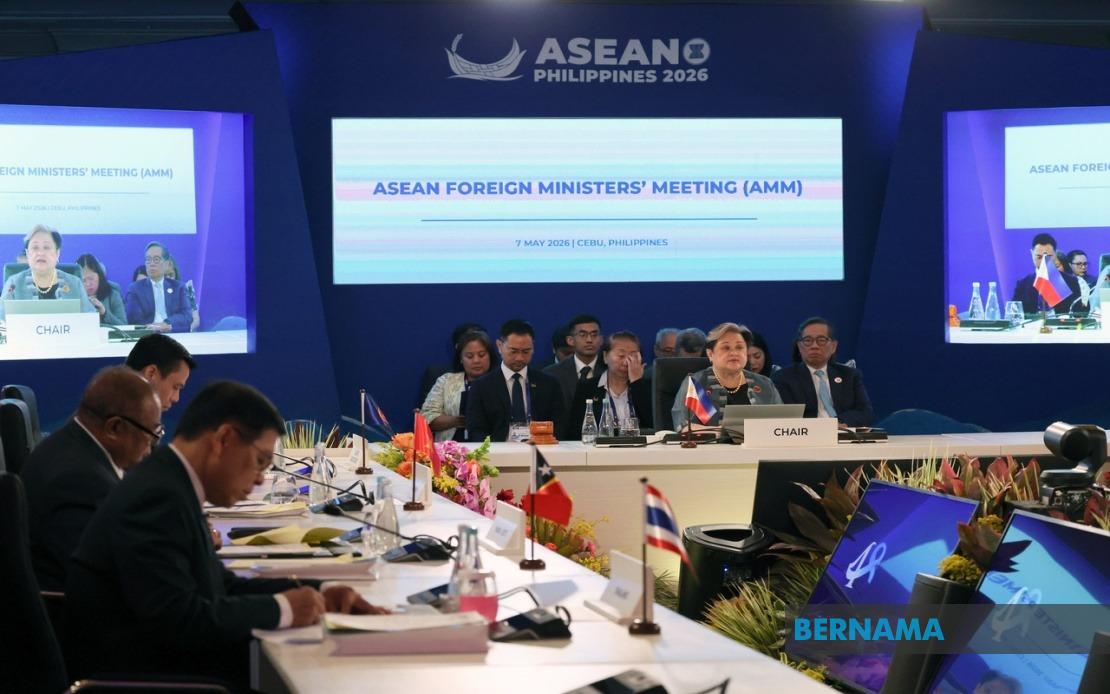
The Philippines is advocating for a recalibrated approach to ASEAN's peace efforts in Myanmar, insisting that while the Five-Point Consensus remains the cornerstone of regional diplomacy on the crisis, member states must be willing to adapt how they operationalise the framework to match the complex realities unfolding on the ground. Philippine Foreign Affairs Secretary Ma. Theresa P. Lazaro made this position clear during discussions on Myanmar's intractable political and security situation, a matter that has tested ASEAN unity since the military coup that ousted civilian leader Aung San Suu Kyi in February 2021.
Lazaro's remarks signal growing recognition within ASEAN that the Five-Point Consensus, adopted in April 2021, must be applied with greater strategic flexibility if it is to yield tangible results. The framework itself encompasses five core elements: an immediate halt to violence, inclusive dialogue involving all competing parties, appointment of an ASEAN Special Envoy to facilitate mediation efforts, delivery of humanitarian assistance to affected populations, and the envoy's active engagement with all stakeholders in the Myanmar conflict. Yet nearly three years after its adoption, the consensus has struggled to translate into concrete progress, particularly as fighting intensifies and Myanmar's humanitarian situation deteriorates.
What distinguishes the Philippine position is its explicit rejection of the notion that flexibility implies abandonment of principle. Lazaro stressed that reconsidering implementation strategies does not constitute a departure from the Five-Point Consensus framework itself. Rather, she framed the adjustment as necessary evolution, arguing that whether ASEAN acts as a collective body or through its rotating chair, those actions must be deliberately calibrated to address shifting battlefield conditions, diplomatic opportunities, and humanitarian needs. This nuanced stance reflects the diplomatic balancing act that ASEAN members must perform when confronting a crisis where military operations continue while political dialogue remains stalled.
The question of Myanmar's participation in ASEAN meetings has emerged as a touchstone for measuring progress. Since the coup, ASEAN has maintained a restrictive stance, barring Myanmar's military leadership from attending summit-level gatherings while permitting only non-political representatives to participate in high-level meetings. Lazaro indicated that restoring Myanmar's full representation would hinge on demonstrable advancement in three specific areas: meaningful de-escalation of fighting, constructive engagement in dialogue processes, and tangible humanitarian assistance reaching affected civilians. This conditional approach provides ASEAN with both leverage and a mechanism for signalling international disapproval of the Myanmar junta's conduct.
The Philippines' emphasis on ground realities reflects frustration shared across Southeast Asia regarding the pace of change in Myanmar. Since the February 2021 coup, the country has descended into widespread armed conflict, with a shadow civilian government known as the National Unity Government competing for legitimacy alongside the military State Administration Council. Armed resistance movements, including the People's Defence Force and various ethnic armed organisations, have fractured Myanmar's territorial control and complicated any peace negotiation. The humanitarian toll has been catastrophic, with hundreds of thousands displaced and millions facing acute food insecurity.
Calls for rethinking the implementation of the Five-Point Consensus have come from multiple ASEAN capitals, reflecting a broader acknowledgment that the framework, while conceptually sound, has proven insufficient in isolation. Malaysia's Foreign Minister Datuk Seri Mohamad Hasan articulated this perspective on June 25 when he indicated that ASEAN was actively exploring new operational approaches designed to strengthen how the consensus is deployed. Importantly, Malaysia reaffirmed commitment to the framework itself even while signalling openness to methodological innovation. Malaysia's broader peace engagement strategy extends to sustained dialogue with the military government, the National Unity Government, the People's Defence Force, and ethnic armed groups—a multi-stakeholder approach reflective of Myanmar's fragmented power structure.
The annual ASEAN Leaders' Review and Decision on Implementation of the Five-Point Consensus provides the institutional mechanism through which member states assess Myanmar's progress. These regular evaluations serve dual purposes: they create accountability checkpoints and they generate opportunities for frank discussion among ASEAN members regarding the appropriate calibration of engagement with Myanmar. Through these structured reviews, ASEAN can adjust its approach without formally discarding the underlying framework, effectively permitting the kind of pragmatic flexibility that the Philippines is advocating. As ASEAN Chair, the Philippines intends to facilitate these conversation spaces, recognising that consensus on Myanmar strategy has become increasingly difficult to achieve.
For Malaysia and other Southeast Asian states, the stakes in Myanmar's crisis extend beyond regional stability and ASEAN credibility, though both matter enormously. The conflict generates refugee flows, disrupts regional commerce, creates ungoverned spaces that transnational criminal networks exploit, and undermines the principle of non-interference that underpins ASEAN's founding architecture. The prolonged crisis tests whether a regional bloc can effectively address a major internal conflict without either compromising its core institutional principles or accepting perpetual stalemate. The Five-Point Consensus was designed as a middle path, but three years of limited progress suggests that implementation requires continuous adjustment to remain relevant.
The broader implication of the Philippine position is that ASEAN is searching for a sustainable approach to Myanmar that neither abandons diplomatic efforts entirely nor persists with approaches that demonstrably are not working. This intellectual openness, while presenting the risk of strategic incoherence, may represent ASEAN's most realistic pathway forward. The bloc cannot impose solutions through coercive means and lacks the leverage to compel Myanmar's competing factions toward negotiated settlement. What it can do is maintain engagement, preserve the structural frameworks for dialogue, and adapt tactical implementation to respond to shifting battlefield and political realities.
As ASEAN navigates this delicate balance, the outcomes of these decisions will reverberate throughout Southeast Asia. Malaysian policymakers, in particular, must weigh their engagement with Myanmar's various power centres against ASEAN's collective positions and Malaysia's own strategic interests. The Philippines' advocacy for pragmatic flexibility provides political cover for other member states to pursue more nuanced diplomacy while maintaining public commitment to ASEAN's formal position. How successfully the bloc operationalises this balance will determine not only the trajectory of Myanmar's crisis but also ASEAN's capacity to manage other internal conflicts or political challenges that may emerge among its ten members.

