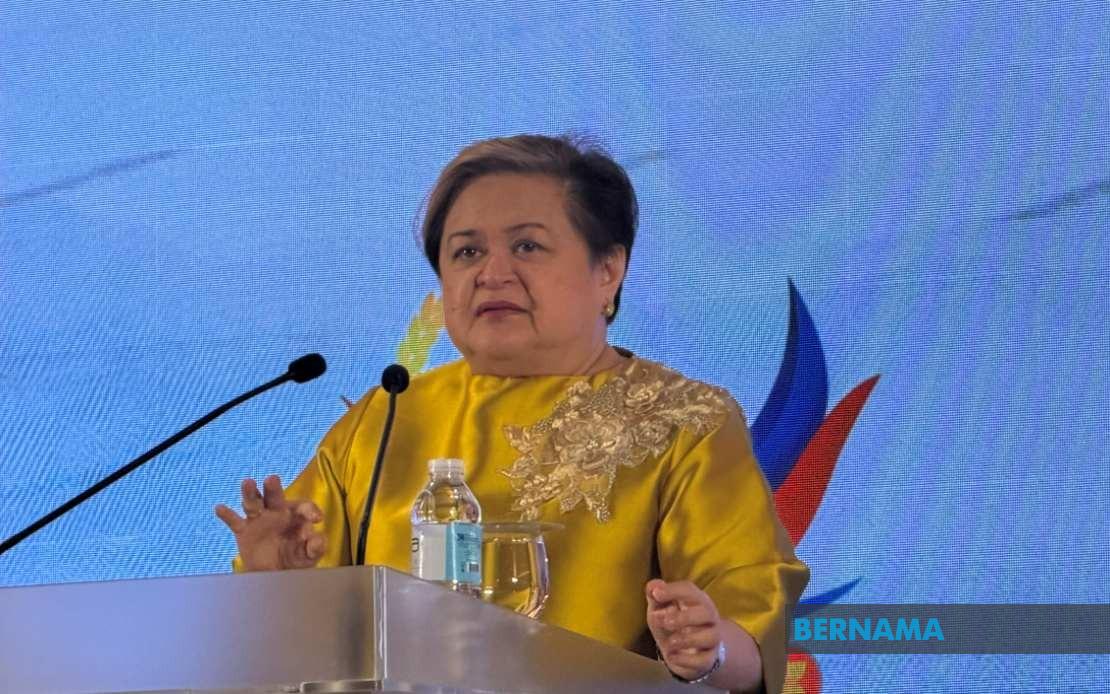
The Philippines has made a forceful case for ASEAN to invest substantially in securing the region's vital maritime arteries, warning that vulnerability to supply chain disruptions threatens the economic stability of every member state. Speaking to regional media in Kuala Lumpur, Philippine Foreign Affairs Secretary Ma. Theresa P. Lazaro outlined how interconnected the bloc's prosperity has become with uninterrupted passage through critical waterways, particularly the Strait of Malacca and the South China Sea—two of the world's busiest and geopolitically sensitive sea lanes.
Lazaro's intervention reflects a growing anxiety across Southeast Asia about the fragility of global commerce. She pointed specifically to recent turbulence in the Strait of Hormuz, where shipping disruptions have rippled outward to inflate energy costs worldwide and destabilise supply chains far beyond the Middle East. For ASEAN nations—economies deeply woven into global manufacturing networks and heavily dependent on seaborne energy imports—such shocks carry outsized consequences. When oil prices spike due to chokepoint disruptions, consumers across the region feel the impact at petrol pumps and in food prices within weeks.
The economic exposure is particularly acute for Southeast Asia because the region has become a critical node in global production networks. Manufacturing hubs in Thailand, Vietnam, and Indonesia rely on steady flows of raw materials and energy, while finished goods destined for worldwide markets must pass through these same corridors. Any significant delay or route diversion adds costs that squeeze already tight profit margins and threaten the competitiveness that has drawn investment into the region. Lazaro articulated this vulnerability with precision, noting that increased operating expenses, production slowdowns, or diminished comparative advantage would undermine ASEAN's carefully constructed position in the global economy.
Beyond the immediate economic dimension, Lazaro emphasised that food security concerns compound the challenge. Many ASEAN nations rely on seaborne grain imports and fertiliser shipments routed through the same waters. A prolonged disruption could threaten nutrition security and trigger domestic political instability—a scenario no government in the region wishes to contemplate. The breadth of interdependencies means that maritime security is no longer a niche strategic concern but a foundational requirement for social stability.
Lazaro proposed a substantive response architecture that moves beyond rhetorical commitments. She advocated for ASEAN to establish formal crisis communication channels, particularly among foreign ministers, enabling rapid collective decision-making when maritime emergencies emerge. Such protocols would allow the bloc to coordinate messaging, pool intelligence, and present a unified diplomatic posture to external powers. The proposal reflects lessons learned from fragmented regional responses to past crises, where uncoordinated statements sometimes amplified confusion or undermined negotiating positions.
Enhancing information-sharing and early-warning systems featured prominently in Lazaro's roadmap. By developing shared mechanisms to detect emerging threats—whether piracy, accidents, or deliberate chokepoint manipulation—ASEAN could move from reactive crisis management to proactive risk mitigation. Technical cooperation on maritime domain awareness, vessel tracking, and real-time intelligence dissemination would require sustained investment but could pay enormous dividends in prevention and rapid response. Such capabilities also signal resolve to external actors, potentially deterring provocative behaviour.
The secretary stressed that openness, transparency, and predictability in maritime operations would strengthen confidence in regional trade. When shipping routes are secure and governance is predictable, businesses commit capital, investors feel assured, and supply chains consolidate. Conversely, when uncertainty pervades, companies diversify routes at higher cost or relocate operations entirely. ASEAN's collective interest therefore centres on creating an environment where merchants feel confident planning long-term commitments within the region.
Lazaro's statement gained particular weight given the Philippines' impending 2026 ASEAN Chairship. Manila has already identified the establishment of an ASEAN Maritime Centre as a flagship initiative for its leadership year. This centre would serve as a repository for maritime expertise, a coordination hub for ASEAN mechanisms addressing ocean governance, and a platform for cross-sectoral collaboration among member states. By anchoring the institution within Philippine territory, Manila signals deep commitment to maritime matters and positions itself as a trusted custodian of regional maritime interests.
The proposed Maritime Centre would address a genuine gap in ASEAN's institutional architecture. Currently, no single ASEAN body consolidates expertise on shipping security, marine resource management, environmental protection, and maritime law enforcement. A dedicated centre could standardise best practices across member states, facilitate training exchanges, and serve as a neutral venue where disputes are managed constructively. Such institutions take years to mature but provide enduring value by embedding cooperation into institutional habits and procedures.
The Philippines' push also reflects broader strategic calculations within Southeast Asia. As maritime claimants in the South China Sea, countries like the Philippines, Vietnam, and Malaysia have vested interests in maintaining the principle of freedom of navigation and preventing any single power from dominating these waters. Stronger ASEAN maritime resilience translates into reduced dependency on external actors for security assurances and reinforces the bloc's agency in managing regional affairs. This dimension resonates beyond trade and energy to questions of strategic autonomy.
Lazaro's emphasis on supply chain resilience carries particular relevance for Malaysia and Singapore, which serve as trans-shipment hubs and financial centres coordinating regional commerce. Any maritime disruption immediately threatens their revenues and employment. Similarly, Indonesia's archipelagic geography makes it vulnerable to shipping route disruptions, while Thailand's landlock status places premium value on stable maritime access. ASEAN unity on maritime resilience therefore aligns with broad shared interests across diverse member economies.
The challenge ahead involves translating these principles into concrete institutional capacity. ASEAN's consensus-based decision-making sometimes impedes rapid action, and member states' varying security concerns occasionally create diplomatic friction. Yet the maritime domain offers unusual potential for consensus because the economic costs of inaction fall broadly across the region. If Manila can harness this shared vulnerability into genuine institutional cooperation during its 2026 chairship, it could bequeath ASEAN with capabilities that enhance regional resilience for decades.

