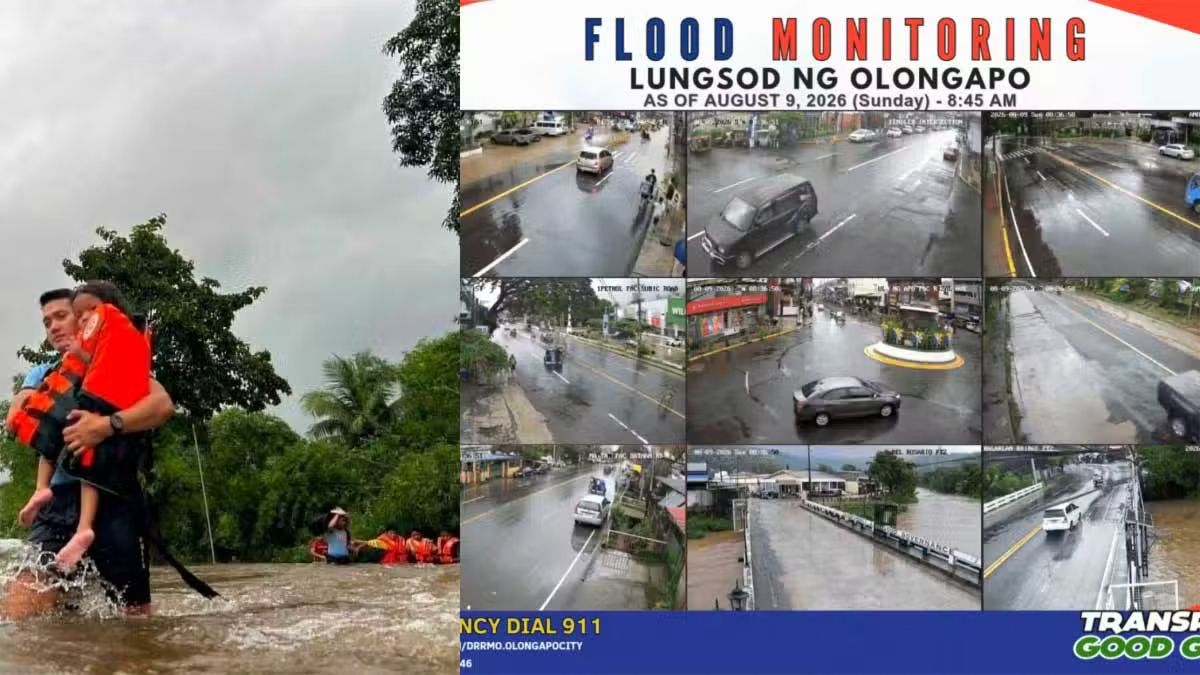
Authorities across the Philippines have escalated their response to a humanitarian crisis unfolding across the archipelago, deploying additional personnel and resources to communities ravaged by relentless rainfall. The southwest monsoon, locally known as the habagat, has been significantly amplified by the presence of Tropical Depression Luis and Tropical Storm Maymay, creating a convergence of weather systems that has generated torrential downpours across vulnerable regions. The National Disaster Risk Reduction and Management Council reported on Sunday that approximately 382,000 people spanning 110,000 families have been impacted, with the majority concentrated in eight regions distributed across Luzon and Mindanao, compelling many residents to abandon their homes in organised evacuation efforts.
The human toll of this meteorological event has proven substantial, with at least nine fatalities recorded as of Sunday. Among the deceased was a policeman from Negros Occidental who perished while attempting to rescue two of his colleagues from a swollen river, exemplifying the dangerous conditions confronting rescue personnel across the affected areas. Another recent casualty was a 28-year-old resident of Cuenca, Batangas, who died on Saturday night following electrocution while traversing a flooded section of J.P. Laurel Highway in Barangay Tambo, Lipa City. The remaining seven deaths involved separate drowning and landslide incidents that claimed lives in Luna and Alaminos City in Pangasinan, Candon City in Ilocos Sur, La Trinidad in Benguet, and Rodriguez in Rizal, underscoring the geographic breadth of the disaster.
Weather forecasters indicated that the deluge will persist through Wednesday, with the Philippine Atmospheric, Geophysical and Astronomical Services Administration warning that rainfall intensity will likely increase in mountainous and elevated terrain. Their Sunday evening advisory specifically cautioned that regions already burdened by significant cumulative precipitation face heightened risk of worsening conditions. The convergence of the habagat with two tropical cyclones has created an exceptional meteorological scenario, with weather warnings having been continuously issued since Friday for Metro Manila and surrounding provinces. This confluence of atmospheric conditions has generated precipitation levels that overwhelm drainage infrastructure and natural waterways across the affected regions.
The impact on critical infrastructure has been immediate and severe. The Angat Dam in Norzagaray, Bulacan, which supplies water to Metro Manila and serves as a crucial water security asset, experienced a dramatic rise of nearly 15 metres within ten days, climbing from 150.61 metres above sea level on July 30 to 164.80 metres by Sunday afternoon. This rapid elevation reflects the extraordinary volume of water cascading into the reservoir system. Downstream, the Ipo Dam has similarly approached its spillway capacity at 101 metres above sea level while discharging 314.91 cubic metres of water per second, indicating the intensity with which the monsoon rains have replenished the region's water infrastructure. Such rapid accumulation poses both flood risks to downstream communities and management challenges for water authorities balancing supply and safety considerations.
In Central Luzon, which historically experiences severe flooding, the situation has deteriorated dramatically. Ninety-eight villages across the region have inundated, affecting nearly 170,000 individuals with pre-emptive evacuations conducted for 781 families totalling 2,544 people in Nueva Ecija and Zambales. The province of Bulacan saw approximately 1,000 residents compelled to leave their homes as floodwaters coincided with high tide conditions, with inundation reaching approximately four feet in certain localities. The Bulusan Riverbank in Calumpit became impassable for light vehicles, effectively severing transport links for communities dependent on these routes. In Zambales, the situation deteriorated further when a dike was breached in San Marcelino, isolating communities while also destroying a bridge in Barangay Santa Fe through the force of strong currents, and damaging at least eleven houses and a barangay multipurpose hall in San Antonio through wind damage.
The Calabarzon region, comprising provinces south of Metro Manila, reported more than 7,000 affected families with 3,134 families sheltering in 117 evacuation centres distributed across 29 localities. This concentration of displaced persons has strained local government resources and humanitarian capacity. Across the broader Luzon region, the monsoon has triggered cascading failures in transportation and connectivity. Two bridges in Cagayan became impassable as the Chico River swelled beyond safe levels, while landslides and rockfalls have blocked critical road networks in Nueva Vizcaya, Abra, and Mountain Province, isolating communities and complicating access for relief operations. In Benguet, floodwaters rose to approximately two feet in sections of Barangay Pico in La Trinidad, inundating residential areas and disrupting daily life for thousands of residents.
Weather-related phenomena have extended beyond conventional flooding. Iloilo City experienced what authorities suspect was a tornado accompanied by strong monsoon winds, causing damage to at least 52 houses while toppling trees and utility poles across the city. This meteorological event displaced more than 150 residents and contributed to the broader pattern of infrastructure damage characterising the disaster response phase. The Philippine National Police chief, General Jose Melencio Nartatez Jr, issued a public statement urging residents to remain vigilant while heeding official guidance, and specifically cautioned against sharing unverified online updates that could amplify public anxiety and complicate disaster coordination efforts. Police operations have been substantially stretched by the need to manage evacuations and maintain order amid clogged thoroughfares and emergency conditions.
The maritime sector has equally suffered disruption, with the Philippine Coast Guard reporting that 543 passengers, truck drivers, and cargo handlers have been stranded at 28 ports distributed across four regions due to sea travel suspensions. This maritime disruption compounds the broader logistical crisis, isolating communities dependent on sea transport while interrupting cargo movements essential for regional commerce. The convergence of flooding, landslides, traffic paralysis, and sea travel suspension has created a compounding crisis affecting multiple dimensions of economic and social life across affected regions.
The political dimension of this disaster has immediately surfaced, with the Makabayan coalition drawing connections between the floods and infrastructure deficiencies under the Marcos Jr. administration. The coalition has specifically criticised flood control projects and suggested that the administration's reliance on unprogrammed appropriations—funds not allocated in the original budget—creates mechanisms through which resources could be diverted toward pork barrel spending rather than disaster mitigation infrastructure. As deliberations on the 2027 national budget approach, the coalition has called for intensified scrutiny of government spending practices, arguing that endemic governance failures expose citizens to predictable catastrophes. This criticism reflects broader concerns regarding infrastructure investment priorities and budget accountability that transcend immediate disaster response considerations.
The Philippine context adds significant weight to these concerns. The archipelago experiences multiple typhoons annually and is vulnerable to monsoon-related flooding, particularly in Luzon's densely populated regions that concentrate national economic activity and population. The severity of this particular event suggests that accumulated infrastructure investments may be insufficient to manage precipitation intensities generated by converging weather systems. Malaysian and Southeast Asian observers recognise similar vulnerabilities across the region, where climate variability and population concentration in low-lying areas create recurring disaster scenarios. The Philippine experience underscores the necessity of integrated approaches combining structural flood control measures with early warning systems, evacuation planning, and disaster financing mechanisms capable of responding to events that exceed historical parameters.
Looking forward, meteorological forecasts indicate rainfall will continue through Wednesday, meaning peak impacts may not have yet been realised in some regions. Authorities face the immediate challenge of managing ongoing evacuations while simultaneously beginning recovery operations in areas where floodwaters have receded. The scale of displacement—over 382,000 people—will require sustained coordination between national and local government units, humanitarian organisations, and international partners to address shelter needs, health concerns, and eventual reconstruction. The rapid rise in major dam levels also necessitates careful water release management to prevent downstream catastrophe while maintaining water supply to Metro Manila and agricultural regions dependent on irrigation. These interconnected challenges will continue to test Philippine disaster management capacity in the coming days.

