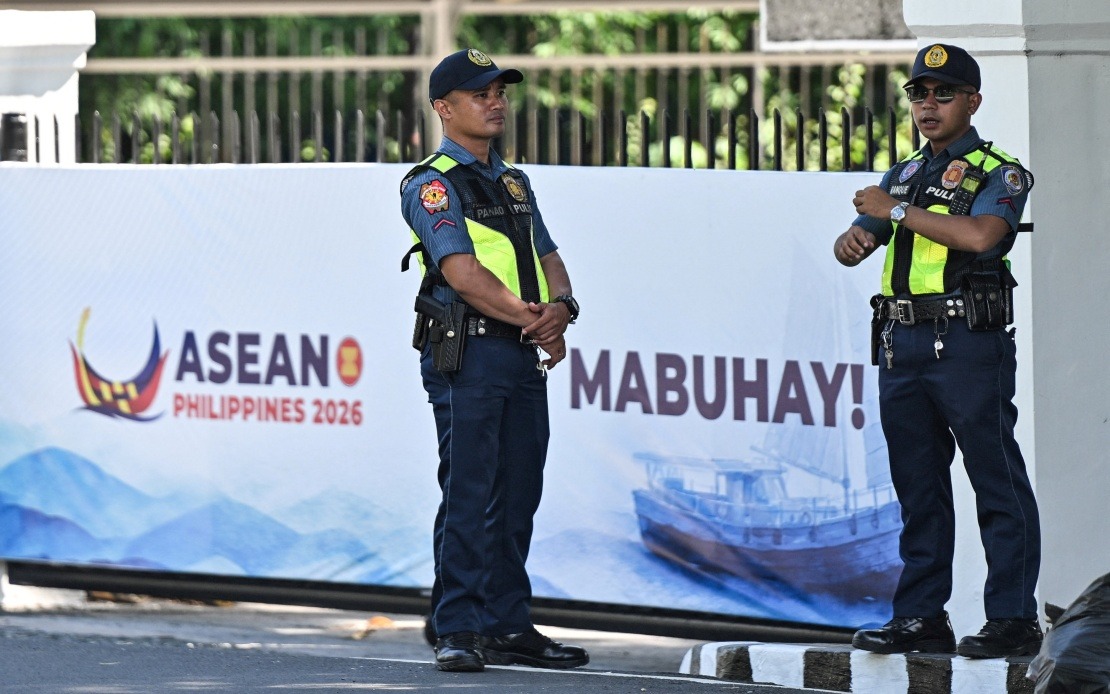
The Philippines is taking the helm of a pivotal week of diplomatic engagement as it convenes the 59th ASEAN Foreign Ministers' Meeting and Associated Meetings from July 20 to 24, positioning itself as the driving force behind regional dialogue on security, human rights, and geopolitical stability. The gathering represents a crucial opportunity for Southeast Asia's foreign policy establishment to chart a collective course amid widening global tensions and intensifying regional challenges that threaten the delicate balance of power that has underpinned decades of relative stability in the Indo-Pacific.
According to Foreign Affairs Assistant Secretary and ASEAN Spokesperson Dominic Xavier Imperial, the Philippines seeks to capitalize on seven months of sustained diplomatic momentum to advance the bloc's core development objectives while reinforcing the institutional framework that binds the ten member states together. This emphasis on continuity reflects an understanding among ASEAN capitals that coherence and unified messaging are increasingly vital when negotiating with major powers and confronting transnational challenges that do not respect borders. The week's agenda demonstrates the complex web of issues competing for ministerial attention, from traditional security concerns to emerging humanitarian challenges that require coordinated responses.
Central to this diplomatic calendar is the 16th face-to-face meeting between ASEAN Foreign Ministers and the ASEAN Intergovernmental Commission on Human Rights, an interface that underscores the regional bloc's stated commitment to promoting fundamental freedoms and protecting vulnerable populations. This engagement between traditional foreign policy practitioners and human rights advocates reflects growing recognition within Southeast Asian capitals that development and stability cannot be achieved without addressing systemic violations and institutional weaknesses that undermine governance across the region. The dialogue also signals ASEAN's attempt to balance its principle of non-interference with contemporary expectations for greater accountability on rights issues, a tension that has complicated the bloc's diplomatic positioning in international forums.
Parallel discussions within the Southeast Asia Nuclear Weapon-Free Zone Commission framework demonstrate ASEAN's long-standing commitment to maintaining Southeast Asia as a region free from nuclear weapons, a cornerstone principle established decades ago that continues to frame regional security architecture. Ministers will review progress on the 2023–2027 action plan and examine accessions to the treaty protocol, work that carries particular significance given the intensifying great power competition in Southeast Asian waters and the proliferation of advanced military capabilities among regional and external actors. This initiative reflects a conscious effort by ASEAN to preserve the region's strategic autonomy and prevent it from becoming a theater for nuclear confrontation between major powers.
The formal opening of the 59th AMM on Tuesday will bring together foreign ministers, the diplomatic corps, and resident missions in a comprehensive assessment of ASEAN's progress across its three foundational pillars: the political-security community, the economic community, and the socio-cultural community. This holistic evaluation framework, established through the ASEAN Community Vision 2025 and its successors, requires ministers to examine how effectively the bloc is advancing integration while managing internal and external pressures that constantly threaten cohesion. The gathering will also provide a platform for ministers to exchange perspectives on pressing international developments, including conflicts in Europe and the Middle East that have indirect implications for Southeast Asian supply chains, security arrangements, and development partnerships.
Two significant outcome documents will emerge from the meeting: the 59th AMM Joint Communiqué and the Guidelines on the Modalities for Engagement of ASEAN with High Contracting Parties to the Treaty of Amity and Cooperation in Southeast Asia. The communiqué serves as ASEAN's collective voice, articulating the bloc's position on regional developments and international affairs while reflecting the often-delicate compromises required to achieve consensus among ten diverse member states with varying strategic interests and political systems. The TAC guidelines represent a Philippine-driven initiative intended to systematize engagement with states that have not yet formalized partnerships with ASEAN, creating structured pathways for cooperation while preserving the treaty's founding principles regarding peaceful settlement of disputes and respect for sovereignty.
Wednesday's Post-Ministerial Conferences with dialogue partners—including India, the United States, Canada, Russia, China, South Korea, Japan, Australia, New Zealand, the United Kingdom, and the European Union—will transform the gathering into a de facto summit of global powers competing for influence in Southeast Asia. These structured bilateral meetings, conducted alongside the broader ASEAN agenda, allow major powers to reinforce their regional commitments while exploring alignment with ASEAN's positions on matters ranging from trade to security architecture. For Southeast Asian foreign ministers, these interactions represent crucial opportunities to extract commitments from dialogue partners while maintaining ASEAN centrality in regional decision-making—a priority that has grown more urgent as the bloc faces pressure from competing great power strategies.
Following day will bring together the 27th ASEAN Plus Three meeting, which includes China, Japan, and South Korea, alongside the 33rd ASEAN Regional Forum and the 16th East Asia Summit. These multilayered engagements create a cascade of diplomatic forums that progressively widen the circle of participants while maintaining ASEAN's position at the center of regional architecture. The progression from purely ASEAN deliberations to expanded forums reflects the bloc's careful calibration between exclusivity and inclusion, between deepening intra-ASEAN integration and managing relationships with external powers whose interests and capabilities shape the region's strategic environment.
A particularly significant bilateral engagement is scheduled between Philippine Foreign Affairs Secretary Ma. Theresa Lazaro and Chinese Foreign Minister Wang Yi, a meeting that carries weight beyond Manila-Beijing relations given its timing during a major ASEAN gathering and the ongoing tensions over territorial disputes in the South China Sea. This engagement signals continued diplomatic channels between the Philippines and China despite periodic escalations and nationalist rhetoric in both capitals, demonstrating the willingness of pragmatic officials to maintain dialogue even amid substantive disagreements. The bilateral discussion will inevitably address the regional implications of Sino-Philippine dynamics, particularly how maritime disputes and competing claims affect ASEAN's collective security environment and the feasibility of consensus-based decision-making on sensitive geopolitical matters.
Two issues will dominate ministerial discussions throughout the week with particular intensity: the escalating humanitarian and political crisis in Myanmar, and the long-standing territorial disputes in the South China Sea. On Myanmar, ASEAN continues to grapple with the challenge of maintaining dialogue with the State Administration Council while engaging other stakeholders, a balancing act complicated by the bloc's non-interference principle and the refusal of the military junta to implement the Five-Point Consensus that ASEAN endorsed in 2021. Enforcement of this consensus has proven elusive, reflecting the structural limitations of ASEAN's capacity to pressure member states or external actors into compliance with regional decisions when core interests diverge.
The Code of Conduct negotiations regarding the South China Sea will feature prominently in exchanges, reflecting the permanent fixture these discussions have become in ASEAN diplomacy. Ministers will assess progress toward a binding agreement that could establish clearer rules governing resource competition, maritime activities, and dispute resolution in waters through which trillions of dollars in global trade transit annually. These negotiations remain contentious because different ASEAN member states have conflicting relationships with China and differing exposure to potential benefits or risks from a finalized code, making consensus difficult and compromises frequently controversial within individual national contexts.
Imperial's emphasis on these multilateral engagements as vital venues for addressing regionally and globally impactful crises reflects recognition that Southeast Asia's ability to shape its own trajectory depends increasingly on effective coordination among ASEAN members and strategic positioning relative to major powers. The week's diplomatic schedule reveals an organization striving to maintain institutional relevance and preserve centrality in regional affairs while confronting challenges—from internal political instability to great power competition—that test the limits of consensus-based decision-making and non-aligned diplomacy. The meetings conclude Friday with commemoration of the Treaty of Amity and Cooperation's 50th anniversary, a symbolic anchoring of ASEAN's diplomatic traditions as the bloc confronts an uncertain future.

