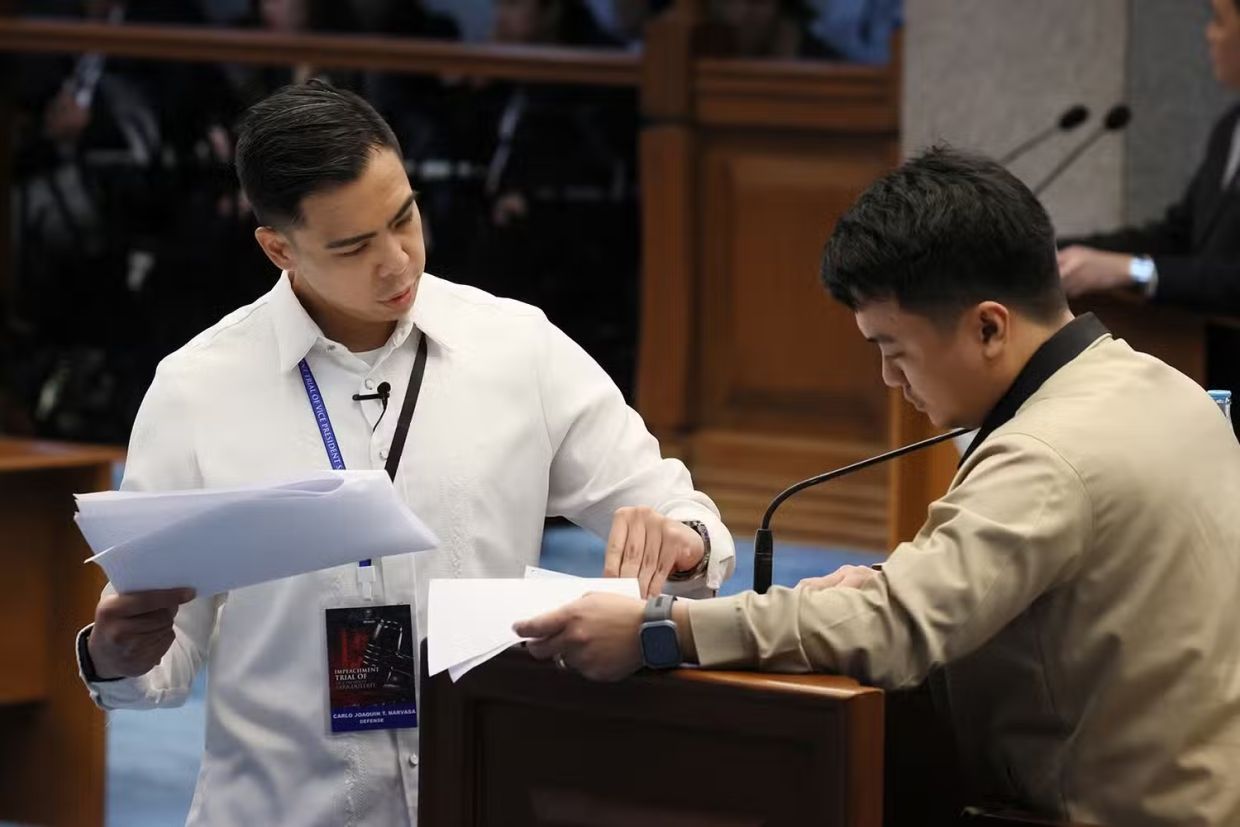
The impeachment trial of Philippine Vice President Sara Duterte entered a critical phase on Wednesday as her defence team mounted a fundamental challenge to the constitutional basis of the charges against her, arguing that remarks she made in late 2024 do not meet the threshold of "other high crimes" stipulated in the country's 1987 Constitution as grounds for removing a sitting vice president.
Duterte's legal representatives, armed with cross-examination of the prosecution's opening witness, sought to dismantle the case piece by piece, questioning not only the strength of evidence but the very jurisdiction of the Senate impeachment court to proceed with charges they characterised as falling outside constitutional parameters. The defence's strategy mirrors broader constitutional debates in the Philippines about what conduct truly rises to the level of impeachable offence—a distinction with significant implications for how the country's political system polices itself and prevents abuse of impeachment mechanisms as weapons in factional struggles.
The trial's central factual dispute concerns statements Duterte made during an online press briefing on November 23, 2024, directed at President Ferdinand Marcos, First Lady Liza Araneta-Marcos, and former Speaker Martin Romualdez. While prosecutors maintain these remarks constituted grave threats—particularly references to assassination—the defence contends they were unconventional but contextually justified responses to what it describes as systematic persecution of the Vice President and her staff by hostile elements within government. Defence counsel Mark Vinluan articulated this reframing clearly, asserting that Duterte spoke not in her official capacity but as a private individual protecting her family from what her team characterises as real security threats.
Central to the defence strategy was questioning the rigour of the National Bureau of Investigation's inquiry into the allegations. Senior NBI agent John Mark Calilung, who led the initial investigation and anchored the prosecution's opening presentation, found himself scrutinised on whether his agency had genuinely conducted a thorough investigation or merely assembled circumstantial interpretations of public statements. Defence counsel Carlo Narvasa highlighted that none of the three alleged victims—the President, First Lady, or Romualdez—had personally filed criminal complaints with the NBI or provided sworn statements to investigators. Instead, Calilung acknowledged the bureau had proceeded motu proprio, meaning on its own motion without formal complainant initiation, a procedural irregularity the defence suggested undermined the investigation's legitimacy.
The prosecution's own concessions during cross-examination became leverage for the defence argument. When Senator Risa Hontiveros pressed prosecution counsel Amando Ligutan on whether Duterte's recorded statements definitively proved she had actually contracted an assassin, Ligutan acknowledged they did not meet that threshold of proof. Rather, he framed the statements as part of a pattern demonstrating intent. This admission became the cornerstone of the defence's contention that the prosecution had failed to establish the essential elements of any crime—that Duterte had actually taken concrete steps toward arranging anyone's assassination, as opposed to making heated rhetorical statements during a moment of personal distress.
Vinluan argued strenuously that the term "assassin" itself had been supplied by external interpreters rather than originating from Duterte's actual words, a distinction carrying weight in cases hinging on exact language. The defence presented video evidence from the November 23 briefing showing the emotional context in which Duterte's remarks occurred, particularly footage of her chief of staff Zuleika Lopez breaking down as she objected to her planned transfer to a correctional facility. The defence team contended this scene demonstrated the triggering event for Duterte's subsequent statements—her government was punishing her loyalists, and she was reacting defensively to what she perceived as institutional persecution targeting her office and family.
The characterisation of events as "systematic oppression" featured prominently in the defence narrative, with Narvasa pointing to House committee investigations, contempt citations, and administrative actions taken against Vice Presidential staff members. He argued these actions, orchestrated partly by Representative Joel Chua who now serves as a prosecutor, created conditions that justified, if not the tone, then the urgency of Duterte's remarks. When Hontiveros pressed whether this logic suggested grave threats could be excused by circumstances, Narvasa retreated somewhat, clarifying the defence was not arguing that threat-making becomes acceptable merely because underlying grievances exist.
The constitutional argument represents the most significant dimension of the defence case, one with implications extending beyond Duterte's personal political fate. Article XI, Section 2 of the 1987 Constitution enumerates specific grounds for impeachment: culpable violation of the Constitution, treason, bribery, graft and corruption, betrayal of public trust, and "other high crimes." That final catchall phrase has proven contentious in Philippine impeachment jurisprudence, with scholars and jurists disagreeing on whether it encompasses offences merely serious in emotional impact or whether it requires conduct that threatens the constitutional order or fundamental government operations. The defence's position that Duterte's statements, however intemperate, do not rise to this constitutional threshold poses a challenge prosecutors must overcome through argumentation rather than relying on the inflammatory nature of the words themselves.
For Malaysian observers and Southeast Asian analysts tracking Philippine political instability, this trial illustrates the vulnerability of presidential systems to weaponised impeachment procedures, particularly when political factions achieve legislative majorities. The Philippine case demonstrates how impeachment, conceived as an emergency remedy for genuine misconduct threatening the state, can become merely another tool in ongoing factional combat. The outcome will likely influence how other Philippines officials assess their political security and whether impeachment threats function as genuine constitutional safeguard or simply another instrument of political pressure in an already fractious system.
The proceedings also highlighted procedural complications and evidentiary gaps that may prove disadvantageous to prosecution efforts. The absence of affidavits from the alleged victims themselves, the motu proprio nature of the NBI investigation, and the prosecution's admission that recorded statements alone do not prove conspiracy to commit assassination all suggest the case rests substantially on inference and interpretation rather than direct evidence. Whether the Senate impeachment court will view these gaps as fatal to the prosecution or accept circumstantial evidence as sufficient for the lower evidentiary threshold traditionally applied in impeachment cases remains to be determined as the trial continues.
Senator Francis Escudero, presiding over the court, intervened to redirect questioning boundaries, noting that the central issue—whether Duterte's conduct constitutes impeachable offence—had already emerged clearly through testimony. His guidance that senator-judges should refrain from legal conclusion-drawing in cross-examination suggested at least some judges recognised the need to maintain procedural discipline, even as others like Hontiveros indicated they preferred the broader questioning latitude employed in previous Philippine impeachment trials. This tension between rigorous procedure and expansive inquiry itself reflects the broader challenge the Philippines faces in managing impeachment as constitutional mechanism versus political instrument.

