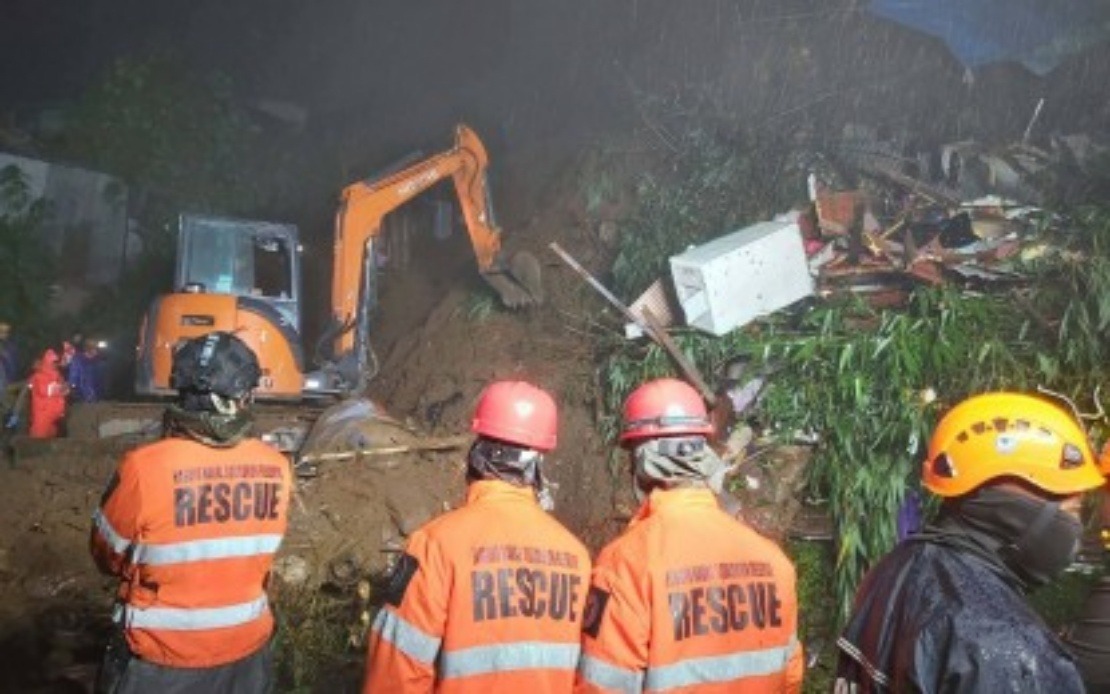
The Philippines faces a major humanitarian crisis following consecutive tropical depressions and intensified monsoon activity that has claimed at least 19 lives and displaced millions across the archipelago. The Office of Civil Defence confirmed on Tuesday that the death toll stems from the combined impact of Tropical Depressions Luis and Maymay alongside the southwest monsoon system, with regional authorities continuing to assess the full scope of the calamity affecting communities from the northern Cordillera down to the southernmost provinces.
Death distribution across affected regions reveals a concentration of fatalities in the highland areas, with Benguet province accounting for 12 confirmed deaths—a pattern typical of mountainous zones where tropical systems trigger landslides and flooding. Rizal province in the eastern reaches of Metro Manila recorded four deaths, while Batangas in the Calabarzon region reported three, indicating that the weather system's destructive reach extended well beyond the highland zones into densely populated lowland areas surrounding the capital. The Office of Civil Defence reported an additional 15 injured individuals, with 12 sustained in Benguet and scattered cases across Ilocos Sur, Rizal, and Cavite provinces, underlining the uneven geographic distribution of the crisis.
Beyond confirmed deaths, search and rescue operations continue for four missing persons—three in Benguet and one in Batangas—raising the possibility that casualty figures may yet rise as recovery teams access remote communities cut off by flooding and landslides. Such missing-person scenarios often indicate widespread infrastructure collapse that hampers both rescue efforts and the delivery of emergency aid to isolated populations, a situation particularly acute in upland agricultural communities where road access typically depends on a single route through vulnerable terrain.
The scale of civilian displacement underscores the severity of the combined weather systems. Approximately 646,676 families—representing 2,270,862 individuals—have been directly affected across ten administrative regions spanning the Ilocos corridor down through the central islands to the western Visayas and eastern Mindanao. The geographic spread indicates these were not isolated local events but rather a broad-based meteorological phenomenon that saturated vast swathes of the Philippines simultaneously, overwhelming local government capacity to respond uniformly. The National Capital Region itself—home to over 16 million people—was caught in this footprint, demonstrating that metropolitan areas with superior infrastructure and resources still faced significant challenges managing the influx of displaced families.
The humanitarian response framework has mobilized nearly 920 evacuation centres nationwide, currently sheltering approximately 26,174 families or roughly 95,000 individuals. This figure represents only a portion of the 2.2 million affected, suggesting that most displaced persons are either sheltering with relatives, occupying makeshift community spaces, or remaining in damaged homes. The reliance on formal evacuation centres, concentrated in urban centres and larger municipalities, leaves many rural residents without structured support systems, dependent instead on barangay-level resources that are often already stretched thin.
Structural damage has been quantified at 639 partially damaged houses and 45 completely destroyed dwellings, though these numbers likely represent only initial damage assessments before full surveys of rural and remote areas could be completed. Housing damage in the Philippines during typhoon season typically escalates as authorities gain access to previously isolated barangays and conduct comprehensive evaluations, meaning the eventual count will almost certainly exceed current figures. The destruction of homes compounds displacement challenges, as families cannot return to their residences and must remain in emergency facilities or seek alternative shelter arrangements for extended periods.
Infrastructure damage has been provisionally assessed at PHP1.46 million (approximately RM97,000), a relatively modest figure that almost certainly underestimates actual losses in transportation networks, water systems, electrical grids, and communication facilities. Philippine infrastructure in rural areas, already vulnerable to tropical weather patterns, typically sustains significant disruption during monsoon events that costs far exceed immediate structural repairs when accounting for economic losses from service interruptions and cascade failures across interconnected systems.
The agricultural sector has absorbed PHP135.33 million in damages, a figure reflecting destroyed crops, submerged fishponds, and compromised equipment across multiple provinces. For the Philippines, an agrarian economy where rural households depend directly on harvests and livestock for subsistence, such agricultural losses create secondary humanitarian crises as food insecurity spreads through farming communities and local markets experience commodity shortages. The Ilocos Region, Cagayan Valley, and Bicol Region—all major agricultural producers—were directly affected, meaning the national food supply and rural income sources have sustained meaningful blows that will require months of recovery.
The concurrent impact of two named tropical depressions combined with the annual southwest monsoon represents a compounding weather event that tests Philippine disaster management systems. The timing during the August peak of the monsoon season, when the archipelago typically experiences its highest rainfall and most severe flooding, means that saturated soils and swollen waterways across multiple regions created conditions far more destructive than either weather system might cause independently. The combination also suggests that communities faced sustained rainfall over extended periods rather than discrete weather events, allowing water accumulation in low-lying areas and prolonged flood conditions that impede rescue operations and damage assessments.
For Malaysian observers, the Philippine crisis illustrates the shared vulnerability of Southeast Asian nations to tropical weather systems and the importance of coordinated regional disaster preparedness frameworks. The 2.2 million affected represents approximately 2 percent of the Philippine population, a scale of disruption that demonstrates how quickly tropical systems in densely populated archipelagic regions can overwhelm response capacity. Malaysia, with comparable geographic exposure to monsoon systems and tropical depressions, faces analogous risks during its own wet seasons, making the Philippine experience relevant for assessing regional readiness and identifying gaps in early warning systems, evacuation protocols, and emergency shelter capacity that might apply across Southeast Asia.

