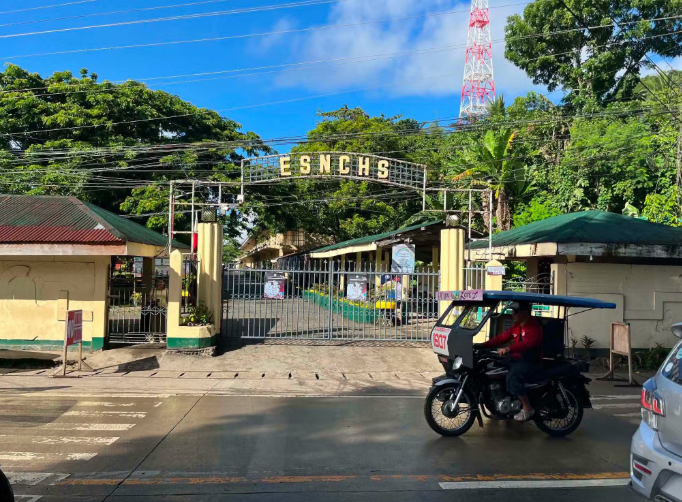
A prominent secondary school in the Philippines was forced to shut its doors on Friday following circulation of an online post containing alleged threats of violence. Eastern Samar National Comprehensive High School in Borongan City halted operations after administrators received reports that the threatening material had been posted online, seemingly originating from students in the Grade 11 Kitchen Operations programme. The swift closure reflected mounting anxiety about campus safety across the Eastern Visayas region, particularly among school leaders and parents concerned that the region had become vulnerable to repeated security incidents.
The school's acting head, Dean Ernest Paul Hermano, issued the closure directive in coordination with multiple layers of authority, including the Borongan City Police Station, the Schools Division Superintendent's office, and the assistant superintendent responsible for the municipal education system. According to the official statement released by the institution, the decision prioritised safeguarding all persons within the school compound—students, teaching staff, and administrative personnel—in response to the specific nature of the alleged threats. This multi-agency coordination underscored how seriously local officials were treating even preliminary reports of violence on school grounds.
Law enforcement responded with considerable force and urgency. A Special Weapons and Tactics team was mobilised to conduct thorough inspections of campus facilities, focusing particularly on the locations where the threatening photographs had allegedly been captured. The operation proceeded methodically through the morning, with officers examining buildings and grounds to rule out the presence of any explosive devices or weapons that might pose an immediate danger. By 8:35 a.m., PLTCOL Silver Cabanillas, the acting police chief for Borongan, formally declared that the campus was clear of any credible threats and safe for potential return.
Despite these assurances, investigators have yet to identify who created or posted the threatening material. The investigation remained active and ongoing at the time of the school's statement, with authorities apparently pursuing multiple investigative avenues to establish responsibility. The school administration reiterated its commitment to cooperating fully with law enforcement to ensure that accountability would be maintained and that whoever was responsible would face appropriate consequences. Officials emphasised that such actions violated the trust that communities place in educational institutions and would not be tolerated.
This incident must be understood within the context of a far more serious tragedy that had occurred in the same region less than a fortnight earlier. On June 22, a student at San Jose National High School in Tacloban City opened fire on campus, an act that claimed three lives and wounded twenty others. That shooting—one of the deadliest on a Philippine school campus in recent memory—sent shockwaves through the education sector and prompted immediate reconsideration of security protocols across multiple municipalities. The June incident galvanised schools, police departments, and local government units to implement stricter access controls, increase visible police presence on campuses, and conduct thorough reviews of how institutions would respond to emergencies.
Eastern Samar National Comprehensive High School carries particular significance within its region as both the largest public secondary institution in the province and the flagship school for secondary education. The campus enrolls thousands of students not only from Borongan City itself but also from neighbouring municipalities, making it a major educational hub. The breadth of its student population means that a closure or security incident directly affects an extensive segment of the regional youth population and their families. For many communities served by ESNCHS, the school represents an essential pathway to educational advancement and economic opportunity.
The events of recent weeks have exposed a pattern of security concerns affecting schools across Eastern Visayas. Officials in the region have reported multiple school-related security incidents beyond just the mass shooting and the bomb threat, though the specific nature of these other incidents remains less publicised. The frequency and variety of threats have prompted authorities to issue public guidance urging residents to exercise caution when encountering unverified information circulating on social media platforms. Authorities have specifically asked citizens not to amplify or share unconfirmed reports of threats without verification, arguing that doing so can create unnecessary panic and potentially interfere with police investigations.
At the same time, law enforcement agencies have appealed to the public to maintain vigilance and to report any genuine threats immediately to police rather than sharing them online. This messaging reflects a delicate balance that security officials must strike: encouraging community awareness and reporting while simultaneously discouraging the viral spread of information that may be incomplete, inaccurate, or deliberately sensationalised. Schools are particularly vulnerable to hoax threats, as internet users may post threatening content as a prank, without understanding the genuine harm caused by such actions or the significant resources expended by police and schools in response.
The implications of these incidents extend beyond Eastern Visayas and merit attention from education policymakers and security experts throughout Southeast Asia. As digital literacy among young people increases, so too does the potential for misuse of social media to threaten public safety. Schools in the region must grapple with how to balance openness and connectivity with the need to maintain secure, protected learning environments. The challenge is particularly acute in the Philippines, where social media penetration is exceptionally high and where young people are among the most active users of digital platforms in the region.
For Malaysian and Southeast Asian observers, these incidents underline the importance of comprehensive school safety frameworks that address both physical security and the evolving threat landscape presented by digital communication. The Philippine experience demonstrates that effective responses require coordination across multiple agencies and clear communication protocols that prevent confusion while enabling rapid, appropriate action. As educational institutions throughout the region continue to grapple with these challenges, the cases emerging from Eastern Visayas offer important lessons about the necessity of preparedness, the value of inter-agency cooperation, and the need for public education about distinguishing genuine threats from misinformation.

