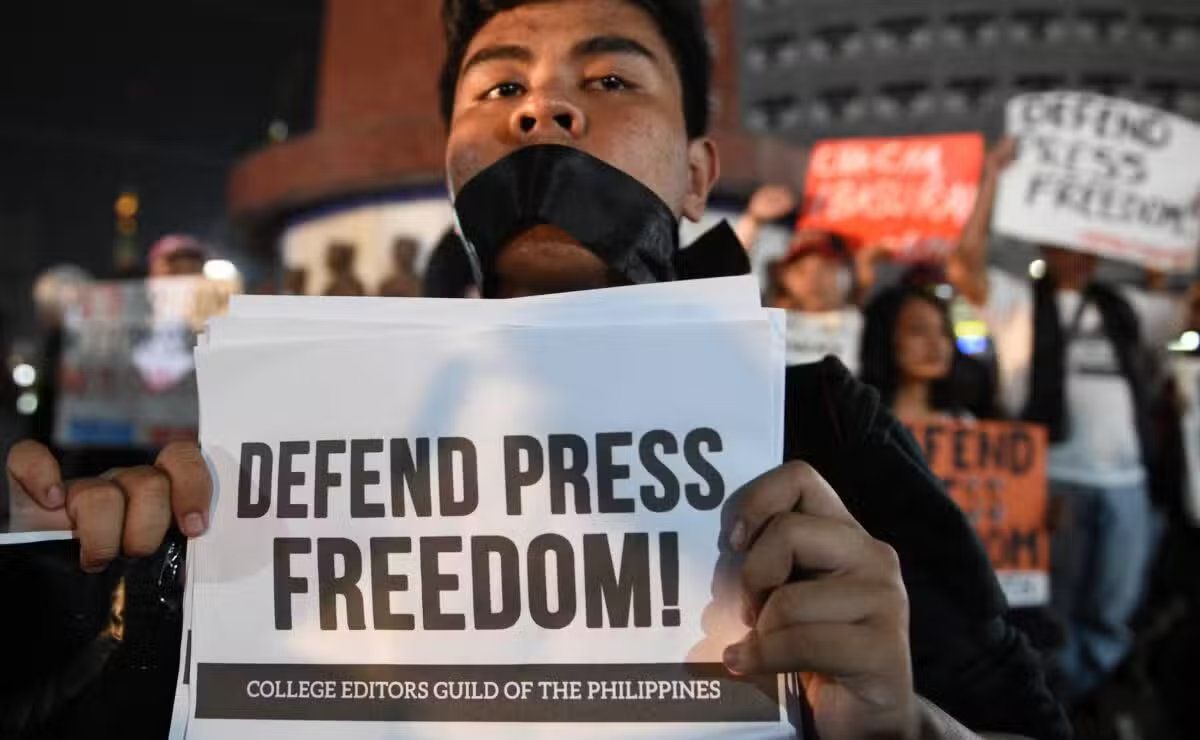
As President Ferdinand Marcos Jr. enters his fifth year in office, the National Union of Journalists of the Philippines has compiled a sobering record: approximately 260 documented cases of violence, harassment, and intimidation directed at members of the press. These figures underscore a deepening crisis for media freedom in the country, yet they tell only part of the story. The distribution of attacks reveals a stark reality about who pays the price for reporting uncomfortable truths—and it is not the journalists working in air-conditioned offices in Manila's central business districts.
The numerical breakdown exposes a troubling vulnerability in the Philippine media landscape. Of the 260 recorded incidents, more than 180 involved journalists employed by community newspapers, provincial radio stations, alternative news platforms, and university publications. This concentration demonstrates that the frontline of press freedom threats runs through smaller, independent newsrooms rather than the country's established media institutions. These outlets operate across tight budgets, offer modest salaries to their staff, and typically lack the institutional infrastructure and legal resources that shield their counterparts in larger metropolitan newsrooms. For journalists in these organisations, the equation between earning and exposure tilts dangerously: modest compensation meets extraordinary personal risk.
Working in provincial communities and smaller cities creates a fundamentally different journalistic environment from that experienced in Manila. Provincial journalists inhabit the same neighbourhoods as the officials, business owners, and political figures whose actions they scrutinise. They shop at the same markets, their children attend the same schools, and they cannot anonymously disappear into urban crowds after publishing critical stories. This proximity, while providing invaluable insight and community connection, simultaneously amplifies vulnerability. Local power brokers—whether politicians, business interests, or other influential figures—can identify precisely where journalists live and work, making the threat landscape concrete and immediate in ways that distant critics cannot fully appreciate.
Jay Lavapiez, a 48-year-old radio broadcaster and station manager of Baskog Radyo in Roxas City, Capiz, embodies both the commitment and the peril facing community journalists. In June of this year, Lavapiez survived an assassination attempt when two gunmen on a motorcycle intercepted his vehicle and fired four bullets from a 9mm pistol. The attack was not random violence but appeared directly connected to his journalism. Beginning the previous year, Lavapiez and his wife, India, had reported on a cemetery owned by a local official alongside broader allegations of public sector abuse and corruption. Responding to these reports, powerful figures filed multiple cyberlibel cases against the couple and their staff across jurisdictions in Manila, Muntinlupa, and Capiz—a coordinated legal harassment campaign that mirrors tactics used elsewhere in Southeast Asia to suppress inconvenient reporting.
The Lavapiez case illustrates the arsenal of pressure tactics deployed against provincial journalists. Beyond physical violence and assassination attempts, reporters face libel and cyberlibel complaints, coordinated online harassment, direct intimidation, public threats, reputation-damaging smear campaigns, and armed attacks. These mechanisms work synergistically, creating a suffocating environment where each tool reinforces the others. A critical news report triggers legal cases that drain limited resources; legal cases spawn online attacks; threats and harassment follow. For a journalist earning provincial-scale wages—substantially below those of metropolitan colleagues—the cumulative burden becomes overwhelming. Yet unlike journalists based in Manila who might transfer to other assignments or relocate, provincial journalists cannot simply abandon their communities without abandoning their livelihoods and identities.
The broader context of this environment became tragically apparent in April when community journalist RJ Ledesma was killed in Toboso, Negros Occidental while conducting reporting on renewable energy initiatives and their impact on agricultural communities. Ledesma died during a military operation that a subsequent fact-finding mission condemned for serious violations, including alleged indiscriminate firing despite military forces supposedly having a clear view of the scene. Ledesma was one of 19 people killed in that operation, but his death carries particular significance for press freedom: he represents a journalist silenced while performing exactly the work that community journalism demands—investigating how development projects affect ordinary citizens and giving voice to rural communities often ignored by national media.
Lavapiez articulates the philosophical foundations driving provincial journalism despite its dangers. Community journalists do not pursue their profession primarily for financial reward; modest salaries have never been the attraction. Instead, they are motivated by the conviction that somebody must ask difficult questions when public resources are at stake and ordinary citizens lack platforms to voice concerns. This motivation distinguishes community journalism from commercial journalism: it is fundamentally service-oriented, rooted in a commitment to local accountability that national media structures cannot provide. Provincial journalists understand that larger outlets will never systematically cover local government contracts, provincial development schemes, or regional power dynamics with the consistency and depth that communities require.
Yet this very proximity and commitment that gives community journalism its moral weight also explains its vulnerability. As Lavapiez observes, the closer a journalist operates to their community, the more exposed they become, precisely because community members and local power brokers know exactly where journalists live, where they broadcast, whom they contact, and where they travel. The intimacy that enables effective local reporting simultaneously enables targeting. Provincial journalists work without the institutional buffers—legal teams, security details, international visibility, or access to prominent platforms—that partially shield their metropolitan peers. A reporter in Manila can escalate threats to international press freedom networks; a provincial journalist may have no comparable recourse beyond their local union representative.
The implications of this landscape extend beyond the journalists themselves. When community journalists are silenced through violence, legal harassment, or intimidation, entire communities lose access to crucial accountability mechanisms. Local corruption, abuse of public resources, environmental degradation, and violations of rights continue undocumented and unexamined. Citizens in provincial areas effectively lose their democratic right to informed participation in local governance. The concentration of attacks on community media also represents a calculated strategy: eliminate the grassroots accountability press, and larger national outlets will fill the vacuum with coverage determined by their own editorial priorities—often overlooking the local and provincial stories that directly affect millions of Filipinos.
For Malaysia and other Southeast Asian nations, the Philippine situation offers instructive warnings about media ecosystem vulnerability. In Malaysia, as in the Philippines, smaller publications and provincial outlets operate with fewer resources and greater exposure than metropolitan-based newsrooms. The pattern of targeting independent and community-based journalism observed in the Philippines reflects broader regional trends in press freedom under pressure. As Malaysia navigates its own post-election political dynamics and debates about media regulation, the experience of Philippine journalists working in provincial communities provides concrete evidence of how inadequate protections for smaller outlets can systematically undermine democratic accountability.
Lavapiez concludes his reflections on the state of community journalism by articulating a modest but fundamental demand: the freedom to work without threats, harassment, prosecution designed to silence through exhaustion, or physical harm for asking questions. He does not request special protections or privileges beyond those accorded to any journalist. The request is for the minimum conditions necessary for democratic journalism to function—safe working conditions that enable reporters to investigate power without fear of assassination, legal warfare, or community-level retaliation. As the toll of 260 documented attacks accumulates in the Philippines, and as provincial journalists continue their work despite mounting dangers, this elementary demand remains unfulfilled. The survival of community journalism, and with it the survival of democratic accountability at the grassroots level, depends on whether societies will finally guarantee the basic safety that journalism requires.

