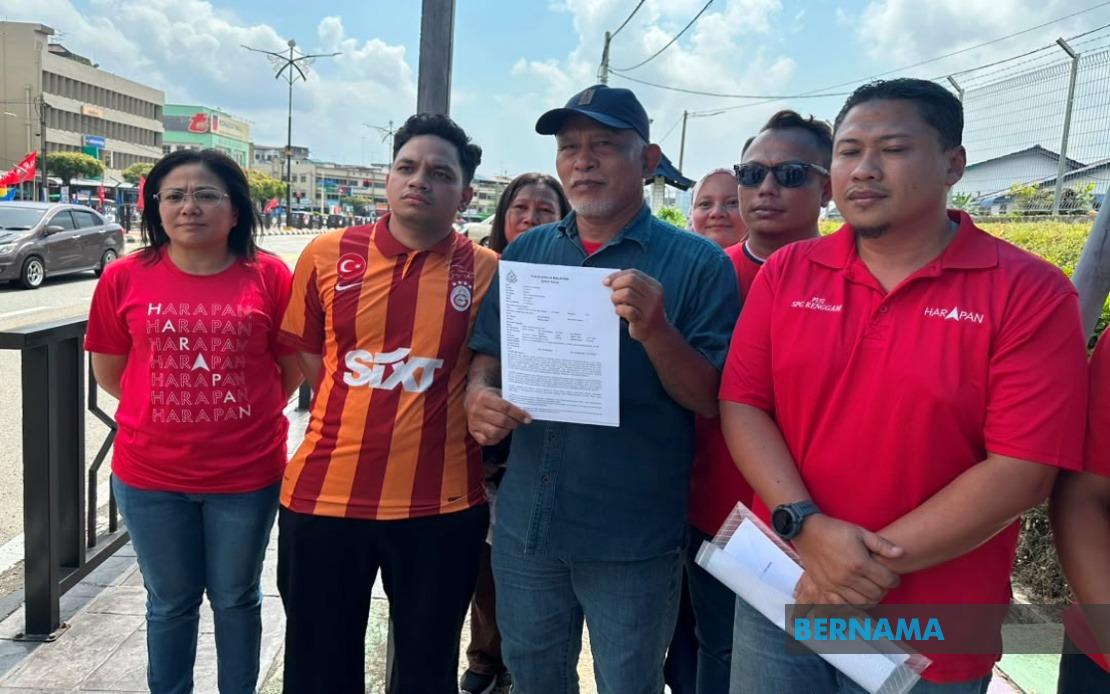
During the Johor state election campaign, controversy has erupted over allegations that Technical and Vocational Education and Training (TVET) institutions have been instrumentalised for partisan political purposes. Khiru Nasir Rohani, representing the PH candidate contesting the Machap seat, formally reported the matter to police at Simpang Renggam district headquarters, bringing into question whether electoral rules protecting educational integrity were breached during the campaign period.
The complaint centres on an event held in Kluang on July 4, where a cohort of approximately 172 students from local TVET centres was reportedly assembled and encouraged to participate in what was ostensibly a training or developmental programme. Khiru Nasir contends that this gathering functioned in reality as a platform for overt campaign activity benefiting BN-endorsed candidates. The allegation assumes particular weight because it implicates state educational institutions in what PH representatives characterise as an abuse of official machinery for electoral advantage.
Crucially, the complaint invokes specific sections of the Election Offences Act 1954, arguing that the activities represent undue influence and misuse of institutional authority for campaigning purposes. Malaysian election law has long attempted to prohibit exactly such conduct—using government machinery, educational facilities, or official position to sway voters or mobilise constituencies. The interpretation of whether a TVET gathering crosses from educational programming into illicit campaigning hinges on officials' demonstrable intent and the direct linkage between the event and partisan advocacy.
Khiru Nasir, serving also as Simpang Renggam Amanah deputy division chief, framed the complaint as a safeguard for democratic norms rather than mere partisan manoeuvreing. He explicitly called upon three institutional bodies—the police, the Malaysian Anti-Corruption Commission (MACC), and the Election Commission (EC)—to jointly scrutinise the allegations. This multi-agency appeal suggests PH views the matter as touching on both electoral integrity and potential misconduct in office, domains spanning law enforcement and electoral administration.
The timing of the complaint matters considerably. The Johor state election was scheduled for polling on July 8, meaning the allegation surfaced mere days before voters cast ballots across 56 state seats contested by 172 candidates overall. Such last-minute complaints, whilst legitimate, often generate debate about their strategic deployment within competitive campaigns. Nonetheless, if evidence demonstrates systematic mobilisation of TVET students for partisan purposes, it would represent a material breach of electoral conduct standards that authorities are obliged to investigate.
Educational institutions occupy a delicate position within Malaysia's electoral framework. Schools, colleges, and vocational centres are meant to serve as politically neutral spaces where young citizens develop skills and knowledge independent of partisan interference. When state officials are alleged to have commandeered such venues for campaign activities, the accusation strikes at foundational principles about how state resources ought to be deployed. The controversy also highlights growing sensitivity around the treatment of younger, potentially less politically sophisticated voters who may feel pressured by institutional authority figures.
Vocational education particularly merits protection in this context. TVET institutions serve Malaysia's economic development needs by equipping students with practical skills for employment. When such institutions become entangled in electoral campaigns, their educational mission risks subordination to political cycles. Students may experience divided loyalties or feel obligated to participate in political activities as a condition of their educational experience, undermining the voluntary and authentic nature of political participation that democratic systems require.
The complaint arrives amid broader questions about electoral conduct in Malaysia's regional contests. State elections have periodically generated allegations of campaign misconduct, ranging from vote-buying to abuse of government resources. While such complaints are investigated with varying rigour, this particular case involves high-profile figures and specific institutional allegations that lend themselves to concrete evidentiary examination. The EC, MACC, and police possess mechanisms to examine whether students were transported using government vehicles, whether officials used state communications networks to organise attendance, and whether campaign speeches or materials were distributed during the programme.
For the Johor contest specifically, these allegations emerged during what had already proven a closely contested campaign. The involvement of a state menteri besar—the chief executive of a major state government—amplifies the stakes. If substantiated, findings of misconduct could influence public perceptions of governance integrity and raise questions about how institutional authority has been wielded during the electoral period. Conversely, if the complaint proves unfounded or exaggerated, it may be weaponised as evidence of PH resorting to unsubstantiated allegations.
The outcome of any investigation will carry implications beyond Johor. Malaysia's electoral system relies substantially on public confidence that rules governing campaign conduct are applied consistently and fairly across all contesting parties. When one party alleges institutional abuse by a rival, and investigative bodies examine the claim, the credibility of those institutions themselves becomes implicated. If investigations appear cursory or politically influenced, public trust in electoral administration erodes further. Conversely, thorough, transparent investigation—regardless of whether allegations prove substantiated—reinforces institutional legitimacy.
Moving forward, this case exemplifies recurring tensions between utilising state machinery for legitimate governance purposes and shielding electoral competition from institutional distortion. TVET institutions may legitimately organise student activities, but the line between educational programming and political mobilisation must remain clearly demarcated. Whether authorities can establish that line convincingly in this instance will test both their investigative capability and their commitment to electoral fairness principles that Malaysian democracy fundamentally depends upon.

