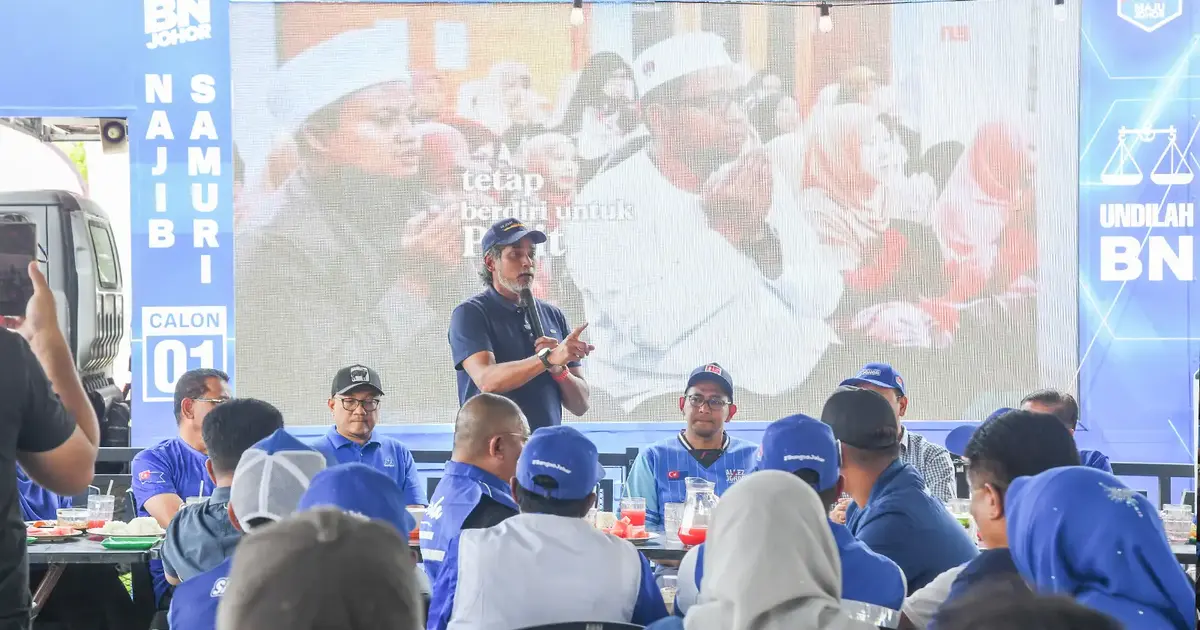
Khairy Jamaluddin, the former chief of Umno Youth, has stipulated that any debate involving Johor Barisan Nasional chairman Onn Hafiz Ghazi would require Pakatan Harapan to present a candidate of comparable stature. The condition reflects ongoing political manoeuvring ahead of potential electoral contests in the state, where leadership credentials and public standing carry substantial weight in voter perception.
The former minister's statement underscores a broader dynamic in Malaysian politics where debate formats have become tools for establishing political legitimacy and media visibility. By insisting on a menteri besar prospect as an interlocutor, the Johor BN establishment signals that Onn Hafiz operates at a leadership tier that transcends typical party functionaries. This positioning carries implications for how PH strategizes its political messaging within the state and across the region.
Onn Hafiz Ghazi has served as Johor's chief minister since 2022, inheriting significant infrastructural and governance portfolios that define the state's trajectory. His tenure has encompassed managing economic policies during a period of post-pandemic recovery, overseeing implementation of federal-state initiatives, and navigating Johor's complex political landscape where multiple coalition interests intersect. Any debate platform would inevitably examine his administration's record, resource allocation decisions, and vision for the state's development priorities.
Pakatan Harapan's strategic response to this proposal carries consequences beyond a single debate engagement. The coalition must weigh whether fielding a prospective menteri besar candidate elevates internal leadership discussions prematurely or consolidates public messaging around a defined alternative vision. Johor remains a state where federal-level politics intersect with state-specific concerns around port operations, manufacturing competitiveness, and cross-border economic dynamics with Singapore.
The debate dynamics reflect Malaysian political culture's increasing reliance on public discourse platforms to shape electoral narratives. Unlike parliamentary systems where legislative proceedings dominate public engagement, electoral debate formats offer compressed, accessible avenues for candidates to present policy positions and personal credentials. Success in such forums often translates directly into media coverage momentum and voter perception shifts, particularly among younger, urban-oriented constituencies.
For PH, the challenge involves identifying which prospective menteri besar candidate possesses both policy depth and communication skills adequate to contemporary public expectations. The opposition coalition in Johor has undergone various configurations, with different political parties bringing distinct organizational capabilities and community networks. A debate candidate must therefore represent not merely individual competence but also coalition cohesion and programmatic coherence.
Khairy's intervention also signals internal Umno-BN consensus regarding Onn Hafiz's political standing within the broader coalition framework. The former youth movement chief maintains significant influence within party circles despite relinquishing formal positions, and his public statements often reflect leadership perspectives on strategic political matters. His debate conditions essentially frame Onn Hafiz as a principal political figure entitled to engagement only with senior opposition counterparts.
Regionally, Johor's political dynamics carry implications beyond state boundaries. The state functions as an economic and demographic bridge connecting Malaysia's peninsula with regional cross-border dynamics, particularly vis-à-vis Singapore. Federal-level decisions regarding land use, port development, and manufacturing incentives often hinge on state-level political considerations. Consequently, leadership debates in Johor frequently touch upon issues with peninsular and regional resonance.
The debate proposal also reflects evolving Malaysian expectations around political accountability. Contemporary voters increasingly demand direct engagement with candidates and leaders, moving beyond traditional press conferences and party statements. Debate formats provide structured environments where leaders must respond extemporaneously to challenging questions, offering voters genuine insight into decision-making approaches and policy familiarity. This transparency dimension has reshaped how ambitious politicians prepare for public office.
For Pakatan Harapan, accepting or rejecting Khairy's debate conditions carries distinct political costs and benefits. Fielding a menteri besar prospect signals confidence in alternative governance models and elevates internal leadership candidates toward public consciousness, but risks prematurely exposing less-established figures to intensive scrutiny. Conversely, declining debate engagement might be characterized as evasion, dampening public appetite for opposition alternatives.
The broader significance of this exchange involves how Malaysian political actors continue negotiating the role of public debate in electoral processes. As media landscapes diversify and voter information sources fragment, direct candidate engagement increasingly supplements traditional campaign mechanisms. Political leaders who master debate environments gain substantial advantages in shaping voter perceptions and establishing themselves as credible alternative power centers.
Moving forward, whether this proposed debate materializes depends on PH's internal deliberations regarding candidate selection and strategic positioning. The decision will likely influence broader perceptions of coalition readiness for state-level competition and signal which party figures have consolidated sufficient support for prominence in potential electoral campaigns. In Johor's competitive political environment, such positioning decisions reverberate across multiple constituencies and demographic groups.

