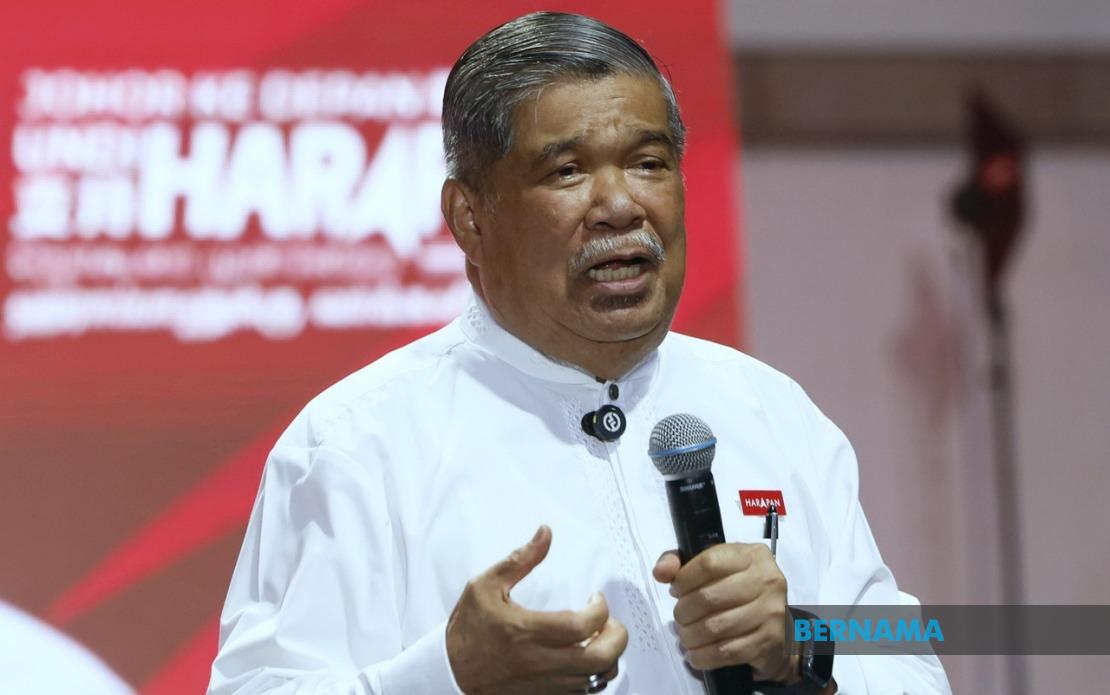
Pakatan Harapan officials have responded with confidence to PAS's move instructing its voters to support Barisan Nasional candidates in constituencies where the Islamic party is not running its own contenders in the Johor state election. Amanah president Datuk Seri Mohamad Sabu, speaking in Johor Bahru on July 1, downplayed the strategic manoeuvre, asserting that the PH machinery would press ahead with its planned campaign activities without wavering in the face of opposition tactics or provocations.
The directive from PAS, which withdrew from the PH coalition before the 2022 federal elections and subsequently aligned itself with Barisan Nasional, represents an attempt to consolidate anti-PH votes across the state. However, Mohamad Sabu, who also serves as Minister of Agriculture and Food Security, emphasised that PH would not be intimidated by such moves. He stressed that the coalition's campaign apparatus would continue operating at full capacity, undeterred by the rival bloc's strategic positioning ahead of the July 11 polling date when all 56 state seats will be contested.
Central to PH's messaging is its emphasis on multiracial and multi-religious cooperation as the bedrock of the coalition's political identity. Mohamad Sabu argued that this inclusive approach distinguishes PH from its competitors and provides the foundation necessary for sustained political stability across the country. He contended that such stability, in turn, serves as a crucial enabler for economic development and prosperity. This framing directly addresses demographic and ideological divisions that have characterised Malaysian politics in recent years, suggesting that PH's strength lies in bridging rather than exploiting communal differences.
The PH leadership is also making a direct appeal to voters to prioritise substance over sentiment. Mohamad Sabu called on Johor residents to base their voting decisions on individual candidate merit, including their capability, service record, and dedication to justice, rather than being swayed by appeals rooted in racial or religious identity. This messaging appears designed to counter potential effectiveness of PAS's directive, which implicitly relies on communal voting patterns and the notion of strategic bloc voting to maximise opposition consolidation.
A significant component of PH's campaign strategy centres on administrative coherence between state and federal governments. Party leaders argue that voter support for PH in Johor would create alignment between the state administration and the federal government, thereby smoothing implementation of major developmental initiatives. This argument carries particular weight given Malaysia's federal structure, where coordination challenges between different political administrations can slow or complicate major projects. Mohamad Sabu specifically highlighted several initiatives that would benefit from such alignment, including public transport system transformation, enhancement of facilities at international border crossings, and efforts to attract foreign and domestic investment into the state.
DAP strategic director Liew Chin Tong, who also holds the position of Deputy Finance Minister, shifted focus to demographic dynamics and their electoral implications. He identified youth voter turnout as the pivotal factor that will ultimately determine the election outcome, drawing on recent historical experience. The 2022 Johor state election demonstrated how low overall voter participation had advantaged Barisan Nasional, and Liew highlighted an additional complication: significant numbers of Johor residents employed in Singapore had been unable to return home to vote due to COVID-19 travel restrictions that were in effect at that time. This mobility issue presents an ongoing structural challenge for opposition coalitions seeking to maximise their support base in states bordering Singapore.
Liew advocated for a shift in campaign discourse during the second phase of the election process, arguing that political parties should move beyond simply attacking rivals and instead concentrate on presenting concrete policy proposals that would materially improve voters' quality of life. This emphasis on policy substance over political theatre reflects recognition that voter fatigue with repetitive partisan messaging may be limiting campaign effectiveness. He pointed to employment concerns as particularly pressing for Johor's demographic, noting that the creation of high-quality jobs offering competitive compensation remains essential to prevent young Johoreans from seeking opportunities across the border in Singapore, where employment prospects and wage levels often appear more attractive.
Among the specific policy priorities that Liew identified as deserving greater emphasis were improvements to public transport infrastructure, management of flooding and drainage systems, river maintenance, preparation for demographic ageing, and expansion of childcare services. These issues reflect bread-and-butter governance concerns that directly affect daily living standards across the state. The emphasis on these practical matters, rather than abstract political principles, suggests a strategic calculation that voters' immediate material interests may outweigh partisan loyalty or identity-based voting considerations.
Liew particularly stressed the importance of federal-state government cooperation in accelerating implementation of the Johor-Singapore Special Economic Zone (JS-SEZ), a major bilateral development initiative designed to generate high-quality employment opportunities and economic growth in Johor. The zone represents a significant potential source of jobs and investment for the state, and PH's argument that such projects move faster with political alignment between administrations carries concrete economic weight. This framing positions PH not as an ideological alternative to Barisan Nasional but as a more capable administrator capable of delivering tangible economic benefits through improved governance coordination.
The election backdrop reveals the stakes involved for both major coalitions. With Pakatan Harapan and Barisan Nasional each contesting all 56 seats across the state, there is no area of compromise or carve-out between the two blocs. Early voting is scheduled for July 7, with the main polling day set for July 11. The sequential voting arrangement, with early balloting preceding the main election day by several days, may affect turnout patterns and could introduce uncertainty into final result projections.
PH's confidence despite the PAS directive appears grounded in belief that the coalition's federal government position and policy agenda hold sufficient appeal to offset opposition tactical manoeuvres. The emphasis on multiracial cooperation, administrative competence, and policy delivery reflects a broader PH strategy to position itself as the architects of institutional stability and economic progress, in contrast to older political formulations based on communal bloc voting. Whether such messaging resonates with Johor voters, particularly younger ones, will be clarified once polling concludes in mid-July.

