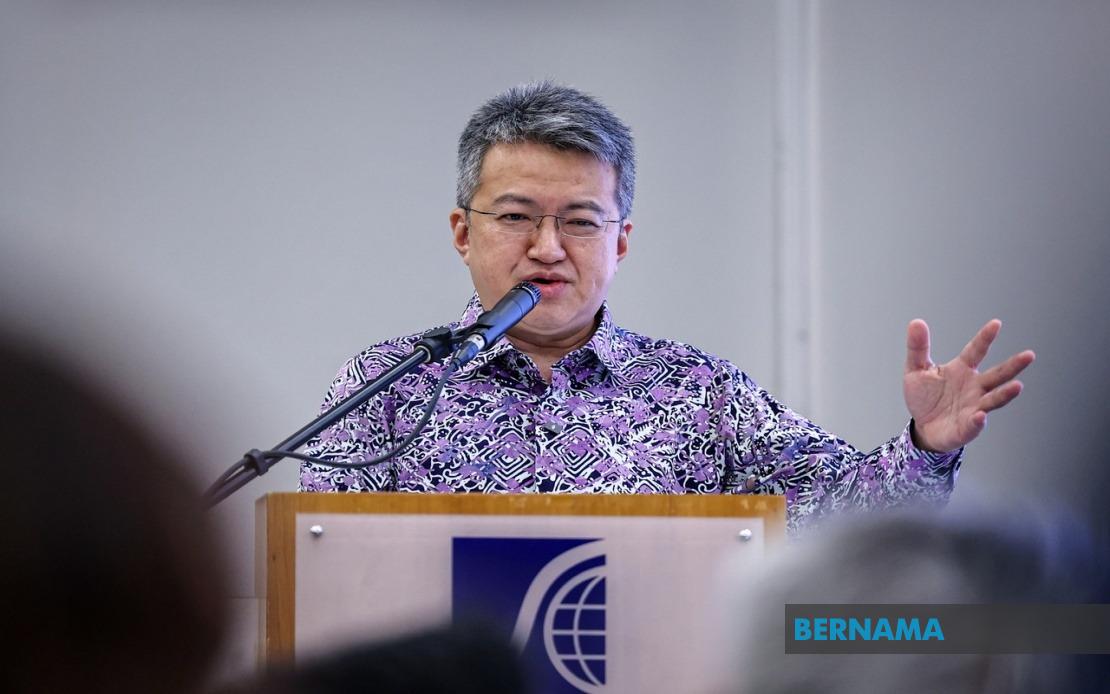
Pakatan Harapan faces an unpredictable electoral landscape in the Johor state election, where Perikatan Nasional's decision to contest only a fraction of the 56 state seats has opened a strategic puzzle that could fundamentally alter the outcome. With PN absent from 23 constituencies, the coalition must now navigate the substantial risk that opposition supporters may not automatically gravitate towards PH candidates, but instead seek alternative parties or abstain altogether. This concern, articulated by DAP Strategic Director and Deputy Finance Minister Liew Chin Tong, reflects the complex mathematics of Malaysian electoral politics, where voter behaviour cannot be predicted through simple arithmetic.
The core anxiety preoccupying PH strategists centres on vote volatility in constituencies where PN has chosen not to stand. Rather than assuming that supporters of the Perikatan alliance will either stay home or automatically support PH, the coalition recognises that displaced PN voters represent a highly contingent bloc whose allegiance depends on local dynamics, candidate quality, and campaign messaging. In tightly competitive three-way or four-way contests, such voter movements can prove decisive. Liew's cautionary stance suggests that PH's internal modelling indicates narrow margins in several marginal seats, where unexpected vote transfers could flip outcomes that currently appear secure.
This vulnerability underscores a broader strategic challenge for PH in Johor. While the coalition fielded candidates it considers young and credible across its target constituencies, the party recognises that organisational momentum and voter enthusiasm alone cannot guarantee success. The electoral environment in Johor, a state with deep-rooted Barisan Nasional influence and considerable PN support, demands sustained vigilance and responsive campaigning. Liew's emphasis on remaining observant and offering compelling ideas reflects PH's awareness that complacency could prove costly, particularly when opposition votes are fragmented across multiple contenders.
The strategic uncertainty extends to how Barisan Nasional will benefit from the PN vacuum. As the long-time ruling coalition in Johor, BN maintains significant on-the-ground machinery and voter loyalty in numerous constituencies. In seats where PN abstains, BN may consolidate both its traditional support and some PN leakage, potentially strengthening its position relative to PH expectations. This dynamic is particularly relevant in semi-urban and rural constituencies, where BN's organisational reach remains formidable and voter attachment to established parties remains strong.
Liew's own decision to step aside from his Perling state seat, despite winning it in 2022, exemplifies DAP's stated principle of preventing elected representatives from simultaneously holding both parliamentary and state assembly positions. Yet this transition carries electoral risk. Perling, with 109,992 registered voters, will feature a three-cornered contest between incoming DAP candidate Alan Tee Boon Tsong, BN's P. Pannir Selvam, and Parti Bersama Malaysia's Boo Wei Han. The seat's transition from an incumbent to a newcomer creates an opening for challengers and could test whether Liew's personal mandate translates smoothly to his successor.
Tee's background as a former Senai assemblyman provides some continuity and local legislative experience, potentially offsetting the absence of incumbency advantage. However, in Malaysian state elections, the sitting representative's personal network and voter familiarity often prove difficult to transfer. PN's absence from Perling means that opposition votes will not be split between PN and PH, yet this advantage is offset by the need to re-establish candidate credibility with an electorate accustomed to Liew's representation. The presence of Bersama Malaysia, a relatively new political entity, adds another unpredictable element to voter calculations.
Across the broader Johor electoral landscape, the 23 constituencies where PN is absent represent approximately 41 per cent of the state's legislative seats. This concentration of uncontested ground creates both opportunity and vulnerability for PH. In ideal circumstances, PH could dominate many of these seats by running superior campaigns and capturing disillusioned PN voters seeking an alternative government. However, the coalition cannot assume this scenario will materialise uniformly. Voter behaviour is often locally determined, driven by individual candidate appeal, community grievances, and informal networks rather than state-level narratives.
The early voting scheduled for July 7, with main polling following four days later on July 11, provides PH with a limited window to mobilise its machinery and persuade undecided voters. In constituencies where PN's absence has created a two-way contest against BN, PH's task is relatively straightforward. However, in multi-cornered contests involving Bersama Malaysia or independent candidates, vote fragmentation becomes more acute. PH candidates must not only attract disaffected PN supporters but also ensure their traditional base votes and that messaging is sufficiently clear to avoid voter confusion or disengagement.
From a Southeast Asian perspective, the Johor election reveals broader patterns in opposition coalition-building and competitive fragmentation affecting regional democracies. PN's strategic withdrawal from 23 constituencies may reflect internal resource constraints or deliberate tactical choices to contest only winnable seats, but it simultaneously demonstrates the challenge facing multi-party opposition coalitions in building coherent campaigns. PH's cautious messaging acknowledges this structural vulnerability without explicitly admitting it, instead framing the election as requiring heightened vigilance and superior candidate quality.
Liew's comments also underscore how Malaysian electoral mathematics continue to reward parties with strong local machinery and credible grassroots candidates, rather than purely ideological or national-level messaging. Despite PH's parliamentary representation at federal level and governance experience in several states, translating that advantage into Johor requires seat-by-seat execution. Each constituency represents a distinct political micro-environment with its own voter demographics, economic concerns, and historical voting patterns. Generic party campaigns, however well-resourced, cannot overcome local deficiencies in candidate acceptance or campaign organisation.
The strategic implications for PH's performance in Johor extend beyond state-level governance. Johor remains a crucial political battleground in Malaysia's larger power struggle, given its size, economic significance, and historical role as a BN stronghold. A strong PH showing would validate the coalition's ability to compete in traditionally conservative states and strengthen its claim to national relevance. Conversely, disappointing results would reinforce perceptions of PH's weakness outside urban centres and in BN-aligned states, potentially affecting its positioning for future federal elections.
As polling day approaches, PH's cautious tone reflects realistic assessment of electoral uncertainties rather than pessimism. The coalition has invested in candidate selection and campaign infrastructure, yet recognises that these inputs do not automatically translate into predicted outputs. Voter behaviour, particularly when established political alignments shift due to PN's absence, contains elements of genuine unpredictability. PH's focus on offering fresh ideas and maintaining campaign discipline represents a pragmatic response to this uncertainty, emphasising execution and voter persuasion over strategic calculation.

