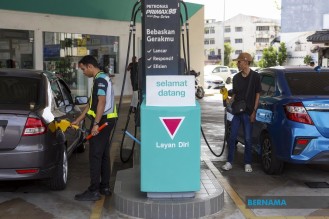
Fuel availability at Malaysia's extensive Petronas petrol station network faces no immediate constraints, with supplies expected to remain adequate until August, according to Datuk Seri Azalina Othman Said, Minister in the Prime Minister's Department (Law and Institutional Reform). The assurance came during discussions at the National Economic Action Council (MTEN) meeting last week, where Petronas provided formal confirmation of its supply position. This declaration addresses earlier public statements that had cast uncertainty over fuel availability, with previous announcements suggesting guarantees only through June 2026. The government's updated position reflects a more confident assessment of the nation's energy security trajectory over the coming months.
The Petronas Dagangan Bhd network represents a critical pillar of Malaysia's domestic fuel infrastructure, distributing approximately half of all petrol and diesel consumed nationally. This concentration of market supply through a single major distributor underscores the strategic importance of Petronas' operational continuity and procurement capabilities. The company's publicly listed subsidiary manages hundreds of service stations across peninsular Malaysia, Sabah, and Sarawak, making its supply chain decisions consequential for millions of motorists and commercial transport operators. Any disruption to Petronas' distribution network would have cascading effects throughout the broader economy, affecting logistics, agriculture, and everyday consumer activities.
Global energy markets remain turbulent due to the ongoing conflict in West Asia, which has created uncertainty in crude oil production and shipping routes critical to Asian petroleum importers. Malaysia, as a net energy exporter with its own oil production, maintains some insulation from these shocks compared to neighbours like Singapore or Thailand. However, Petronas sources a portion of its crude supplies internationally, making the company vulnerable to price volatility and supply disruptions emanating from regional geopolitical tensions. The stabilisation of supplies through August suggests Petronas has successfully negotiated or secured adequate volumes from its global supplier network, though this position will require continuous management.
In response to escalating international energy challenges, the Malaysian government has established a dedicated Crisis Management Task Force (PPPK) operating under MTEN's umbrella. This inter-agency body brings together representatives from relevant ministries and state-owned enterprises to coordinate responses to fuel and energy supply threats. The task force's mandate encompasses continuous monitoring of the domestic fuel, petroleum, and energy landscape, with particular attention to emerging bottlenecks or supply vulnerabilities. By centralising information gathering and decision-making authority, the government aims to respond more swiftly to energy emergencies and avoid the reactive crisis management that characterised previous oil shocks.
Beyond immediate supply assurance, the task force is tasked with managing the complex equation between supply security and price stability. Malaysia maintains subsidised fuel pricing for regular grade petrol and diesel, creating fiscal pressures on the government budget while insulating consumers from global commodity price movements. Balancing these objectives requires careful management of import volumes, strategic reserves, and domestic production. The task force's price control mandate reflects recognition that sudden fuel price increases could trigger inflation and reduce consumer purchasing power, particularly affecting lower-income households and small transport operators who lack hedging mechanisms.
Combating fuel smuggling and irregular market activities represents an equally significant component of the task force's work. Malaysia's geographical position, with maritime borders extending into the Strait of Malacca and the South China Sea, creates ongoing vulnerability to fuel theft and illegal cross-border trading. Neighbouring countries' higher fuel prices incentivise smuggling operations that drain supplies from the legitimate domestic market. Criminal syndicates engaged in fuel trafficking exploit weak enforcement in certain jurisdictions and the complexity of maritime surveillance. The task force's attention to these irregular activities signals heightened vigilance and coordination between customs, maritime law enforcement, and Petronas security personnel.
Looking beyond West Asia, Malaysia's government is actively pursuing alternative crude oil sources from geographically diversified suppliers. West African producers including Nigeria, Angola, and Ghana represent one sourcing avenue, while the Americas—particularly from Brazil and Mexico—offer additional alternatives. Diversifying away from Middle Eastern crude reduces dependency on any single producing region and insulates Malaysia from localised geopolitical crises. However, crude oil grades vary significantly by origin, and Petronas' refinery infrastructure is configured for specific crude characteristics. Switching sources requires careful technical evaluation to ensure compatibility with existing refining equipment and product specifications. Commercial negotiations must also satisfy crude oil traders' requirements regarding price, volume commitments, and delivery terms, adding complexity to procurement decisions.
The government's proactive engagement with energy security reflects lessons learned from previous global oil shocks, including the 1973 embargo and the 2008 price spike. Malaysia's experiences during these episodes demonstrated the economy-wide impact of energy disruptions and the importance of strategic reserves, diversified sourcing, and transparent communication with the public. The establishment of the crisis task force represents institutional evolution, embedding energy security considerations within the highest levels of economic policymaking. This governance shift suggests the government views energy challenges not as isolated sectoral issues but as fundamental threats to macroeconomic stability and social cohesion.
For Malaysian consumers and businesses, the immediate assurance of stable supplies through August provides breathing space to adjust to any emerging constraints or price adjustments. Transport companies can plan operations without fearing sudden fuel rationing. Ordinary motorists can refrain from panic-buying and hoarding behaviour that would distort legitimate demand patterns. Manufacturing sectors dependent on stable energy costs can pursue forward contracts with greater confidence. However, the temporary nature of this reassurance—extending only to August—suggests the underlying energy environment remains fragile. Further deterioration in the West Asia situation or unexpected supply disruptions elsewhere could necessitate rapid contingency activation.
The Malaysian energy sector's resilience will ultimately depend on sustained diplomatic engagement in global energy markets and continued investment in domestic production capacity. While Petronas' immediate supply position appears secure, Malaysia cannot take energy abundance for granted indefinitely. The crisis task force's establishment signals official recognition that globalised energy markets create vulnerabilities even for producing nations. Maintaining stable supplies requires constant vigilance, relationship management with international suppliers, strategic reserves, and regulatory frameworks that balance consumer affordability with fiscal sustainability.

