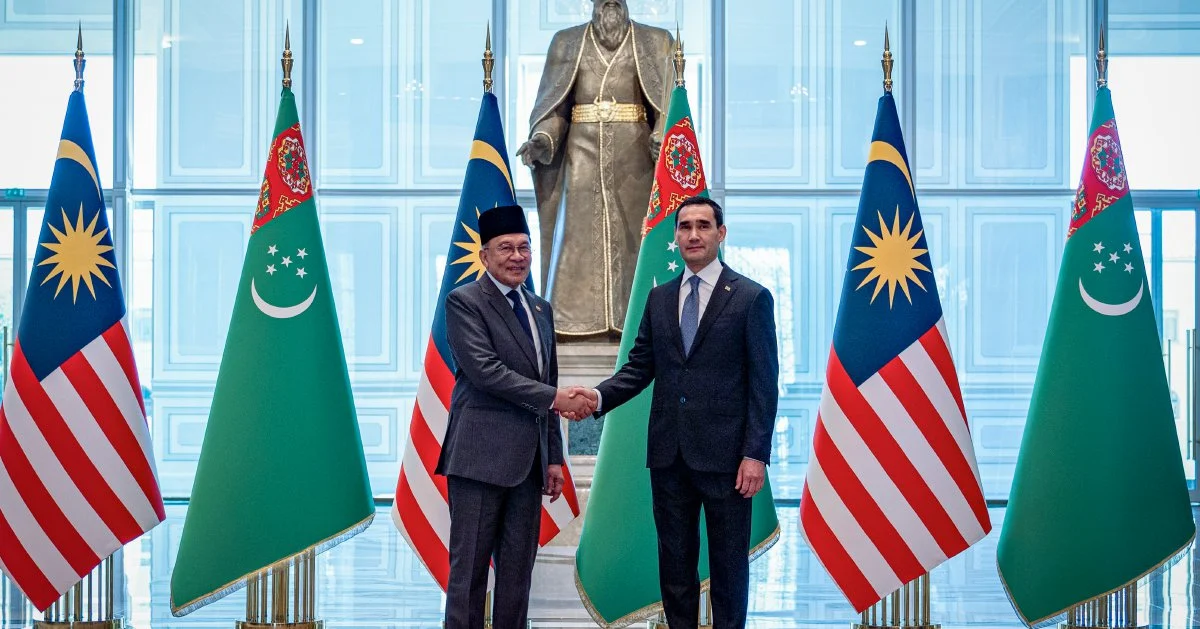
Malaysia's relationship with Turkmenistan is entering a transformative phase, with Petroliam Nasional Bhd (Petronas) emerging as a primary vehicle for deepening ties between the two nations. The national oil and gas company's growing activities in the Central Asian republic have taken on heightened significance following Prime Minister Datuk Seri Anwar Ibrahim's official state visit, which underscored the strategic importance both countries attach to energy sector collaboration. This momentum reflects a broader recognition that hydrocarbon cooperation can serve as a foundation for expanding trade, investment, and diplomatic engagement across multiple sectors.
Petronas has maintained a continuous operational presence in Turkmenistan for years, but the company's role is now being repositioned as part of a deliberate strategy to strengthen Malaysia's footprint in Central Asia. The timing of the PM's visit and the subsequent emphasis on energy cooperation suggests a coordinated diplomatic approach aimed at elevating Malaysia's profile in a region traditionally dominated by Russian, Chinese, and Iranian interests. For Malaysian policymakers, Turkmenistan represents both an energy security opportunity and a gateway to broader engagement across Central Asian markets where Southeast Asian nations remain comparatively underrepresented.
Turkmenistan possesses one of the world's largest natural gas reserves, making it an attractive partner for energy-importing nations and companies seeking long-term supply contracts or exploration opportunities. Petronas' expertise in offshore operations, liquefied natural gas (LNG) technology, and downstream development aligns well with Turkmenistan's aspirations to diversify its energy partnerships beyond traditional buyers in Europe and Asia. The company's technical capabilities and experience managing complex infrastructure projects in maritime environments provide Turkmenistan with an alternative partner capable of introducing modern efficiency standards and operational best practices.
The strategic implications for Malaysia extend beyond immediate energy commerce. Central Asia occupies a pivotal position in global geopolitics, serving as a crossroads between Europe, Russia, China, and South Asia. By strengthening ties through Petronas-led energy projects, Malaysia positions itself as a reliable, neutral partner with technical expertise rather than as a nation pursuing geopolitical dominance. This approach aligns with Malaysia's broader foreign policy emphasis on pragmatic, benefit-focused relationships uncomplicated by historical rivalries or regional power struggles.
For Petronas specifically, the Turkmenistan opportunity represents a significant growth avenue in a region where Southeast Asian oil and gas companies remain relatively scarce. International oil majors have long dominated upstream operations in Central Asia, but the market is gradually opening to a wider range of competitors. Petronas' established reputation in the Asia-Pacific region, combined with its state-owned structure that affords access to long-term financing and patient capital, positions the company competitively against both international independents and emerging players from South and East Asia.
The economic dimensions of expanded cooperation are substantial. Energy projects typically catalyse secondary economic activity, from engineering services to equipment supply and workforce training. Malaysian companies in the oilfield services sector, equipment manufacturing, and technology provision stand to benefit from tenders and subcontracting opportunities tied to Petronas' operations. Additionally, strengthened bilateral relations create openings for Malaysian enterprises in construction, telecommunications, financial services, and other sectors where Turkmenistan is actively seeking partnerships with non-traditional partners.
Turkmenistan has demonstrated interest in diversifying its partnership base, particularly as Western sanctions and geopolitical tensions have periodically disrupted traditional energy markets. Malaysia, as a moderate Muslim-majority nation with no historical antagonisms toward Central Asia and a reputation for pragmatic, non-ideological business relationships, presents an attractive alternative. The country's success in managing multinational energy consortia and its track record in developing upstream acreage align with Turkmenistan's modernisation objectives.
From Malaysia's perspective, Petronas-anchored engagement in Turkmenistan carries broader implications for regional positioning. Southeast Asia has historically focused on maritime trade and South China Sea affairs, but the region's energy security increasingly depends on secure access to Central Asian supplies and markets. As Southeast Asian economies grow and energy demand rises, diversifying supply sources becomes strategically essential. Central Asia offers alternatives to Middle Eastern oil and liquefied natural gas, reducing dependency on any single region and enhancing energy security across the bloc.
The diplomatic framework underpinning these energy initiatives matters considerably. The PM's visit signalled high-level political commitment to the relationship, providing cover for long-term business planning and investment decisions that Petronas and its potential local partners require. Government-to-government exchanges, whether through bilateral commissions or sector-specific working groups, help address regulatory uncertainties and facilitate the commercial negotiations that inevitably accompany major hydrocarbon projects.
Looking ahead, the trajectory of Malaysia-Turkmenistan relations will substantially depend on Petronas' ability to execute projects efficiently and deliver tangible economic benefits to both nations. Successful operations would validate the partnership model and create momentum for expanded collaboration across other sectors. Conversely, project delays or underperformance could constrain broader bilateral engagement. The company's operational track record in Southeast Asia and beyond provides reasonable confidence, though Central Asian business environments present distinct challenges that require careful navigation.
For Malaysian stakeholders, including government agencies, supporting industries, and financial institutions, the Petronas-led Turkmenistan initiative represents a strategic opportunity to diversify economic exposure and participate in Central Asian development. The convergence of Petronas' technical capabilities, Malaysia's diplomatic positioning as a neutral partner, and Turkmenistan's modernisation aspirations creates a compelling foundation for sustained cooperation that could reshape Malaysia's engagement with one of Asia's most energy-rich regions.

