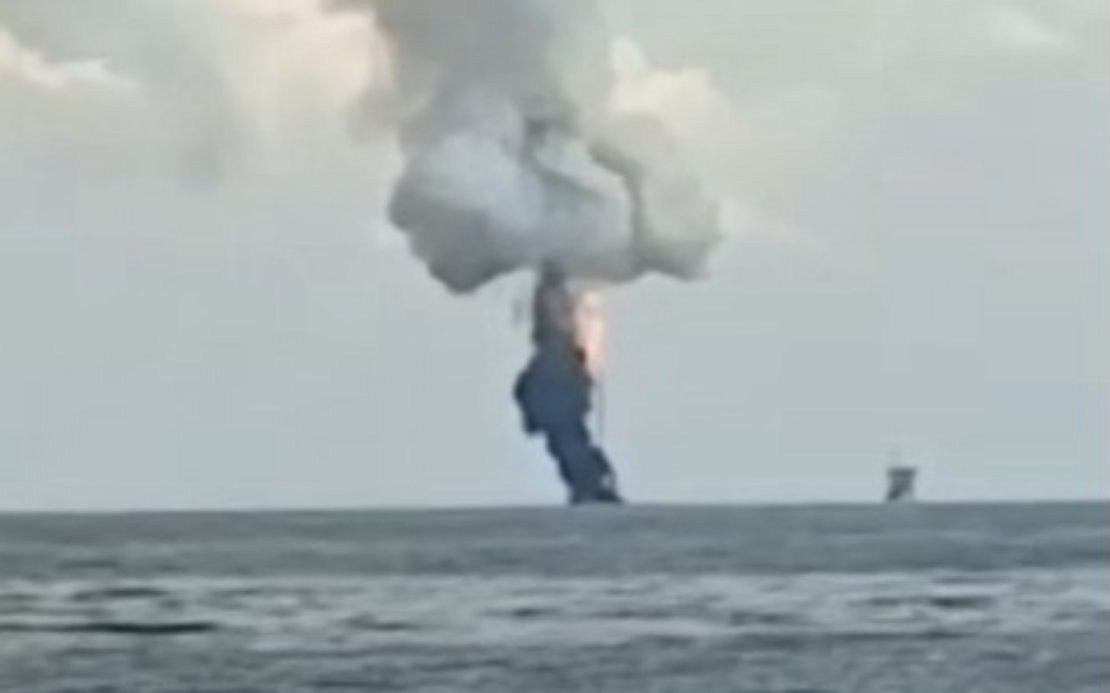
A fire erupted at an offshore petroleum installation operated by Petronas Carigali's subsidiary Vestigo Petroleum Sdn. Bhd. on June 28, prompting immediate response measures that brought the situation under control within hours. The incident occurred at the West Lutong Vent A (WLV-A) facility, situated in waters off Sarawak, at approximately 2 pm local time. The company confirmed the details in a statement released the following day, providing reassurance to stakeholders and the public that safety protocols had functioned as intended.
The fire became a matter of public concern after video footage of the incident circulated rapidly across social media platforms, drawing attention to safety practices in Malaysia's offshore energy sector. Such incidents, while manageable in this case, underscore the operational hazards inherent in deep-water resource extraction and the critical importance of maintaining robust emergency response systems. The swift dissemination of information through digital channels reflects evolving public expectations for transparency from major petroleum operators, particularly in environmentally sensitive offshore regions.
Vestigo Petroleum's immediate statement emphasized that no workers sustained injuries and that all personnel remained accounted for following the incident. This outcome reflected the effectiveness of safety procedures in place at the facility, where trained teams are positioned to respond to emergencies. The company stressed its unwavering commitment to protecting its workforce, a principle that carries both moral and operational significance in an industry where human factors directly impact long-term project viability and regulatory standing.
The operator reported coordinating closely with relevant government authorities and regulatory bodies to manage response efforts and ensure compliance with established protocols. This cooperative approach aligns with Malaysia's regulatory framework for offshore oil and gas operations, where the Petroleum Development Act and associated guidelines require operators to work in tandem with authorities during incident management. The involvement of regulatory bodies provides an additional layer of oversight and ensures that investigations meet national standards for occupational safety and environmental protection.
Investigations into the root cause of the fire remained ongoing at the time of the company's statement, with technical teams conducting systematic analysis of equipment performance, maintenance records, and operational conditions preceding the incident. Determining causation is fundamental not only for understanding what transpired at this specific facility but also for identifying whether systemic lessons might apply across Petronas Carigali's broader operational portfolio. Such investigations typically examine mechanical failures, process deviations, maintenance lapses, or external factors, with findings eventually informing refinements to safety protocols.
The facility's designation as a vent station suggests its role in managing vapour or gas streams during normal operations, functions where careful thermal and pressure management prove essential. Any disruption to such systems carries potential consequences, making the incident's containment within hours a positive indicator of response capability. The West Lutong field represents a significant petroleum production area offshore Sarawak, contributing substantially to Malaysia's hydrocarbon output and representing important revenue streams for both the national economy and state development.
Vestigo Petroleum's assurance that the incident posed no immediate threat to surrounding communities and the marine environment addresses concerns fundamental to coastal and maritime stakeholders in Sarawak. Oil and gas operations in this region operate in proximity to fishing communities, marine biodiversity hotspots, and indigenous settlements dependent on ocean resources. The company's statement that environmental integrity remained uncompromised will require verification through independent monitoring and transparent reporting of any environmental assessments undertaken in subsequent weeks.
The incident gains context within Malaysia's broader energy security framework, where offshore petroleum assets remain vital to export earnings and domestic fuel supplies. Sarawak holds particular significance as a major crude oil and liquefied natural gas producer, with facilities operated by multiple international and domestic companies. Operational disruptions, even brief ones, can cascade through supply chains and affect economic planning, making rapid incident resolution and transparent communication essential components of industry credibility.
Petrolas Carigali, as the upstream exploration and production arm of Petronas, maintains responsibility for ensuring that its subsidiaries like Vestigo uphold the highest safety and environmental standards. The group's reputation for technical competence and operational discipline depends substantially on managing incidents effectively and learning systematically from adverse events. The company's public statements emphasizing commitment to safety and environmental integrity reflect recognition that stakeholder trust represents a durable competitive advantage in an industry increasingly subject to scrutiny regarding climate impact and operational risk.
Looking forward, the investigation findings and any remedial measures implemented will likely inform industry conversations about equipment reliability, maintenance intervals, and emergency response protocols in offshore installations. Regulatory bodies may assess whether existing guidelines require updating based on insights gained from this incident. Such iterative improvements represent standard practice within Malaysia's petroleum sector, where operators continuously refine their approaches to managing complex technological systems operating in challenging offshore environments.
The rapid containment of this fire demonstrates that emergency systems functioned as designed, yet the incident itself illustrates why energy companies must maintain vigilant oversight of their installations. For Malaysian stakeholders concerned with energy security, environmental protection, and occupational safety, the incident underscores the importance of rigorous regulatory oversight, transparent operator communication, and continued investment in prevention and response capabilities across the nation's critical petroleum infrastructure.

