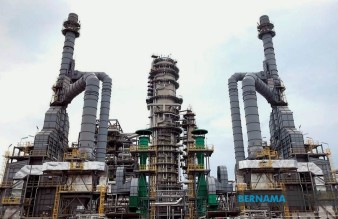
Malaysia's proposed petroleum reserve must be conceived as a single pillar within a far larger architecture of economic resilience rather than pursued in isolation, according to Mohd Sedek Jantan, director of investment strategy and country economist at IPPFA Sdn Bhd. While Prime Minister Datuk Seri Anwar Ibrahim has put forward the idea of establishing a strategic oil stockpile to shield the nation from global supply disruptions and geopolitical tensions, the economist cautions that policymakers must look beyond energy alone when designing mechanisms to protect the economy from future shocks.
The fundamental concern underpinning this perspective rests on a recognition that economic crises rarely emerge from singular sources. Future disruptions could originate from agricultural supply chains, access to rare earth elements and other critical minerals essential for manufacturing, or even semiconductor availability—sectors that carry equivalent or perhaps greater systemic risk than petroleum. Rather than stockpiling barrels as an end in itself, the success of any strategic reserve should ultimately be measured by its contribution to Malaysia's broader capacity to absorb and recover from geoeconomic upheaval. This represents a meaningful shift in how policymakers should frame the reserve initiative within public discourse.
Food security represents a particularly compelling case for parallel prioritisation. Malaysia imports substantial quantities of essential foodstuffs, leaving households and the broader economy vulnerable to international price volatility and supply interruptions. When global food markets tighten, domestic inflation accelerates, eroding household purchasing power and creating social pressures that can destabilise communities. A genuine holistic economic security strategy must therefore allocate equal weight to agricultural resilience as it does to energy independence. The interconnected nature of modern supply chains means that vulnerabilities in one sector frequently cascade into others, amplifying the overall economic impact.
Similarly, reliable energy remains indispensable to the functioning of Malaysia's manufacturing sector, transportation networks and industrial base. Power constraints would rapidly throttle production and export competitiveness, making energy security a legitimate and important component of long-term economic planning. However, the economist's central argument is that petroleum should be positioned as one thread within a larger tapestry rather than the tapestry itself. Tomorrow's critical challenge may involve semiconductors, critical minerals for battery production, or digital infrastructure resilience—sectors that barely registered on strategic planners' radars a decade ago.
Mohd Sedek emphasises that the sustainability and effectiveness of any petroleum reserve hinges on three pillars of rigorous design. First, the government must articulate a clear foundational purpose: the reserve should exist to stabilise the economy during genuine supply emergencies, not to meddle with short-term commodity price movements or serve narrower political objectives. This distinction carries profound implications, as reserves designed to smooth market cycles consume resources inefficiently and invite speculative pressure that erodes their protective value. A reserve anchored to authentic crisis mitigation operates under fundamentally different incentive structures.
Second, the framework governing the reserve must be constructed with sufficient flexibility to accommodate emerging strategic vulnerabilities. Today's planners may focus on petroleum, but the methodology for identifying, monitoring and responding to future risks should be adaptive and forward-looking. This requires establishing institutional mechanisms that periodically scan the horizon for developing weaknesses across food systems, minerals, semiconductors and other domains. The study and implementation process should therefore embed built-in review mechanisms that allow for strategic reprioritisation as circumstances evolve.
Third, commercial and fiscal sustainability must undergird all decisions concerning reserve size, financing structures, storage infrastructure and governance arrangements. Public resources deployed toward strategic reserves represent forgone opportunities elsewhere in the budget—schools, hospitals, infrastructure, or poverty alleviation programmes. Consequently, rigorous cost-benefit analysis should guide determinations about how much petroleum to stockpile, how to finance those holdings, where to store them, and which institutional actors should oversee management. Without this discipline, reserves can become monuments to planning failure rather than instruments of genuine economic protection.
The international experience offers instructive lessons. Japan has developed an exemplary model by integrating strategic reserves with complementary policies including diversified supply chains that reduce dependence on any single source, logistics networks positioned to function under stress, and formalised coordination mechanisms between government and private sector actors. This comprehensive approach yields greater resilience than reserves alone could ever achieve. Malaysia would be prudent to study and adapt such integrated frameworks rather than adopting a narrowly focused petroleum stockpile in isolation.
At its deepest level, the economist's argument represents a call for strategic thinking that transcends sectoral silos. Economic security in an era of geopolitical tension and climate volatility requires systemic resilience—the capacity to identify vulnerabilities wherever they emerge, to address them through coordinated policy responses, and to maintain the flexibility to adapt as new threats materialise. A petroleum reserve can certainly contribute to this broader objective, but only if embedded within a deliberate national risk management framework that spans multiple domains and recognises that today's peripheral concern may become tomorrow's existential challenge. The question for Malaysian policymakers is not simply whether to establish a petroleum reserve, but how to construct a comprehensive economic security architecture within which such reserves serve their proper function.

