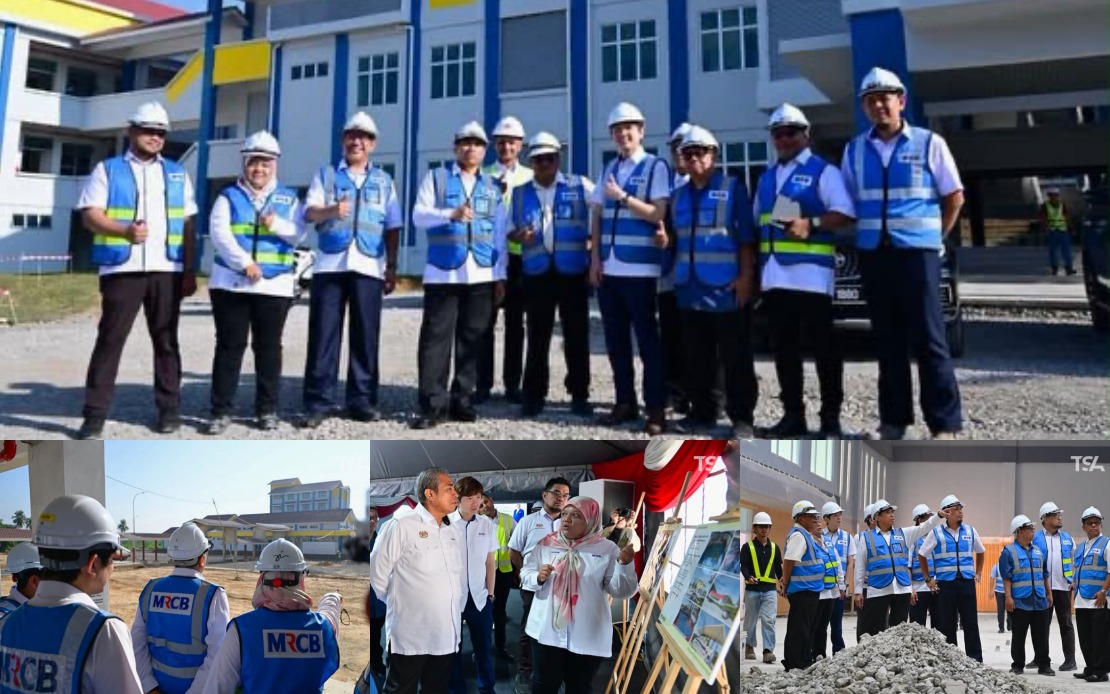
After languishing for more than a decade, construction of the Perlis Malaysia Sports School in Bukit Chabang, Padang Besar, has finally gained momentum and is now expected to reach completion by January 2027. The facility's resurrection marks a significant turn for a project that had become a symbol of unfulfilled infrastructure commitments in Malaysia's northern region.
Chief Secretary to the Government Tan Sri Shamsul Azri Abu Bakar expressed confidence in the timeline following a site visit and consultation with project managers. He disclosed that the first phase of construction has advanced to between 85 and 90 per cent completion, a substantial improvement from the project's stalled status in recent years. The visible progress reflects a dramatic shift in the project's fortunes since Prime Minister Datuk Seri Anwar Ibrahim intervened in April last year by transferring responsibility to a competent government-owned enterprise, recognising that private sector challenges had prevented timely delivery.
The school's extended delay had stemmed from recurring obstacles that plagued implementation across multiple years. Prior to the government takeover, the project struggled with critical labour shortages and contractor performance issues that repeatedly pushed completion dates beyond their scheduled timelines. These recurring setbacks had eroded public confidence in the infrastructure's eventual delivery. By shifting oversight to a government-backed entity with greater resources and accountability mechanisms, authorities addressed the fundamental management weaknesses that had dogged the initiative previously.
Beyond the sports school itself, Shamsul Azri used the occasion to underscore broader government priorities regarding administrative efficiency. He highlighted the Government Service Efficiency Commitment Act 2025, which took formal effect on December 1, 2025, as a critical legal framework intended to dismantle bureaucratic obstacles and expedite public service operations. Unlike earlier administrative directives that lacked binding force, this legislation carries statutory weight and establishes enforceable standards for government agencies seeking to streamline their processes and enhance responsiveness to citizens and businesses.
The efficiency legislation sits within a larger reform architecture known as the Public Service Reform Agenda (ARPA), which encompasses the Bureaucratic Red-Tape Reform (RKB) initiative launched in 2024. Since its introduction, the RKB programme has completed 439 distinct projects aimed at removing procedural obstacles and regulatory redundancies across government departments. These completed reforms have generated estimated compliance cost savings of RM2.95 billion to the broader Malaysian economy, representing tangible benefits that extend from individual businesses to consumers navigating government services.
The scale of savings indicates how substantially inefficient bureaucratic structures had been burdening the economy. By quantifying improvements in measurable financial terms, the government seeks to demonstrate that administrative reform yields concrete economic benefits beyond operational convenience. For Malaysia's business community, these efficiency gains potentially translate into faster approvals, reduced regulatory compliance expenses, and lower transaction costs when engaging with public institutions—factors that strengthen the nation's competitiveness in attracting and retaining investment.
Shamsul Azri emphasised that these efficiency improvements support the government's broader development agenda, which encompasses strengthening public sector productivity, enhancing service delivery capacity, and cultivating an investment environment perceived as more efficient and globally competitive. In Southeast Asia's dynamic economic landscape, where Singapore, Vietnam, and other regional competitors actively market their governance advantages, Malaysia's commitment to demonstrable administrative improvements carries strategic significance for foreign and domestic investors evaluating long-term commitments.
Regarding civil service conduct, the Chief Secretary reaffirmed that personnel across government agencies remain bound by regulatory prohibitions against participating in political activities, particularly as election cycles approach. He noted that no formal complaints regarding political involvement by civil servants have been lodged thus far, and stated that appropriate responses would be implemented should such issues materialise. This stance underscores the government's intention to maintain political neutrality within the bureaucracy, a principle fundamental to meritocratic public administration.
The Perlis sports school project carries additional significance as a bellwether for Malaysia's broader infrastructure development trajectory. Sports facilities like this one serve multiple community functions—developing athletic talent, promoting physical wellness, and providing venues for regional and national competitions. For Perlis, a relatively smaller state within Malaysia's federation, the completion of such a facility represents economic investment in local capacity and potentially enhances the state's profile within national sporting frameworks.
The January 2027 completion target, if achieved, would demonstrate that the government's institutional restructuring and efficiency reforms translate into tangible project delivery. Success here would validate the approach of transferring chronically underperforming infrastructure projects to dedicated government contractors with clearer accountability. Conversely, further delays would reinforce scepticism about whether administrative reforms genuinely overcome operational challenges or merely shuffle institutional responsibilities.
For Malaysian readers, particularly those in Perlis and surrounding states, the project's anticipated completion provides concrete evidence of government commitment to fulfilling infrastructure promises that extend across multiple political administrations. The facility's eventual opening would serve thousands of young athletes and their families, offering training facilities and competitive opportunities previously unavailable in the region. The project thus represents not merely a construction milestone but a tangible expression of inclusive development that reaches beyond Malaysia's economically dominant regions.

