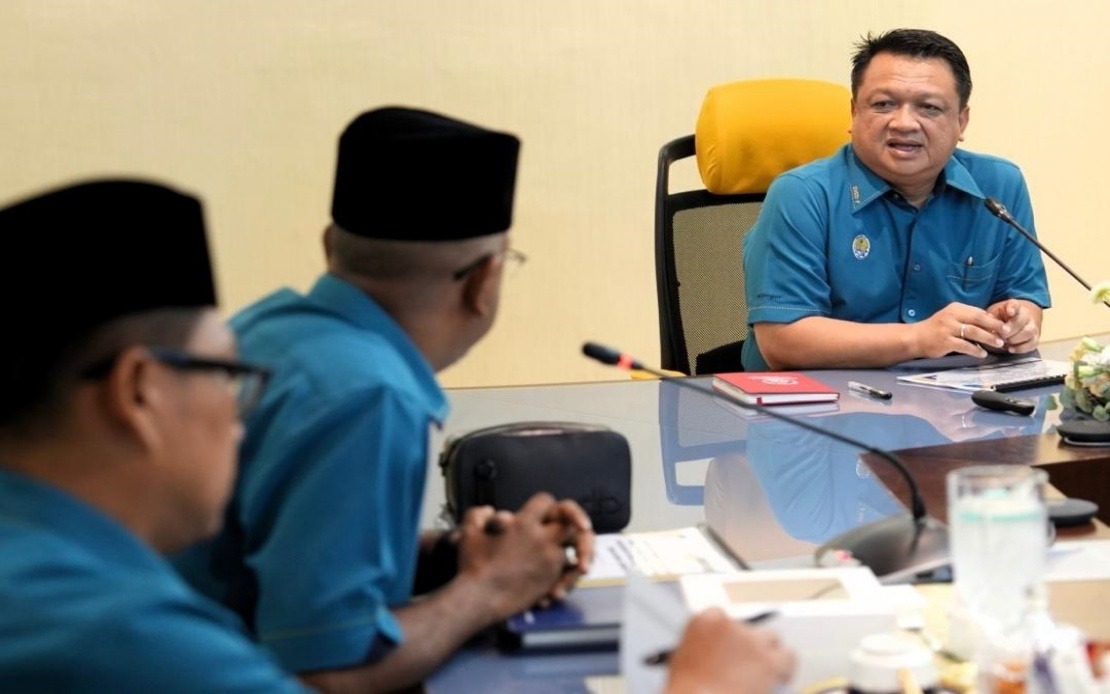
The Raja Muda of Perlis, Tuanku Syed Faizuddin Putra Jamalullail, has outlined an ambitious vision for his state to become Malaysia's leading laboratory for environmental innovation and sustainability transformation. During a meeting with Kangar Municipal Council officials at the Arau Royal Gallery, the Raja Muda proposed that Perlis' relatively modest geographical footprint should be converted into an incubator for ambitious green policies designed to position the state as a 'Green Smart State' within the federation. This proposal carries significant weight beyond Perlis itself, offering Southeast Asia's broader development community a model for how smaller territories can navigate the pressures of modernisation while maintaining environmental integrity.
Central to the Raja Muda's vision is the acceleration of renewable energy deployment across the state. He specifically highlighted solar and biomass technologies as catalysts for transforming Perlis' energy landscape, targeting a zero-carbon operational status that would demonstrate the feasibility of decarbonisation within the Malaysian context. Should such efforts succeed, the initiative would project Perlis as an exemplar of climate action, positioning the state alongside international leaders grappling with the urgency of net-zero transitions. The symbolic value of achieving carbon neutrality in Malaysia would extend beyond environmental metrics, signalling the nation's willingness to pioneer solutions applicable across the tropical Southeast Asian region.
Kangar Municipal Council President Affendi Rajini Kanth revealed that municipal authorities have advanced preparatory work through the development of the Green City Action Plan, a comprehensive strategic document prepared in collaboration with multiple stakeholders including the Ministry of Economy, the IMT-GT Joint Business Council, ICLEI - Local Governments for Sustainability, and the Asian Development Bank. The GCAP received formal approval from the Kangar Municipal Council in February and now functions as the operational blueprint for green urban development across Perlis. This institutional architecture demonstrates how smaller municipalities can harness international expertise and multilateral resources to construct sophisticated sustainability frameworks that align with Malaysia's broader climate commitments and the United Nations Sustainable Development Goals.
The GCAP identifies five priority projects designed to catalyse Perlis' transformation into a low-carbon, climate-resilient jurisdiction. These initiatives span multiple dimensions of urban sustainability, reflecting an integrated approach to environmental management. The plan emphasises that sustainable development requires simultaneous consideration of economic viability, social equity, and environmental protection—a balancing act that many jurisdictions struggle to achieve. For Malaysian policymakers and regional observers, the implementation of these projects offers valuable data on how competing development priorities can be reconciled without sacrificing environmental standards.
Solar photovoltaic installation across government, public, and private buildings represents the cornerstone of Perlis' renewable energy strategy. By systematically converting state infrastructure into distributed power generation nodes, the initiative creates a dual benefit: reducing operational electricity costs for public institutions whilst demonstrating to private sector actors the commercial viability of solar adoption. This approach sidesteps the binary choice between environmental protection and economic efficiency, instead framing decarbonisation as a cost-reduction opportunity. For a state operating under budgetary constraints typical of Malaysian regional governments, such efficiency gains carry particular appeal.
Transportation decarbonisation features prominently in the plan through the preparation of a Low Carbon Transport Plan and the development of Micro-Mobility Zones and Non-Motorised Transport facilities. These interventions address the reality that transportation represents a significant and growing source of greenhouse gas emissions across Malaysia and Southeast Asia more broadly. By establishing infrastructure that encourages walking, cycling, and shared micro-mobility solutions, Perlis can reduce vehicular emissions whilst improving urban livability, public health outcomes, and social cohesion. The establishment of these zones also signals to private sector investors that Perlis is creating amenities that attract younger, more affluent demographics increasingly valuing sustainable lifestyles.
Waste management transformation underpins the broader sustainability agenda through the planned 80-tonne-per-day Material Recovery Facility designed to strengthen recycling capabilities and reduce landfill dependency. This facility addresses a critical infrastructure gap across Malaysia, where waste management systems often prioritise disposal over resource recovery. By developing sophisticated sorting and processing capacity, Perlis can extract economic value from waste streams whilst reducing environmental contamination—a classic circular economy intervention that benefits both municipal finances and environmental quality. The facility's moderate capacity suggests realistic, achievable targets rather than aspirational overreach.
Water resource management receives dedicated attention through comprehensive rainwater harvesting system implementation across the state. In Malaysia's equatorial climate characterised by abundant precipitation but increasingly unreliable distribution patterns, rainwater harvesting offers both water security and flooding mitigation benefits. By systematically capturing and storing rainfall, Perlis reduces pressure on conventional groundwater and surface water sources whilst building resilience against drought. This approach proves particularly valuable in smaller states where water infrastructure investments face economies of scale challenges.
Climate resilience and disaster preparedness form the final pillar of the comprehensive strategy. The proposed Perlis State Disaster Management Plan and strengthening of the Perlis Integrated Command Centre reflect growing recognition that climate change does not merely mean incremental warming but rather increased frequency and intensity of extreme weather events. For a state geographically positioned to experience tropical storms and potential flooding, developing coordinated disaster response capabilities offers tangible protection to citizens and economic assets. This dimension of the plan demonstrates sophisticated understanding that sustainability requires both mitigation and adaptation.
The institutional collaboration supporting the GCAP—encompassing national government ministries, regional business councils, international sustainability networks, and multilateral development banks—exemplifies how smaller jurisdictions can access expertise and resources otherwise available primarily to large metropolitan centres. This collaborative model holds significant implications for other Malaysian states seeking to develop comparable sustainability frameworks. Rather than viewing environmental policy as a resource-intensive luxury, the Perlis approach demonstrates how strategic partnerships can distribute costs and expertise across multiple institutions.
For Malaysia's climate commitments, Perlis' transformation would carry disproportionate symbolic weight despite representing a modest proportion of national GDP or population. Successfully implementing ambitious sustainability policies in a smaller state proves feasibility and builds political momentum for scaling comparable initiatives to larger jurisdictions facing greater technical and financial challenges. The experience generated through Perlis' pilot projects would provide invaluable data on which green technologies prove most cost-effective, which policy instruments drive behavioural change, and which institutional arrangements facilitate effective implementation.
Regional observers across Southeast Asia will monitor Perlis' progress closely, as tropical middle-income states throughout the region grapple with comparable development pressures and climate imperatives. Should Perlis achieve its zero-carbon and resilience targets, the state could establish itself as a knowledge centre and demonstration site attracting visitors, investors, and policymakers seeking concrete examples of how environmental ambition coexists with economic development. This positioning generates potential for Perlis to transition from peripheral economic status towards becoming a centre of expertise and innovation within Malaysia's sustainability landscape.

