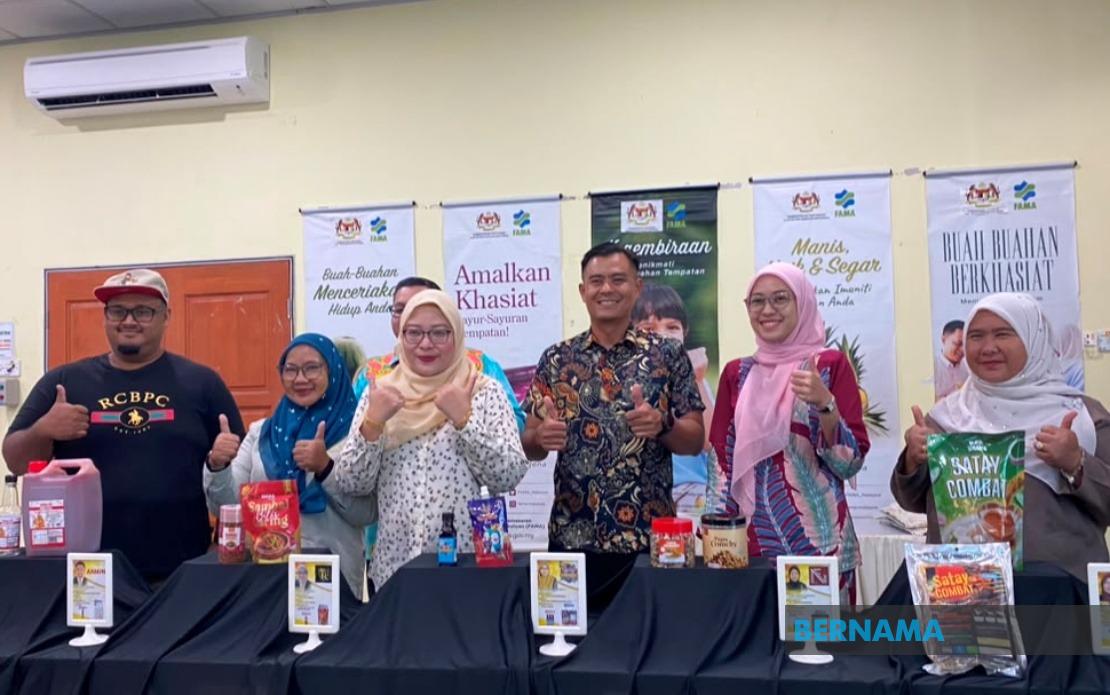
The Perlis branch of the Federal Agricultural Marketing Authority (FAMA) has announced the distribution of RM510,500 in grants to nine agro-food and agro-based industry entrepreneurs, marking a significant intervention in the state's agricultural sector. The financial support, delivered through multiple targeted grant schemes, represents FAMA's commitment to strengthening the competitiveness of rural enterprises and facilitating their integration into broader market networks across Malaysia and potentially beyond.
According to Mohd Anzara Azizan, director of FAMA Perlis, the allocation has been strategically divided across four distinct grant categories to address different business development needs. The largest component, RM392,000, was reserved for the Agro-Tourism Grant, reflecting the growing recognition of experiential and value-added agricultural ventures as a pathway to sustainable rural income. Additionally, RM83,500 was earmarked for Product Image and Packaging Improvement initiatives, RM25,000 for KSHOPPE Outlet upgrades, and RM10,000 to support marketing equipment procurement. This tiered approach acknowledges that agricultural businesses require differentiated support depending on their stage of development and market positioning.
The strategic focus on product presentation and packaging represents a critical shift in how Malaysian agricultural authorities support small producers. Many rural entrepreneurs possess quality products but lack the resources to invest in professional branding, modern packaging design, and visual marketing materials that appeal to contemporary consumers. By addressing this gap, FAMA enables these businesses to compete on shelves alongside established commercial brands, particularly in modern retail environments where packaging serves as a silent salesman. This intervention directly tackles a persistent bottleneck that has historically limited the market reach of small agro-based enterprises throughout Malaysia's states.
The performance metrics disclosed by Mohd Anzara underscore the effectiveness of FAMA's interventions at the grassroots level. Among the 319 registered IMAT entrepreneurs in Perlis, collective sales have reached RM4.8 million year-to-date, representing a robust 30 percent increase compared to the same period in the previous year. This trajectory suggests that previous grant cycles and advisory services have succeeded in building business resilience and expanding customer bases. For a state like Perlis, which faces geographic and population constraints compared to more developed regions, such growth rates indicate that targeted agricultural support can meaningfully improve rural livelihoods.
FAMA's broader programme portfolio encompasses nearly nine distinct grant and support service categories designed to accommodate entrepreneurs at different business maturity stages. The focus on Stage One to Stage Three small and medium enterprises reflects an understanding that emerging businesses require graduated support rather than one-size-fits-all solutions. By segmenting assistance this way, FAMA can provide foundational help to startup operations while offering expansion capital and sophisticated marketing support to more established ventures. This granular approach has become a model increasingly adopted by development agencies across Southeast Asia seeking to strengthen agricultural value chains.
The Agro-Tourism Grant component, commanding the largest share of the current allocation, aligns with national and regional economic trends favouring experiential and farm-based tourism. States across Malaysia have recognised that allowing visitors to engage directly with agricultural production—whether through farm stays, harvesting experiences, or on-site food preparation demonstrations—generates multiple revenue streams for rural communities. Beyond direct tourism income, such ventures create employment opportunities, preserve traditional farming knowledge, and strengthen community cohesion. For Perlis, a state seeking to diversify its economic base beyond conventional agriculture, this emphasis represents strategic positioning in the post-pandemic tourism recovery landscape.
The marketing equipment support component, though modest at RM10,000, addresses a frequently overlooked constraint facing rural businesses. Equipment ranging from modern scales for consistent product measurement to refrigeration units for temperature-sensitive goods to point-of-sale systems can represent prohibitive capital expenses for individual entrepreneurs. By subsidising or co-funding such acquisitions, FAMA reduces the barrier to operational modernisation and helps small businesses meet the technical standards demanded by institutional buyers such as schools, hospitals, and corporate canteens. This democratisation of access to productive infrastructure represents a practical lever for improving competitiveness.
FAMA's stated commitment to monitoring product pricing and marketing conditions reflects recognition that access to capital and grant support alone cannot guarantee business success. Price competitiveness must be balanced against product quality and production costs, a delicate equilibrium that requires ongoing technical guidance. By maintaining oversight of market conditions and providing benchmarking data to entrepreneurs, FAMA functions not merely as a funding agency but as a market intelligence provider. For businesses operating in rural areas with limited direct exposure to urban consumer trends and competitive dynamics, such advisory services often prove as valuable as financial grants.
The concentration of grant activity in Perlis, Malaysia's smallest state by population, underscores FAMA's commitment to ensuring that agricultural support reaches beyond the peninsula's more developed corridors. Rural and peripheral states often struggle to attract business investment and access to market development services that urban centres take for granted. By establishing visible grant distribution in Perlis, FAMA signals that the authority recognises the development needs of Malaysia's less economically dominant regions and is allocating resources accordingly. This regional balance is crucial for national agricultural competitiveness, as rural hinterlands contain significant untapped productive potential and cultural heritage products with strong market appeal.
Looking forward, the aspiration that more entrepreneurs will access FAMA's support services suggests recognition within the authority that grant uptake remains below potential. Barriers to participation may include information asymmetries, application complexity, or lack of awareness among eligible businesses. Addressing these barriers through simplified application processes, expanded outreach, and perhaps enhanced technical assistance for grant preparation could unlock additional entrepreneurial activity and accelerate rural income growth. The demonstrated 30 percent sales growth among participating entrepreneurs provides compelling evidence of programme effectiveness, offering a template for expansion.

