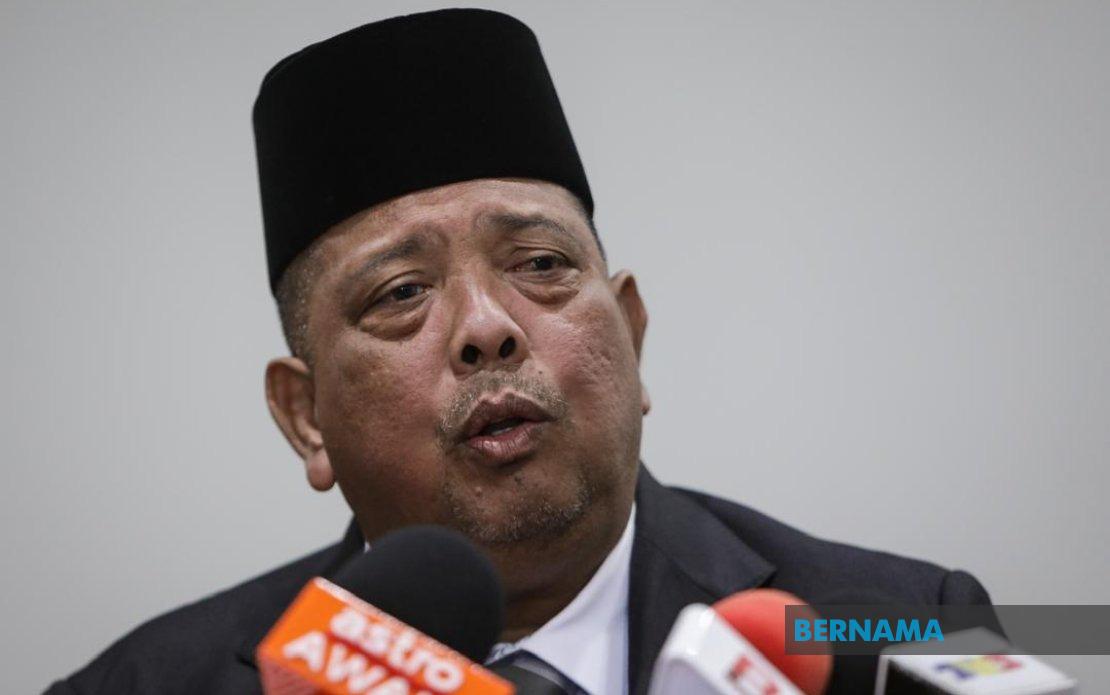
Perlis Menteri Besar Abu Bakar Hamzah has formally stepped down from Parti Pribumi Bersatu Malaysia's supreme decision-making body, a move that underscores the competing demands facing state leaders balancing party responsibilities with executive governance. The resignation, submitted to central party leadership last week, was announced during a cross-border engagement event in Kangar on Tuesday, marking a calculated shift in his political priorities as his tenure approaches a critical juncture.
Abu Bakar's departure from the Bersatu Supreme Leadership Council represents a deliberate recalibration of his commitments rather than a complete severance from the party machinery. He explicitly retained his posts as Perlis state party chief and Kangar division head, signalling that the resignation targets only the highest tier of national party governance. This nuanced distinction suggests he aims to reduce involvement in broad party strategy discussions while maintaining control over state-level operations where his electoral prospects remain tied to local performance metrics.
The timing of the announcement carries significance given Malaysia's political calendar. With the 15th Perlis state legislative assembly term ending next year, Abu Bakar faces intensifying pressure to deliver tangible results before facing potential re-election or losing office. His stated rationale—that approximately one year remains to implement investor attraction initiatives and achieve specific performance indicators—frames the resignation as a pragmatic response to temporal constraints rather than principled disagreement with party direction.
The Raja of Perlis's June directive at the state assembly opening, which explicitly endorsed Abu Bakar's continued leadership without external interference, provided crucial political cover for this manoeuvre. Royal affirmation of his autonomy effectively legitimised the decision to deprioritise national party commitments, suggesting implicit permission from the constitutional monarch to concentrate resources on state-level administration. This royal backing carries particular weight in Malaysia's constitutional framework, where sultanate endorsement of executive authority reinforces legitimacy beyond party structures.
Investor attraction emerges as a cornerstone justification for Abu Bakar's strategic refocus. Perlis, positioned as Malaysia's northern gateway adjacent to Thailand's Satun Province, holds potential for cross-border economic development. The resumption of the Kuala Perlis-Satun ferry service, suspended since the COVID-19 pandemic, symbolises infrastructure revival priorities. Abu Bakar's presence at the ferry service reopening when announcing his resignation drew explicit connections between reducing party distractions and enabling economic initiatives critical to state competitiveness and his political survival.
The announcement occurred within a broader context of political flux within Bersatu's state machinery. Abu Bakar noted that Sena assemblyman and state executive councillor Datin Marzita Mansor had similarly resigned from the party's Supreme Leadership Council, though confirmation remained pending. Multiple simultaneous departures from the council's highest tier suggest possible structural tensions within Bersatu's national leadership or coordinated repositioning by state figures seeking operational autonomy during a politically sensitive period.
Bersatu's organisational dynamics have undergone considerable strain since its 2018 electoral breakthrough and subsequent coalition recalibrations. The party's trajectory from kingmaker to contested faction within Perikatan Nasional has created competing demands on state leaders, who must balance loyalty to national party machinery with the practical necessities of state governance. Abu Bakar's move reflects a calculation that state-level legitimacy increasingly derives from administrative performance rather than national party standing.
Perlis's political economy shapes these decisions distinctly. As Malaysia's smallest state by population and economic output, Perlis depends heavily on cross-border commerce with Thailand and intra-Malaysia investment flows. Menteri Besar performance becomes measurable through job creation, infrastructure development, and revenue generation metrics that directly affect electoral prospects. Abu Bakar's emphasis on KPIs and investor attraction acknowledges that state elections turn on tangible developmental outcomes rather than party machinery dynamics visible in Kuala Lumpur.
The resignation's implications for Malaysian federalism warrant consideration. State chief ministers occupying positions in national party councils face inherent role conflicts, as seat obligations demand attention to nationwide strategy while menteri besar duties require intensive focus on local constituencies. Abu Bakar's decision to prioritise state governance over national council participation suggests a growing recognition among Malaysia's regional executives that these dual roles have become functionally incompatible during critical electoral periods. This represents a subtle but significant shift in how state leaders approach the balance between national party structure and local democratic accountability.
For Southeast Asian context, Perlis's cross-border orientation with Thailand merits attention. The ferry service resumption and Thai delegation visit signal renewed regional connectivity following pandemic disruptions. Abu Bakar's commitment to leveraging these cross-border opportunities reflects how Malaysian state leaders increasingly view regional integration as central to competitiveness. His decision to clear calendar space for such initiatives acknowledges Perlis's distinctive geographic position and economic opportunities tied to Thailand relations.
Bersatu's response to these resignations remains to be seen, but the pattern of state figures deprioritising national council work suggests the party's supreme leadership may require structural reassessment. If multiple state executives simultaneously exit the council, either the council's workload and demands require recalibration, or state leaders increasingly perceive national party positions as incompatible with their primary electoral obligations. Either scenario implies organisational questions for a party still consolidating its role within Malaysia's evolving coalition structures.
Abu Bakar's move also reflects the reality that Malaysian state elections operate according to distinct electoral logics from federal contests. Voters evaluate menteri besar performance on schools, roads, licensing services, and local economic opportunity. National party position carries minimal electoral weight in state campaigns. By formalising his exit from the Supreme Leadership Council, Abu Bakar signals to Perlis voters that he has eliminated distracting commitments and will concentrate solely on state administration until the 2025 term concludes. Whether this strategic repositioning translates into electoral advantage depends on whether promised investor attraction and KPI achievements materialise within the compressed timeframe remaining.

