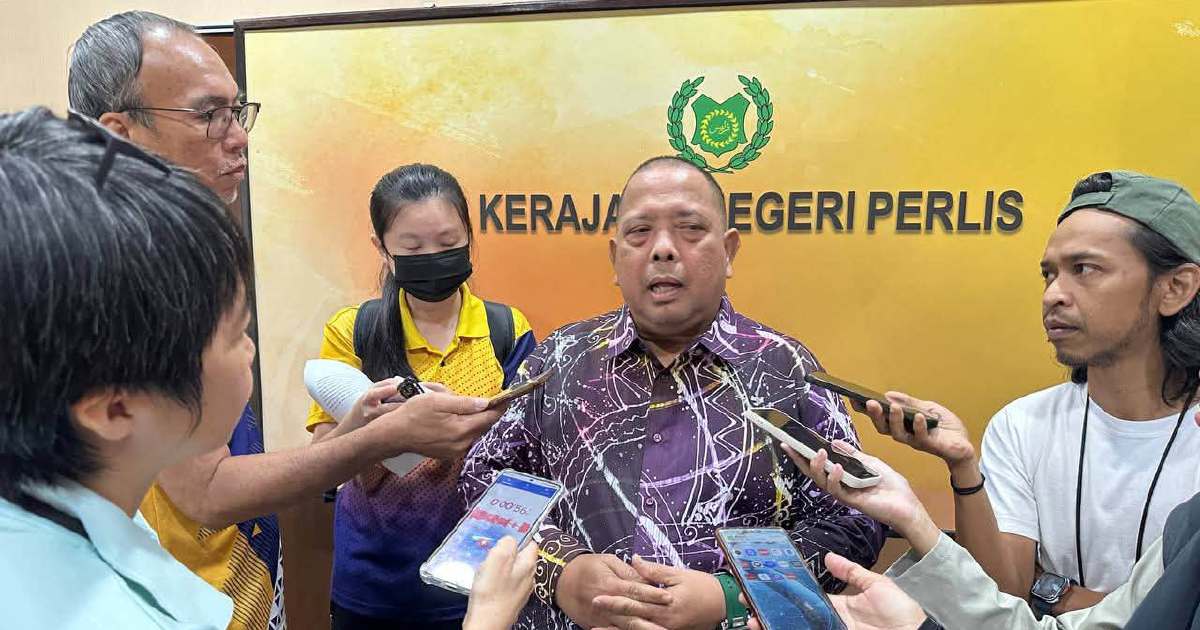
Perlis Menteri Besar Abu Bakar Hamzah moved swiftly to quash mounting speculation about his political future, explicitly denying reports that he is preparing to defect from Bersatu following his recent departure from the party's Supreme Council. Speaking in Kangar, the state's chief executive reaffirmed his loyalty to Bersatu and his continued role as party chairman at the Perlis state level, seeking to stabilise sentiment among party members and the broader political establishment amid questions about his position.
The dismissal comes at a sensitive moment for Malaysia's political landscape, where party-switching among elected officials has become an increasingly common phenomenon. Leadership transitions and council exits often trigger immediate speculation about imminent political moves, particularly when senior figures step down from national-level positions. Abu Bakar Hamzah's swift public clarification suggests awareness of how quickly such narratives can take root and potentially destabilise both his own standing and party cohesion within Perlis.
Bersatu, officially known as Parti Pribumi Bersatu Malaysia, has faced considerable internal turbulence in recent years, with multiple high-profile defections and internal disputes reshaping its political fortunes. The party's fluctuating membership and leadership changes have occasionally cast doubt on the stability of senior figures' commitment to the organisation. Against this backdrop, Abu Bakar Hamzah's deliberate emphasis on remaining a party member carries particular weight, signalling that despite the structural changes affecting his position, his fundamental political affiliation remains unchanged.
His continued chairmanship of Bersatu Perlis represents a significant operational role within the party's state machinery, overseeing the mobilisation of party structures and managing inter-party relations at the regional level. This position places him at the forefront of Bersatu's electoral strategy and governance coordination in a state that, while smaller than many Malaysian territories, remains strategically important within the broader political ecosystem of the peninsular north. Maintaining this chairmanship while clarifying his wider party status suggests a strategic recalibration rather than a wholesale withdrawal from Bersatu's political framework.
The timing of his remarks also reflects broader tensions within Malaysian coalition politics. Perlis, governed by Bersatu with support from other parties, sits within a delicate political arrangement that depends on the stability and reliability of key office-holders. Any uncertainty about Abu Bakar Hamzah's political intentions could create ripple effects within the state government, affecting legislative support and administrative continuity. By explicitly rejecting defection claims, he has attempted to protect the state administration from accusations of instability or manoeuvring.
Within the context of Peninsular Malaysian politics, Bersatu's position as a component party within the larger federal coalition has been contested and fluid. The party's leadership has experienced divisions, and state-level officials like Abu Bakar Hamzah occupy positions where they must balance federal party directives with state-level political realities. His remarks can be read as an assertion of his independence as a state-level executive whilst simultaneously endorsing his formal commitment to party structures.
The Supreme Council exit, whilst the trigger for current speculation, remains unexplained in terms of its underlying causes. Whether the departure resulted from internal disagreements, restructuring decisions made by central party leadership, or voluntary withdrawal remains unclear. This ambiguity has fuelled the very rumours Abu Bakar Hamzah seeks to dispel. Nonetheless, his distinction between his Supreme Council position and his overall party membership suggests that the former change need not necessarily indicate broader political repositioning.
For observers tracking party dynamics in Malaysia's northern states, this clarification serves as a reminder of the distinction between movements within party structures and complete political exits. Officials may shift roles, accept demotions, or voluntarily step back from certain responsibilities whilst maintaining their fundamental party affiliation. Abu Bakar Hamzah has explicitly positioned his situation in these terms, preserving both his operational influence as state chapter leader and his public standing within Bersatu.
Looking forward, the sustainability of his claimed commitment will depend on whether further developments occur that contradict his current statements. In Malaysian politics, declarations of loyalty are often tested by subsequent actions and organisational changes. For Perlis, the assurance that its chief executive remains committed to his party of affiliation provides a degree of reassurance to stakeholders concerned about potential administrative disruptions. Whether this resolves underlying tensions that may have prompted his Supreme Council exit, however, remains to be seen as the political situation continues to develop.

