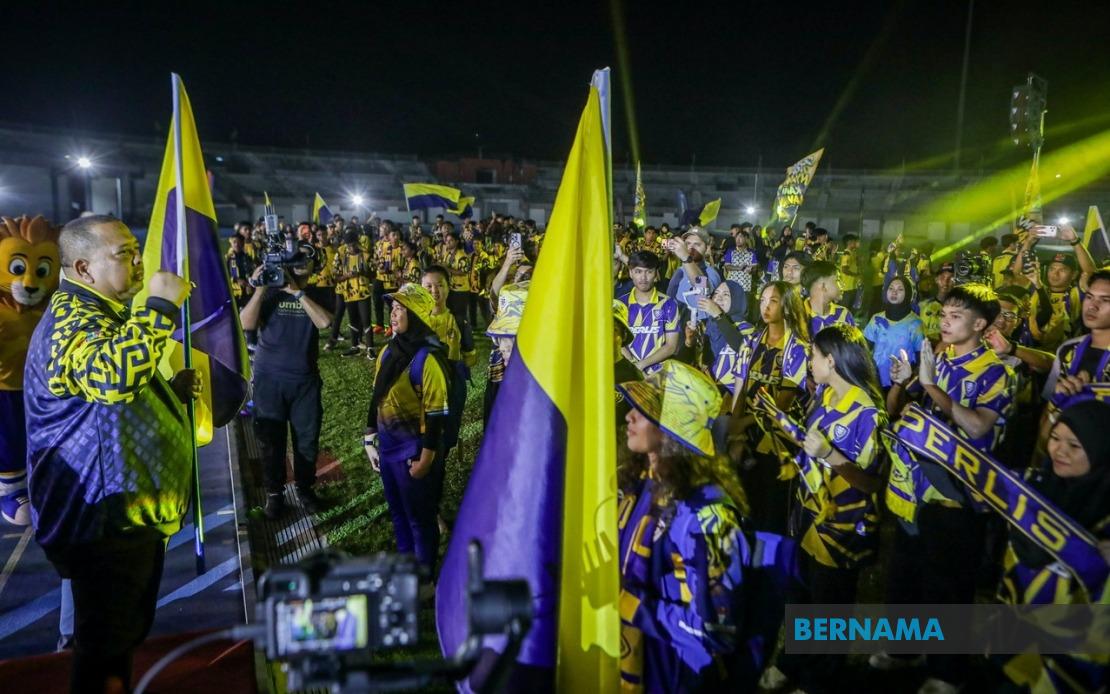
Perlis has achieved its most successful showing in Malaysia Games history after securing 17 gold medals at SUKMA 2026, the biennial multi-sport event held in Selangor. The milestone reflects the state's accelerating investment in athletic development and represents a turning point in Perlis' sporting fortunes, according to officials who view the results as validation of a comprehensive strategy spanning infrastructure, training, and athlete support.
Menteri Besar Abu Bakar Hamzah described the 17 gold medals as evidence that Perlis' systematic approach to sports development is producing measurable outcomes. The achievement underscores the collaborative effort involving state government agencies, athletes themselves, coaching staff, sports associations, and the State Sports Council—a network working in concert to elevate standards across multiple disciplines. The result also signals that targeted investment and long-term planning in athletic programmes can yield competitive returns even for smaller Malaysian states competing against better-resourced counterparts.
Among the standout performances, Perlis athletes rewrote the SUKMA record books in shot put, demonstrating technical excellence and training rigour in a field event historically dominated by states with larger populations and sports budgets. The achievement suggests that specialised coaching and focused talent identification in specific disciplines can generate disproportionate success. Equally impressive was the state's weightlifting contingent, which captured overall championship honours in that sport at SUKMA Selangor 2026, positioning Perlis as a powerhouse in an event requiring considerable infrastructure and expertise.
The overall medal haul for Perlis at this edition of SUKMA totalled 42 medals. Beyond the 17 golds, the delegation brought home seven silver medals and 18 bronze medals, a distribution that indicates competitive depth across multiple sports rather than reliance on one or two elite athletes. This balanced portfolio of medals suggests the state's development programmes are nurturing talent pools systematically rather than depending on occasional standout performers, a sustainable model for long-term competitiveness.
Abu Bakar outlined the state government's commitment to sustaining this upward trajectory. The priorities include ongoing refinement of talent development pathways, enhancement of high-performance training infrastructure, recruitment and retention of quality coaching personnel, integration of sports science into training regimens, upgrading of sports facilities to international standards, and comprehensive athlete welfare provisions. Such multifaceted support recognises that medal success depends not on single interventions but on ecosystems that protect athletes' physical and mental wellbeing while maximising training effectiveness.
The significance of Perlis' achievement extends beyond state pride. As a smaller state with fewer resources than Selangor, Kuala Lumpur, or Sabah, Perlis' performance demonstrates that strategic planning, disciplined implementation, and political commitment can compensate for demographic and economic constraints. For other comparable states in Malaysia and Southeast Asia, Perlis' model offers a blueprint for competing effectively at regional sporting events without massive budgets, achieved instead through intelligent allocation of available resources and cultivation of niche excellence.
The state government is currently negotiating incentive packages for athletes who performed at SUKMA 2026, with formal recognition and reward ceremonies planned after the conclusion of Para SUKMA Selangor 2026. Such incentives serve multiple purposes: they acknowledge athlete sacrifice, create positive reinforcement for future training cohorts, and signal to potential sporting talent that commitment to athletic careers can yield tangible returns. Financial recognition, combined with other support mechanisms, helps attract and retain high-potential individuals who might otherwise pursue alternative career paths.
The timing of Perlis' record performance holds particular significance within Malaysia's broader sporting landscape. SUKMA events represent the primary domestic venue where state pride intersects with athletic excellence, offering a proving ground for athletes before international competition. Success at SUKMA often translates into opportunities for national team selection and exposure, making strong performance economically and professionally valuable for emerging athletes. Perlis' breakthrough therefore has implications beyond medal counts, potentially opening pathways for the state's athletes to represent Malaysia internationally.
The achievement also reflects evolving regional dynamics within Malaysian sports. Historically, certain states have dominated SUKMA competitions through sustained investment and population advantage. Perlis' strong showing suggests this hierarchy is not immutable, and that determined investment in strategic sports disciplines can yield competitive results. This trend may encourage other states to review their sporting strategies, potentially leading to more competitive future SUKMA editions where medal distribution becomes less predictable.
Looking forward, the state government faces the challenge of maintaining momentum. Initial success in one games edition can sometimes prove difficult to replicate, as competing states adjust their own strategies and investment levels in response. For Perlis, sustaining the 17-gold benchmark will require consistent funding, continuous coaching development, systematic athlete progression through age-group competitions, and infrastructure maintenance. The window of opportunity created by this historic achievement provides leverage for securing sustained political and budgetary support for sports development over the coming years.

