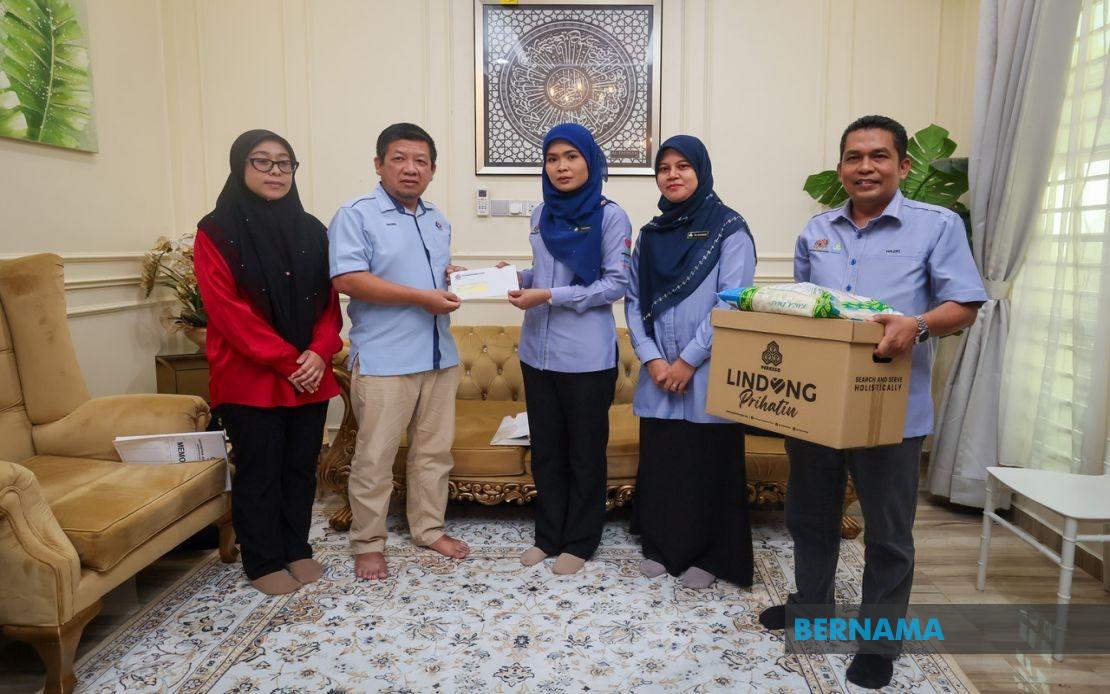
Malaysia's Social Security Organisation (PERKESO) has substantially supported workers and their families across Kelantan by channeling nearly RM3.5 million in benefits throughout the opening half of 2024. The organisation's Kelantan deputy director, Nor Aziemah Ismail, disclosed the comprehensive distribution figures while addressing reporters in Pasir Mas, underscoring PERKESO's commitment to providing timely financial assistance to those affected by workplace incidents and related hardships.
The substantial allocation reflects the organisation's primary function in protecting Malaysia's workforce against employment-related risks. Temporary Disablement Benefit payments constituted the largest component of these disbursements, reaching RM2.388 million. This benefit category addresses a fundamental vulnerability in Malaysia's labour market: workers who sustain workplace injuries that prevent them from fulfilling their occupational responsibilities during their recovery periods. The significance of this payment stream highlights the prevalence of employment-related accidents across Kelantan's diverse industrial and agricultural sectors.
Beyond temporary disablement coverage, PERKESO recognised its broader social responsibility through dependants' benefit schemes. The organisation allocated RM73,000 specifically to next-of-kin of workers whose deaths resulted directly from employment-related accidents during the six-month period. This targeted assistance acknowledges that fatal workplace incidents create immediate financial crises for surviving family members who lose their primary income source. The relatively modest total for this category, while concerning from a safety perspective, reflects both PERKESO's reach and the continued challenge of workplace fatality prevention across the state.
Funeral benefits emerged as another significant allocation stream, with nearly RM1 million distributed to families managing funeral arrangements following workers' deaths during the review period. PERKESO's standardised approach provides RM3,000 per eligible claim, a figure designed to address immediate funeral expenses without requiring extensive verification. The organisation has implemented an expedited approval mechanism that prioritises processing these claims within 24 hours when documentation is complete, recognising that bereaved families cannot afford delays when arranging funeral rites and ceremonies across Malaysia's diverse religious and cultural contexts.
The 24-Hour Employment Injury Scheme represents an innovative expansion of PERKESO's protective mandate, extending coverage beyond traditional working hours and premises. This relatively recent initiative acknowledges the modern reality that workers encounter accident risks throughout their daily lives, not merely during formal employment periods. The scheme has approved nine claims in Kelantan to date, with RM1,300 in sick leave benefits distributed among successful applicants. These approvals have encompassed circumstances ranging from motorcycle convoy participation to accidents while transporting children to educational tuition classes, demonstrating how contemporary employment relationships blur boundaries between work and personal life.
This extended coverage model carries significant implications for Malaysia's social safety net architecture. By recognising employment-related injuries regardless of timing or location, PERKESO aligns its operations with evolving workforce patterns where flexibility and remote arrangements increasingly characterise employment relationships. Workers no longer confined to fixed premises or schedules appreciate knowing their contributions generate protection across their entire daily routine. The scheme's acceptance of motorcycle convoy and childcare-related incidents reflects pragmatic acknowledgment that workers maintain multiple social and familial responsibilities that intersect with occupational risks.
For Kelantan specifically, these benefit streams address regional employment challenges and demographic vulnerabilities. The state's economy encompasses manufacturing, agriculture, small-scale commerce, and increasingly digital enterprises, each presenting distinct accident profiles and workforce compositions. PERKESO's distribution patterns likely reflect this sectoral diversity, with temporary disablement benefits predominating among workers in physically demanding industries. The significant funeral benefit allocations suggest ongoing occupational safety concerns that remain despite modernisation efforts across various economic sectors.
From a regional Southeast Asian perspective, Malaysia's PERKESO model demonstrates how social security organisations can balance actuarial sustainability with genuine social protection. The rapid 24-hour approval mechanism for funeral benefits, coupled with comprehensive scheme coverage, positions Malaysia ahead of several regional peers in worker protection frameworks. Neighbouring countries observing PERKESO's operational efficiency and benefit expansion may consider comparable approaches when strengthening their own employment injury schemes.
Looking forward, the near-RM3.5 million distribution across Kelantan during this half-year period establishes a useful benchmark for monitoring social protection effectiveness. As Malaysia pursues digital transformation and labour market evolution, PERKESO's willingness to extend scheme coverage while maintaining rapid claim processing demonstrates institutional adaptability. For Malaysian workers across all sectors, particularly those in Kelantan facing occupational risks, this consistent benefit channeling reinforces that their mandatory social security contributions translate into tangible financial protection during vulnerable moments. The organisation's transparent communication regarding benefit categories and approval timelines also strengthens public confidence in Malaysia's employment injury protection system.

