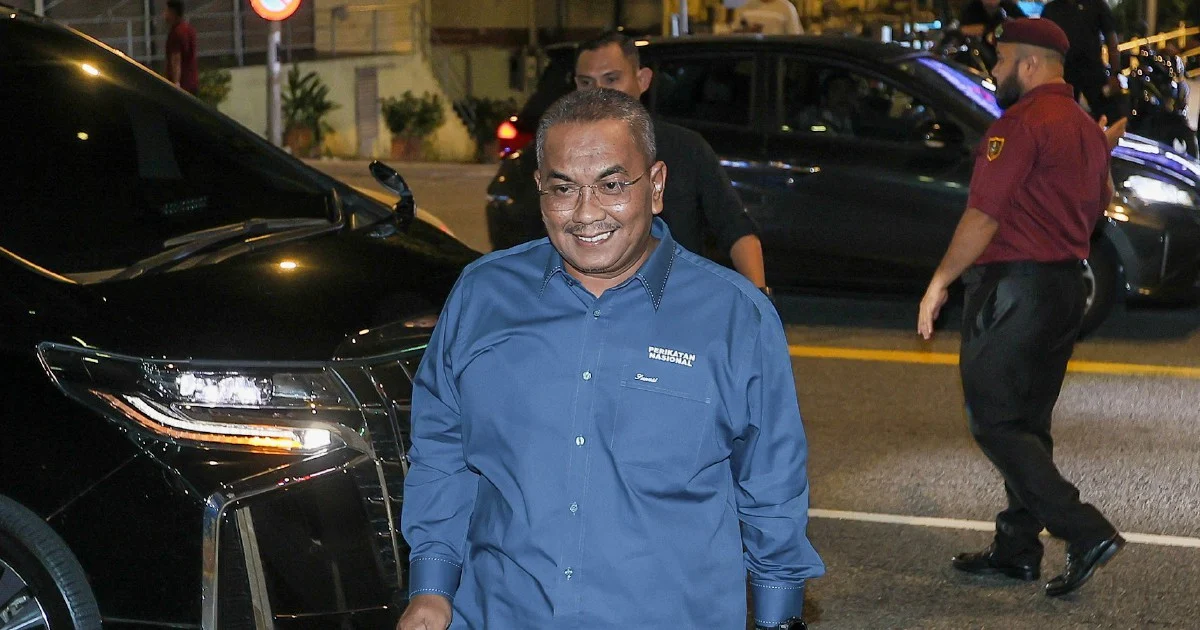
Perikatan Nasional has made clear its intention to stand alone in the forthcoming Johor state election, rejecting suggestions that the coalition would adopt the established Barisan Nasional identity for the contest. The announcement came from Datuk Seri Muhammad Sanusi Md Nor, who holds the position of election director for PN, speaking in Kuala Lumpur on the matter that has generated considerable discussion within political circles.
The clarification addresses persistent rumours that had circulated in recent weeks about a possible convergence between PN and BN for the Johor campaign. Such speculation had sparked debate among political analysts and observers keen to understand the strategic direction of the coalition ahead of the state-level contest. By publicly confirming that PN would maintain its distinct electoral symbol, Sanusi has effectively ended the ongoing uncertainty regarding the party's branding approach.
For Malaysian voters and political observers, this decision carries implications about how opposition and ruling coalition elements intend to position themselves in the southern state. Johor represents one of Malaysia's most strategically important states politically, given its economic significance, large voter base, and traditional stronghold status that has shifted hands between major coalitions in recent years. The electoral dynamics within the state have become increasingly complex as various political actors recalibrate alliances.
The use of distinct party logos rather than unified coalition symbols typically signals confidence in a party's independent brand identity and local organizational strength. PN's choice to campaign under its own emblem suggests the coalition believes it can mobilize support on the basis of its individual platform and party machinery, rather than attempting to leverage the broader recognition that the BN banner might offer in certain constituencies. This approach reflects broader strategic thinking about voter preferences and regional political alignments.
Historically, Malaysian state elections have witnessed various experiments with coalition branding strategies. Some elections have seen unified fronts marshalling all component parties under a single banner to project strength and unity, while others have permitted individual parties within coalitions to campaign separately whilst maintaining electoral cooperation. The choice between these approaches often depends on local political conditions, the relative strength of coalition partners, and calculations about which strategy will prove more electorally advantageous.
For Johor specifically, the political landscape has evolved considerably over the past decade. The state has experienced significant shifts in voter sentiment and coalition alignments, with the 2018 general election marking a turning point that subsequently reverberated through state-level politics. Understanding how PN intends to present itself to Johor voters thus offers insight into the coalition's broader assessment of its standing in the state and its confidence in securing support through its own organizational and messaging frameworks.
The dismissal of the BN logo rumour also underscores the careful management of political messaging in contemporary Malaysian politics, where speculation about coalition arrangements can rapidly influence public perception and investor confidence. By moving quickly to clarify its position, PN has sought to prevent misinterpretation about its independence and strategic direction. Such preemptive communications have become increasingly important as political parties compete for narrative control in an information-saturated environment.
Sanusi's statement carries particular weight given his position within the PN structure and his influence over electoral strategy. As election director, he would be intimately involved in decisions regarding campaign presentation, resource allocation, and the overall positioning of the coalition for the coming contest. His public confirmation thus represents an authoritative articulation of PN's strategic choice rather than speculation or unofficial commentary.
For Southeast Asian observers monitoring Malaysian political developments, this decision reflects the broader trend toward coalition flexibility and conditional alliances that have characterized the region's politics in recent years. Rather than permanent, ideologically defined blocs, Malaysian political actors increasingly form pragmatic arrangements that shift based on electoral cycles and local circumstances. The Johor election will serve as a significant test of whether PN's independent positioning can translate into electoral gains in a state where multiple power centres compete for influence.
Looking ahead, the decision to campaign under the PN banner rather than BN colors will shape how the coalition frames its message to Johor voters, the nature of its electoral cooperation with potential allies, and the overall competitive dynamics of the state-level race. Political observers will watch closely to see whether this independent branding strategy succeeds in mobilizing support or whether it places PN at a disadvantage compared to competitors who may pursue different coalition approaches. The coming months will reveal whether PN's confident assertion of its distinct identity translates into the electoral outcomes the coalition seeks in this significant state contest.