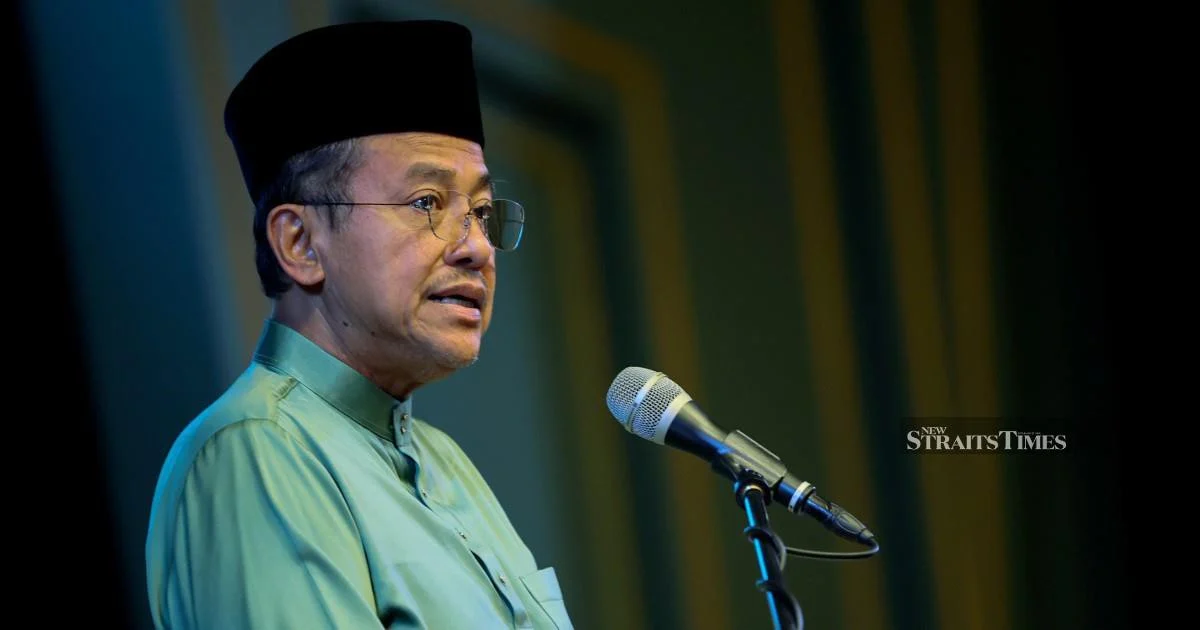
The Perikatan Nasional coalition faces a critical juncture as its leadership council prepares to scrutinise Bersatu's position within the bloc at an imminent high-level meeting. The timing of this discussion underscores the intricate power dynamics that continue to reshape Malaysia's political landscape, particularly as the country navigates the complex relationship between its component parties and their competing ambitions.
Datuk Seri Dr Ahmad Samsuri Mokhtar, the deputy president of Pas, confirmed that the PN leadership council will take up the matter of Bersatu's role and standing in the coalition during tomorrow's gathering in Temerloh. The announcement itself signals that tensions or realignments within the bloc have reached a level requiring formal deliberation at the highest tier of party leadership, rather than being managed through routine backdoor negotiations.
Bersatu, the party led by former Prime Minister Muhyiddin Yassin, has been a cornerstone of PN since its formation, yet the coalition's structure has always reflected the competing interests of its three main components: Bersatu, Pas, and Perikatan Nasional itself as a political entity. The question of how these parties share power, influence, and electoral prospects remains perpetually contested, with each seeking to maximise its position in relation to the others.
The coalition's relevance in Malaysian politics has fluctuated considerably since PN first emerged as a significant force in 2020. Initially presenting itself as a fresh alternative to both Barisan Nasional and Pakatan Harapan, PN has struggled to maintain a consistent narrative and stable internal governance. The proposed discussion about Bersatu's future role suggests that either the party's recent performance or its strategic direction has prompted concerns among its alliance partners, particularly within the Pas leadership hierarchy.
Understanding the potential outcomes of this meeting requires examining PN's electoral performance and internal cohesion. The coalition's showing in recent elections, combined with broader shifts in voter sentiment and the competing demands of different demographic groups across Malaysia's states and federal territories, has created pressure points within its structure. For Bersatu specifically, questions about its ability to deliver seats and retain political relevance have presumably become more acute, prompting this formal reassessment.
Pas, as the largest component party within PN in terms of parliamentary representation and grassroots organisation, carries significant weight in such discussions. The fact that Dr Ahmad Samsuri Mokhtar felt compelled to publicly announce this agenda item suggests that the topic carries sufficient importance to warrant transparency rather than behind-the-scenes handling. This approach may reflect either confidence that the leadership council will reaffirm Bersatu's position or an effort to manage external perceptions ahead of a potential restructuring.
The coalition's regional implications extend beyond Malaysia's borders. Perikatan Nasional has positioned itself as representing a particular vision of governance and identity politics that resonates with specific segments of the Malaysian electorate, and any significant reconfiguration could influence broader Southeast Asian political dynamics, particularly as regional blocs continue to align around shared interests and values.
Bersatu's founding represented a deliberate attempt to create a party distinct from Umno while maintaining allegiance to similar voter constituencies. The party's trajectory since then—marked by electoral contests, internal discipline challenges, and shifting alliances—has demonstrated both the potential and limitations of attempting to carve out political space between established giants. Any decision to diminish Bersatu's status within PN would represent a significant acknowledgement that this experiment faces constraints.
The implications for Malaysian voters and the broader political process deserve careful consideration. Coalition structures, when functioning effectively, can provide checks and balances on executive power and ensure broader representation of diverse viewpoints. Conversely, when internal tensions destabilise coalitions, they can lead to political uncertainty and reduced governmental effectiveness. Tomorrow's meeting may prove consequential in determining whether PN evolves into a more stable, integrated entity or whether its component parties continue to operate as essentially independent actors temporarily bound together by convenience and immediate political advantage.
The scheduled discussion also reflects broader patterns in Malaysian politics whereby formal party structures and leadership councils periodically revisit the fundamentals of political partnerships. These recalibrations, while sometimes portrayed as routine, often signal substantial shifts in how power is distributed and exercised. The fact that PN's leadership has deemed Bersatu's position worthy of deliberate council-level discussion indicates that complacency about the coalition's internal arrangements is absent, at least among Pas leadership circles.