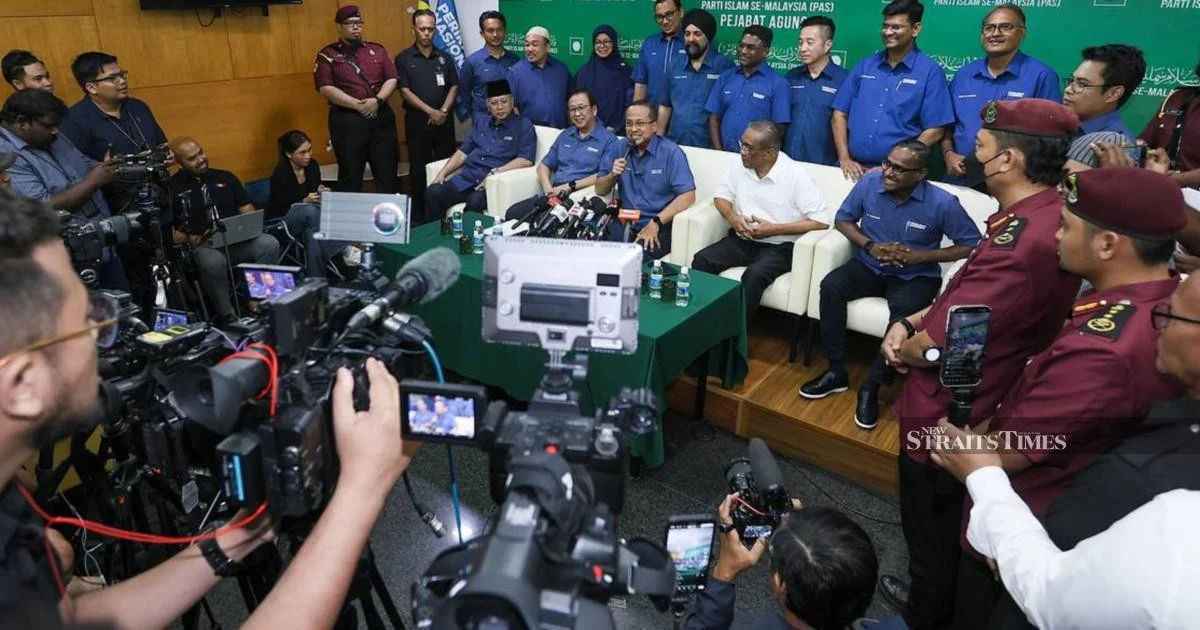
The Perikatan Nasional coalition is moving forward with formal deliberations today to lock in its seat-sharing arrangement for the forthcoming Johor state election, signalling that the bloc's internal negotiations have reached their final stages. The gathering represents a pivotal juncture for an alliance that has undergone considerable scrutiny regarding how parliamentary and state-level contests will be contested across different regions of Malaysia.
Seat allocation exercises serve as the foundation upon which electoral coalitions prove their internal cohesion. For PN—a relatively young coalition comprising UMNO, PAS, Bersatu, and other partners—the Johor negotiation is particularly sensitive, as the state represents one of Malaysia's largest reservoirs of parliamentary and state assembly constituencies. The mechanics of determining which party contests which seat involve complex calculations that weigh local party strength, incumbent performance, demographic shifts, and broader coalition objectives.
Johor's significance in Malaysian politics cannot be overstated. The state has historically swung between different political alliances and currently serves as a test case for how effectively PN can govern a major urban and rural constituency base. The seat allocation decisions being finalised today will directly influence the coalition's ability to mount a cohesive campaign and, ultimately, whether it can command sufficient state assembly seats to form government should elections proceed.
Internal coalition tensions often surface during seat allocation negotiations, as each member party seeks to maximise its own electoral gains while ostensibly prioritising collective victory. The fact that PN is reaching a conclusive determination suggests either that consensus has emerged, or that the coalition's leadership has exercised sufficient authority to impose a framework acceptable to constituent parties. Either outcome demonstrates progress toward presenting voters with a unified ticket.
For UMNO, which retains the largest grassroots machinery among PN partners, Johor holds particular importance given the party's historical dominance in the state. PAS, conversely, seeks to consolidate gains made in recent elections while expanding its foothold in state-level governance. Bersatu's role in the coalition framework continues to shape internal dynamics, particularly regarding how seat distribution reflects the party's national standing relative to other partners.
The Malaysian electorate has increasingly signalled preference for stable, transparent governance, and how PN manages the forthcoming Johor contest will send powerful signals about the coalition's readiness to govern. Voters across the nation often interpret state-level electoral dynamics as indicators of broader national political trends, making Johor's exercise consequential beyond its own boundaries.
Regional observers note that Johor's electoral outcomes could reshape the broader Southeast Asian political landscape, given Malaysia's role as a significant economy and democratic anchor in the region. Coalition stability in major states contributes to investor confidence and macroeconomic certainty, dimensions that extend beyond partisan calculation.
The finalisation of PN's seat allocation strategy also carries implications for opposition coalitions, who will necessarily adjust their own strategies in response to how PN presents its candidacy. The electoral framework that emerges from today's meeting will define the competitive landscape for months ahead and establish parameters within which other political forces must operate.
Technical aspects of seat allocation include analyzing boundary demarcations, voter registration patterns, and demographic composition of individual constituencies. PN's deliberations presumably incorporate detailed constituency-level analysis conducted by party strategists, ensuring that seat assignments reflect both aspirational and realistic assessments of electoral terrain.
The timing of this allocation exercise also matters strategically. Finalising seat arrangements well in advance of polling day permits adequate campaign mobilisation, candidate vetting, and grassroots activation across all constituencies. Political campaigns increasingly require sophisticated coordination across multiple platforms and touchpoints, necessitating lengthy preparation periods.
Beyond immediate electoral mathematics, how PN distributes Johor seats will influence perceptions of fairness within the coalition itself. Member parties scrutinise allocation frameworks to ensure they reflect agreed-upon power-sharing principles and reward electoral contributions proportionally. Perceived inequities can corrode coalition unity precisely when cohesion proves most valuable.
As PN moves toward finalising its Johor strategy, the coalition simultaneously manages broader national positioning. The party's ability to execute effective seat allocation while maintaining internal equilibrium will feature prominently in assessments of its competence and sustainability as a governing force. Today's meeting represents not merely a bureaucratic exercise, but rather a consequential expression of PN's political maturity and capacity to manage complex, multi-stakeholder negotiations that characterise modern Malaysian coalition politics.